Building And Structuring An AI Native Company
Tom Blomfield of Y Combinator discusses the paradigm shift towards AI-native companies, moving beyond traditional human-centric hierarchies. He introduces the concept of self-improving AI loops—where systems continuously learn and evolve without human intervention—and illustrates this with examples like YC's self-healing data agents and living user manuals. Blomfield explores the vision of 'AI employees with VMs' leading to a 'company brain,' where humans transition to the 'edge' for intuition and real-world interaction. He concludes with practical advice for founders: prioritize token burn over headcount, ensure all data is AI-legible, and leverage AI for strategic simulations like investor calls.
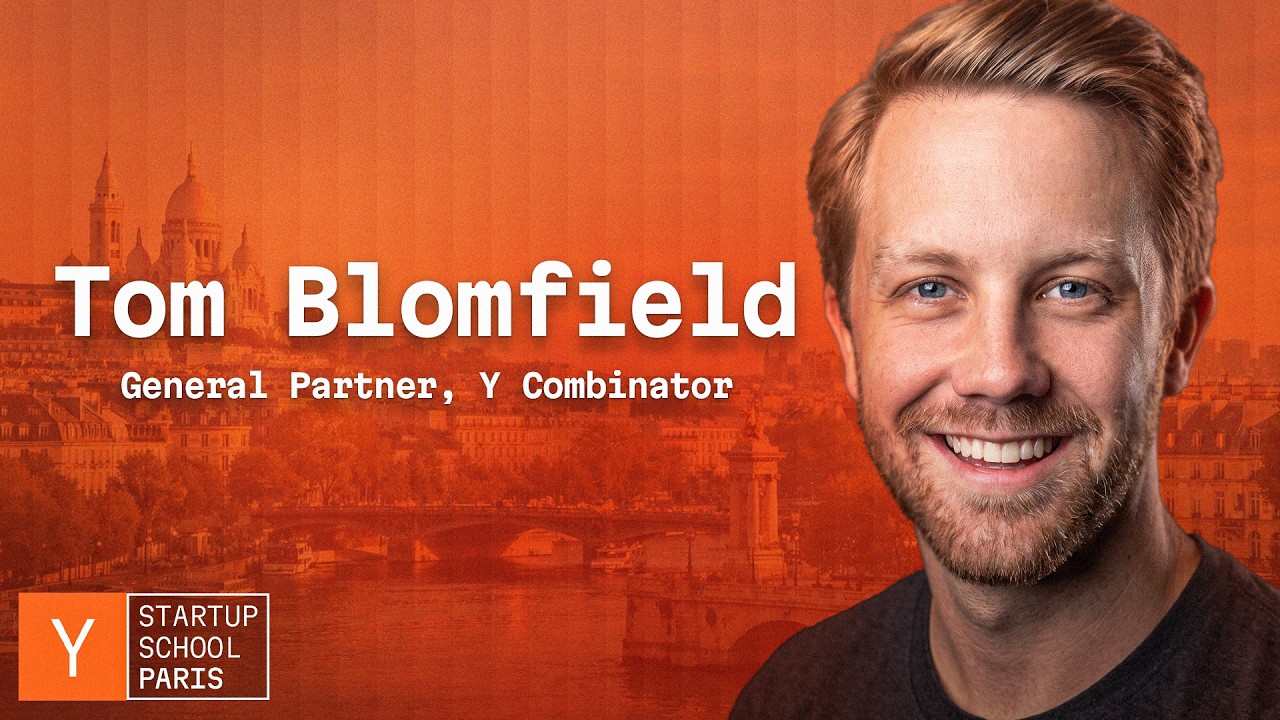
Building AI-Native Companies: Rethinking Organizational Structure
Tom Blomfield, a General Partner at Y Combinator, presented findings on how companies are fundamentally restructuring themselves by embedding AI infrastructure from inception. He emphasizes that while this field is nascent and no one has all the answers, YC is actively exploring these paradigms with hundreds of startups.
The Shift from Traditional Hierarchies
Blomfield critiques traditional organizational structures, exemplified by Roman legions, where information flows hierarchically through human conduits. This model, despite being 2,000 years old, still largely defines modern companies. He cites Jack Dorsey’s assertion that the underlying assumption of hierarchical organization with humans as coordinating mechanisms is fundamentally broken by AI.
Most companies currently misinterpret AI as merely Q&A bots or limited agents that require human intervention when stuck. This approach only marginally increases productivity (e.g., 20% more productive engineers) but doesn’t unlock new capabilities. An AI-native approach reimagines the company as a series of self-improving AI loops, moving beyond simply bolting AI onto existing processes.
The Self-Improving AI Loop
At the heart of an AI-native company is the concept of a self-improving AI loop, which operates continuously without human intervention. Its components include:
- Real-World Data: Inbound messages, product telemetry, billing signals, support tickets, code changes.
- Policy Layer: Rules and constraints for the AI (e.g., approval requirements, logging).
- Tool Layer: Access to internal APIs for actions like sending emails, updating billing, or making code changes.
- Quality Gates: Often another adversarial LLM or a model checking for prompt injection, compliance (e.g., financial advice), or code review. The ideal is to minimize human involvement here.
- Learning Mechanism: Deploying changes, observing their real-world impact, and feeding that data back into the system for continuous improvement.
The ultimate goal is for the product or system to improve itself, even while humans are asleep.
Concrete Examples from YC and Beyond
Blomfield provides several compelling examples of these AI loops in action:
- Self-Healing Data Agent (YC): Initially, an English-to-SQL agent allowed partners to query data. The