Operational efficiency

Building And Structuring An AI Native Company

Building And Structuring An AI Native Company

Tom Blomfield of Y Combinator discusses the paradigm shift towards AI-native companies, moving beyond traditional human-centric hierarchies. He introduces the concept of self-improving AI loops—where systems continuously learn and evolve without human intervention—and illustrates this with examples like YC's self-healing data agents and living user manuals. Blomfield explores the vision of 'AI employees with VMs' leading to a 'company brain,' where humans transition to the 'edge' for intuition and real-world interaction. He concludes with practical advice for founders: prioritize token burn over headcount, ensure all data is AI-legible, and leverage AI for strategic simulations like investor calls.
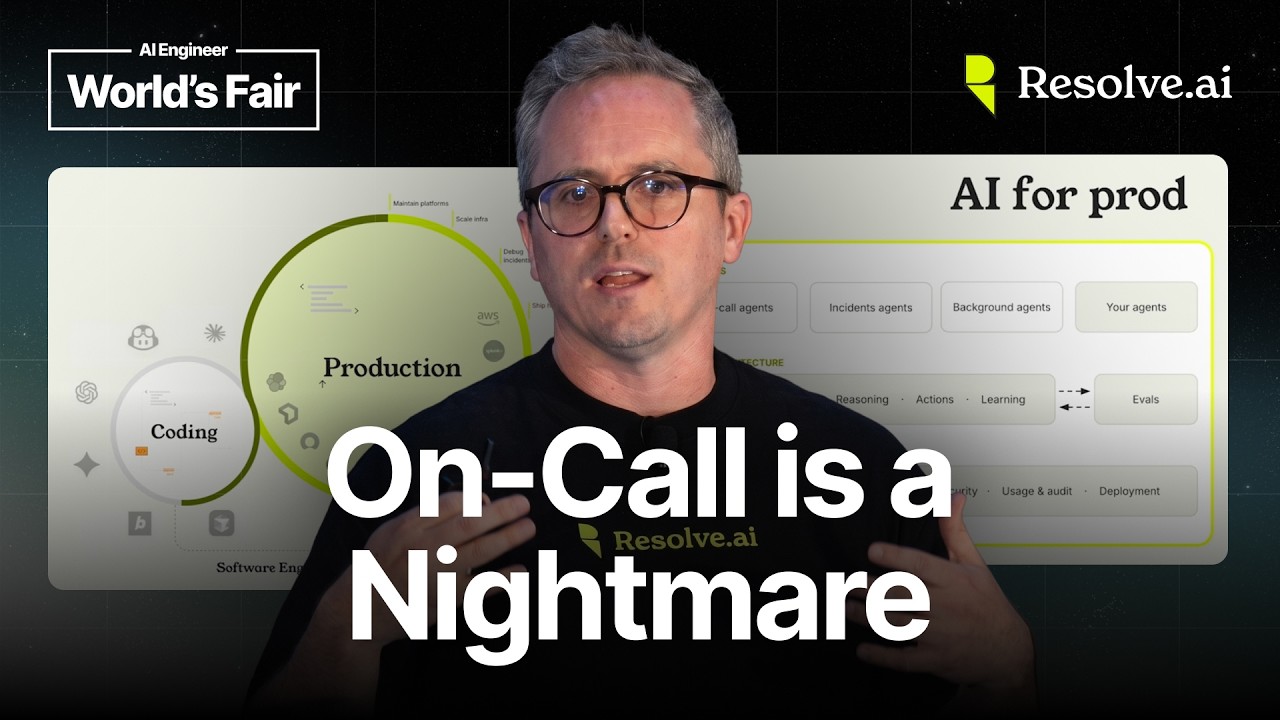
Always-on agents run production without the on-call tax — Justin Smith, Resolve AI

Always-on agents run production without the on-call tax — Justin Smith, Resolve AI

Justin Smith from Resolve AI discusses how AI agents address the increasing operational burden on engineers, highlighting that 70% of an engineer's time is spent running code. He introduces Resolve AI's background agents, which autonomously monitor deployments, perform health checks, generate reports, and answer engineering questions by leveraging deep production context and a self-learning knowledge system, effectively reducing the "on-call tax" and managing system complexity.

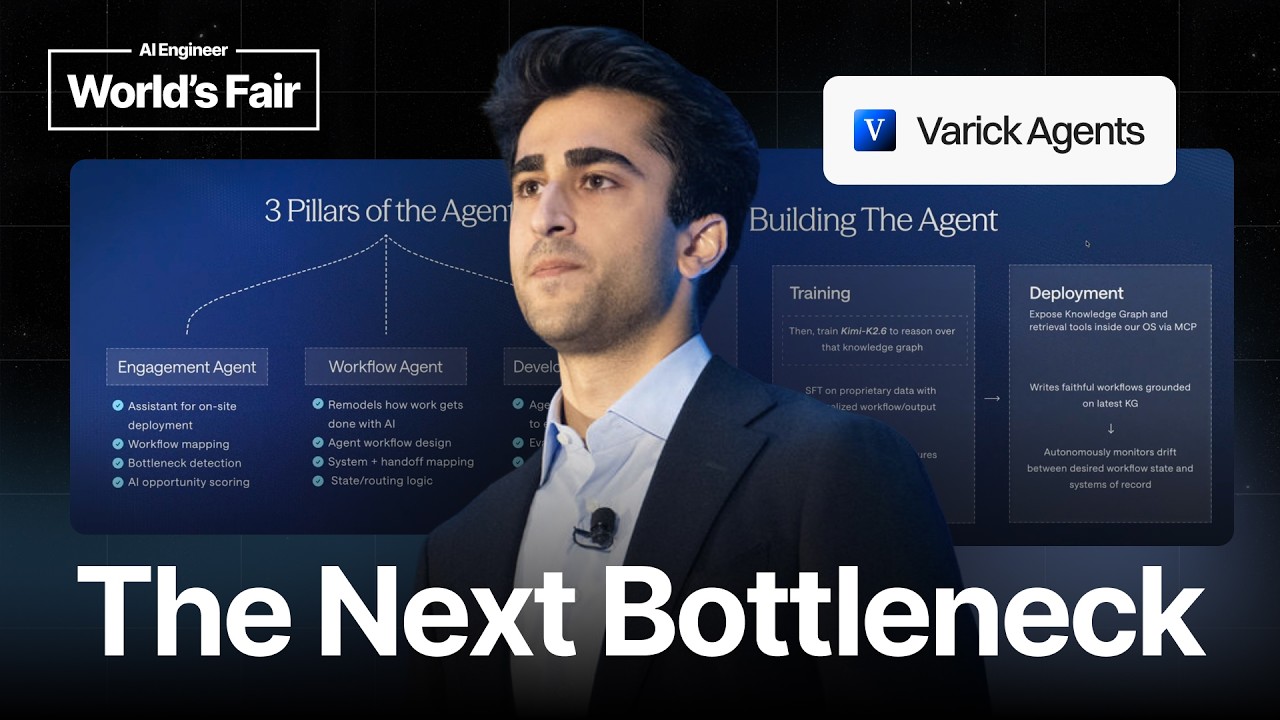
AI tools for Forward Deployed Engineering — Vasuman Moza, Varick Agents

AI tools for Forward Deployed Engineering — Vasuman Moza, Varick Agents

Varick Agents tackles the enterprise AI adoption challenge by deploying Forward Deployed Engineers (FDEs) who map, re-engineer, and automate complex workflows directly on top of existing systems, avoiding costly migrations. The company develops specialized internal AI tooling, including 'Engagement' and 'Workflow' agents, and employs custom model training with RL environments to overcome frontier model limitations in context extraction and clarity, enabling department-wide AI transformation.

Building an Autonomous Delivery Experience with DoorDash Co-Founders Andy Fang and Stanley Tang

Building an Autonomous Delivery Experience with DoorDash Co-Founders Andy Fang and Stanley Tang

DoorDash co-founders Andy Fang and Stanley Tang discuss how AI and autonomous technology are transforming consumer behavior and delivery logistics. They detail the impact of "Ask DoorDash" on restaurant discovery and grocery orders, and the operational challenges and strategic advantages behind their autonomous delivery robot, Dot. The conversation highlights DoorDash's 'use case first' approach to autonomy, the critical role of data in scaling physical AI, and their surprising prediction that more Dashers, not fewer, will be part of DoorDash's future multimodal delivery strategy.

AI Automation that actually works: $100M, messy data, zero surprises - Tanmai Gopal, Hasura/PromptQL

AI Automation that actually works: $100M, messy data, zero surprises - Tanmai Gopal, Hasura/PromptQL

Tanmai Gopal, CEO of Hasura, discusses a Gen AI-driven automation strategy that addresses the "Automation Paradox" by empowering non-technical users. This approach uses a domain-specific language (DSL) to translate natural language into deterministic, executable plans, aiming to drive over $100M in annual impact for a healthcare partner.