953: Beyond “Agent Washing”: AI Systems That Actually Deliver ROI— with Dell’s Global CTO John Roese
John Roese, Dell's Global CTO, discusses the "agent-washing" phenomenon and how Dell achieved a $10 billion revenue boost while cutting costs through disciplined AI adoption. He introduces the concept of the "knowledge layer" as a crucial new component in AI architecture and details his 2026 predictions. These include a focus on governance, a four-part technical definition for agentic AI systems, the need for modern resiliency in AI factories, and the maturation of sovereign AI strategies.
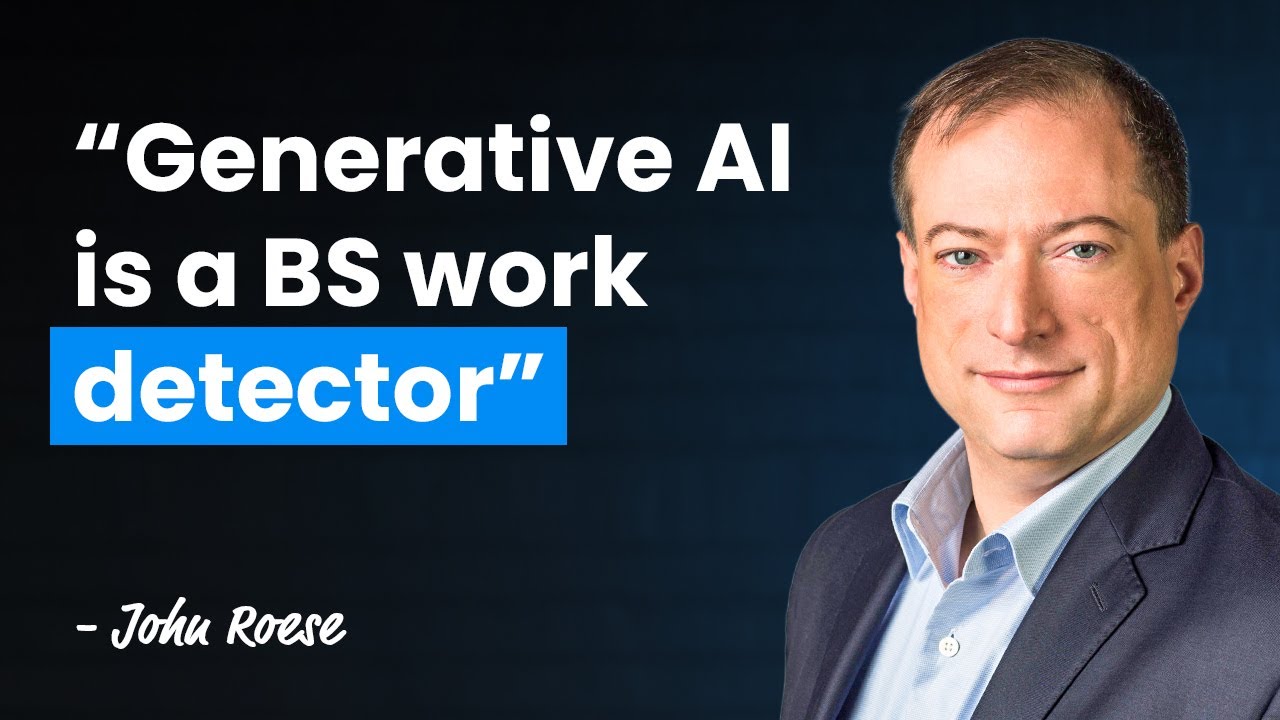
John Roese, Global CTO and Chief AI Officer at Dell Technologies, reflects on his 2025 prediction that “agentic” would be the word of the year. While the term became widespread, its meaning is often misunderstood, leading to the phenomenon of “agent-washing,” where companies rebrand sophisticated chatbots or tools as agents. Roese clarifies the crucial distinction:
- Tools (First Wave of GenAI): Systems like chatbots and RAG that unlock data and require a human in the loop.
- Agentic Systems (Second Wave of GenAI): Truly autonomous AI systems that are given an objective, and then reason, navigate, and execute work on their own. The human is on the loop, providing intent and validation.
He warns that the current confusion around the term can hinder proper preparation for this disruptive technology.
Achieving Unprecedented AI ROI at Dell
Roese provides concrete evidence of AI’s transformative power, detailing how Dell achieved a historic decoupling of revenue growth from cost. In the last fiscal year, Dell’s revenue grew by $10 billion while its absolute costs declined by 4%—a first in the company’s 41-year history. This was accomplished not with a broad, uncontrolled rollout, but through a disciplined, top-down strategy focused on a small number of high-impact use cases (fewer than 30) with clear business outcomes, yielding ROIs from 10:1 to 30:1. This success created a powerful “AI ROI flywheel” and served as a countermeasure to “AI slop”—low-value, unfocused AI outputs. Roese notes that generative AI can act as a “BS work detector”; if applying AI to a task yields no measurable impact, the work itself might have been low-value.
Predictions for AI in 2026
Roese outlines five key predictions for the practicalities of enterprise-scale AI deployment:
-
Governance Takes Center Stage: Both external and internal governance will become critical. The external regulatory landscape is described as a “disaster” of conflicting jurisdictions, while disciplined internal governance is essential for prioritizing projects and avoiding “AI slop.”
-
The Rise of the “Knowledge Layer”: A new architectural component called the knowledge layer will become central to data management. This layer, consisting of vector databases, knowledge graphs, and graph databases, sits between primary data and AI compute. It is dynamic, “hot,” and bidirectional, being both consumed and updated by agents in real-time. It should be located close to the compute (e.g., on the edge) where AI interactions happen.
-
Defining Agentic AI Architecture: An autonomous agent is not just a feature of an LLM but a complex software system with four key components:
- LLM: For reasoning, world knowledge, and communication skills.
- Knowledge Graph: For specialized knowledge and stateful memory, allowing the agent to learn.
- Model Context Protocol (MCP): A standardized interface for perceiving the world (accessing data) and acting upon it (using tools). Roese notes MCP is promising but requires security hardening for enterprise use.
- Agent-to-Agent (A2A) Protocols: For enabling agents to collaborate in ensembles, which allows for tackling more complex tasks and introducing behaviors like consensus to mitigate hallucinations.
-
AI Factories Redefine Resilience: As enterprises build “AI Factories,” the focus will shift to making them resilient. This requires new models for disaster recovery that are architected for AI-specific components like knowledge graphs and agent software, moving beyond traditional IT strategies.
-
Sovereign AI Matures: Sovereign AI will become a mainstream strategy for every nation. The focus will move from merely building national infrastructure to finding innovative uses for it, such as providing resiliency for a nation’s critical infrastructure and creating certified environments for agents in regulated sectors.