Sovereign ai

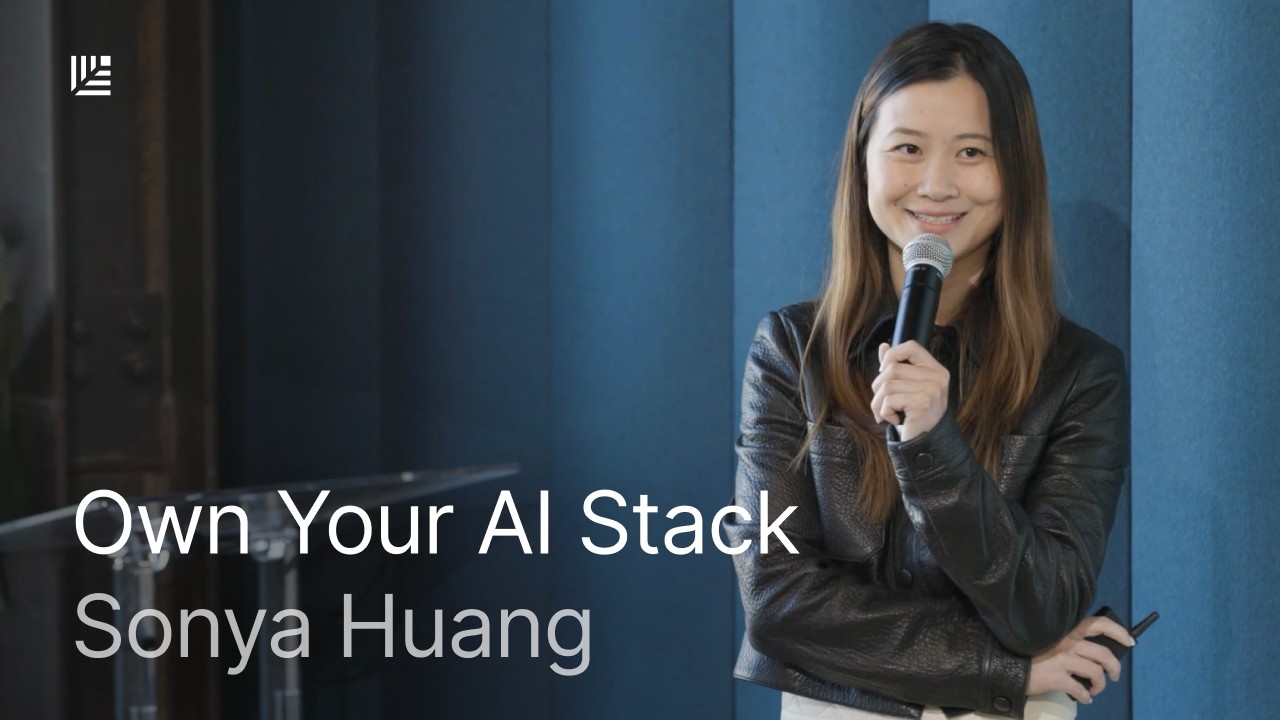
How Companies Are Building Their Own Intelligence | Sonya Huang, Sequoia Capital

How Companies Are Building Their Own Intelligence | Sonya Huang, Sequoia Capital

Sonya Huang of Sequoia Capital discusses the strategic imperative for companies to embrace "sovereign AI" by owning their AI models and weights. She identifies cost, speed, performance, and controlling destiny as the four driving forces behind this shift. Huang argues that the competitive landscape is moving towards owning the intelligence layer, positioning application companies as the new innovation labs. She provides a practical, opinionated framework covering strategy (what to own vs. rent), team building, ensuring external legibility of research, and a technical roadmap for implementation, emphasizing how open-weight models now enable frontier-level performance through ownership and customization.

Why a Nation Can't Outsource Its Frontier AI - Alistair Pullen (Cosine AI)

Why a Nation Can't Outsource Its Frontier AI - Alistair Pullen (Cosine AI)

Alistair Pullen, CEO of Cosine, discusses the UK's sovereign AI initiative, born from US export controls. He outlines Cosine's unique economic model, competing with "millions" against "billions" by licensing models instead of hosting inference. Pullen delves into why open models lag frontier systems, emphasizing active parameters and post-training data. He explains Cosine's innovative approach to "slop" through process-based RL and credit attribution, advocating for runtime proof in code review. The conversation covers their hierarchical "Swarm" sub-agent system, the challenges of memory, and advanced synthetic data generation, concluding on the geopolitical impact of export controls as an unexpected catalyst for UK AI.

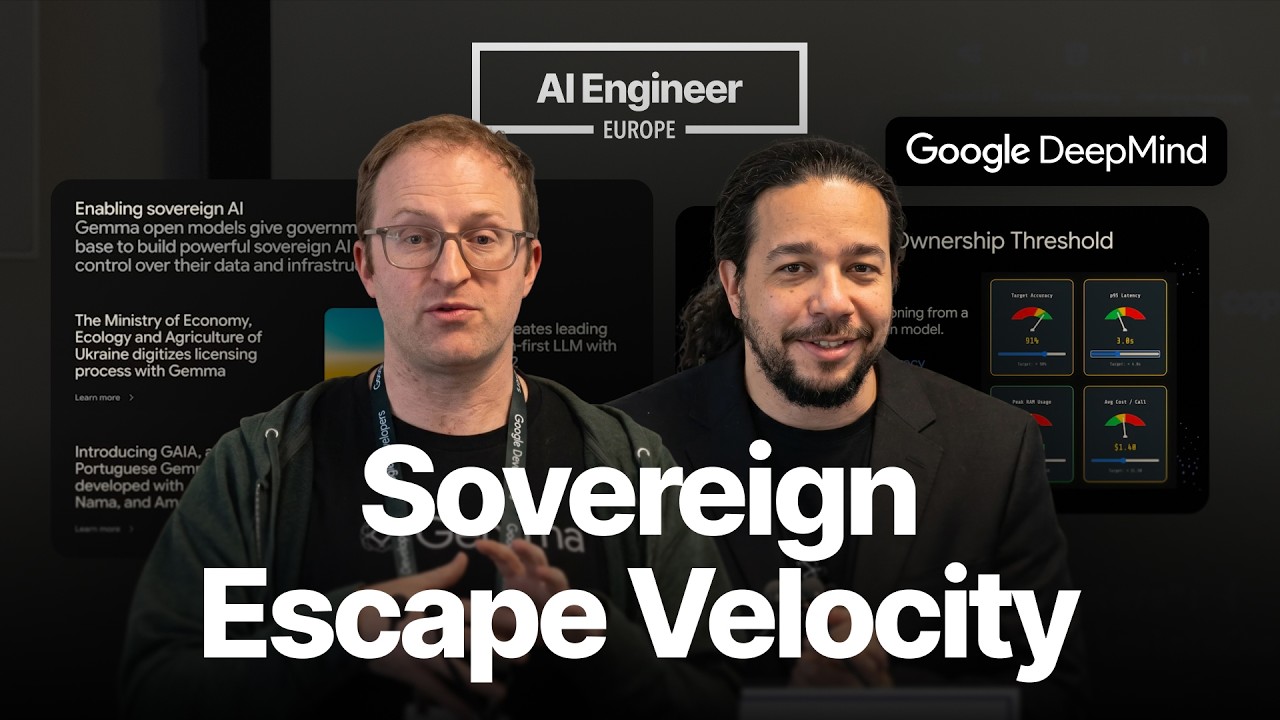
Sovereign Escape Velocity: Ownership w Open Models — Gus Martins, & Ian Ballantyne, Google DeepMind

Sovereign Escape Velocity: Ownership w Open Models — Gus Martins, & Ian Ballantyne, Google DeepMind

Google DeepMind's Ian Ballantyne and Gus Martins introduce Gemma 4, a family of open models delivering state-of-the-art performance with remarkable size efficiency. They discuss how models like the 31B variant outperform competitors 2-20x its size while running on a single GPU, the shift to an Apache 2.0 license to foster sovereignty and adoption, and the new economics of running powerful agentic workloads on hardware ranging from a Pixel phone to a single enterprise GPU.

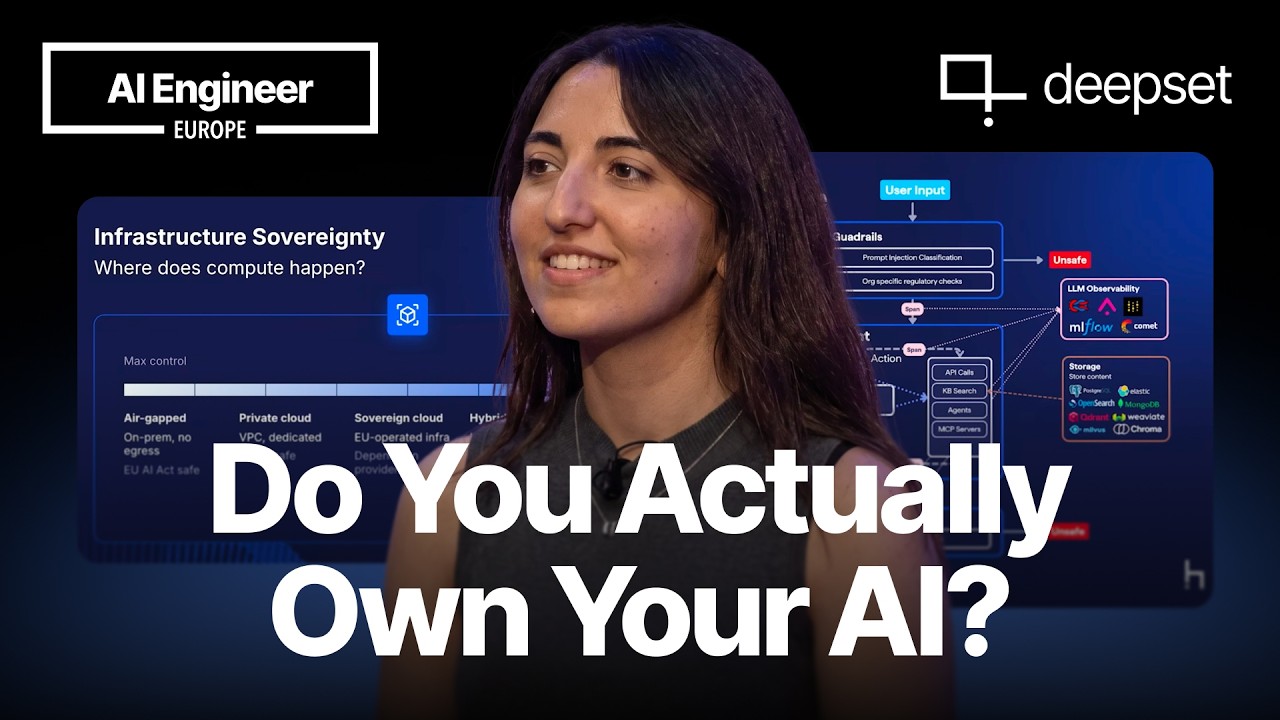
What Breaks When You Build AI Under Sovereignty Constraints - Bilge Yücel, deepset GmbH

What Breaks When You Build AI Under Sovereignty Constraints - Bilge Yücel, deepset GmbH

Bilge Yücel explains that true AI sovereignty is a technical challenge, not just a policy issue, built on four pillars: data, model, infrastructure, and operations. This talk explores the common pitfalls of retrofitting sovereignty—from performance regressions after swapping models to discovering deep vendor lock-in when moving on-prem—and presents a checklist for building genuinely sovereign systems.

Gemma, DeepMind's Family of Open Models — Omar Sanseviero, Google DeepMind

Gemma, DeepMind's Family of Open Models — Omar Sanseviero, Google DeepMind

A deep dive into Google DeepMind's Gemma 4, the latest family of open models. This summary covers the new model architectures like per-layer embeddings, on-device agentic capabilities, multimodal features, and the growing ecosystem of fine-tuned applications from medicine to sovereign AI.

AI Models as a Service: Powering Agentic AI, Privacy, & RAG

AI Models as a Service: Powering Agentic AI, Privacy, & RAG

Cedric Clyburn explains the Models-as-a-Service (MaaS) pattern, detailing how organizations can build their own private AI infrastructure to deploy models like LLMs securely and at scale. He covers the benefits over public APIs, including cost control, data sovereignty, and lifecycle management, and outlines a technical architecture using Kubernetes, API gateways, and observability tools.