Vibe Coding with Confidence — Itamar Friedman, Qodo
Itamar Friedman of Qodo argues that the future of AI in software development lies in moving beyond simple code generation to 'vibe coding with confidence.' This is achieved through multi-agent workflows, grounded in team standards and orchestrated via the Command Line Interface (CLI), enabling a holistic AI-driven approach across the entire SDLC.
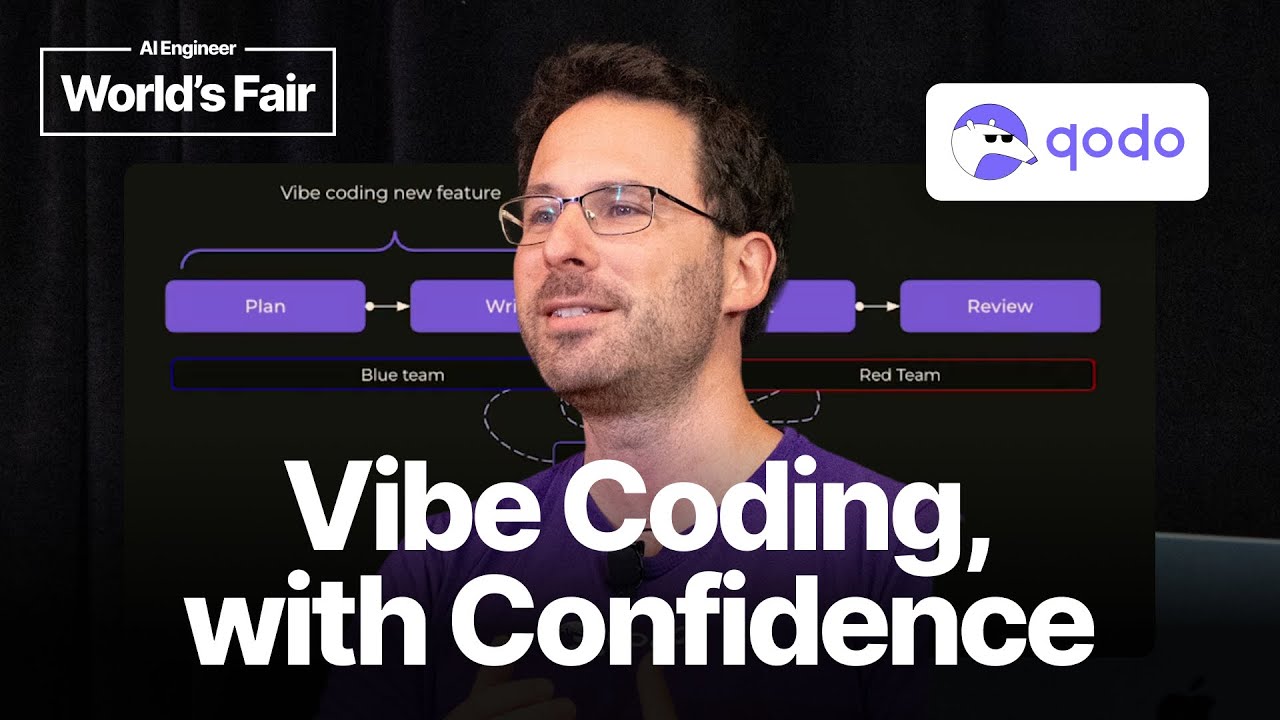
The evolution of AI tools for developers is moving from simple assistance to a complete paradigm shift. This journey can be understood in three stages:
- Gen 1.0: Autocomplete. Tools like the initial version of GitHub Copilot provided line-by-line code suggestions. These were helpful productivity boosts for existing developers but not game-changers.
- Gen 2.0: Chat-driven Generation. With the advent of chat interfaces, junior developers could generate large blocks of code. However, for senior developers and enterprises, this often led to a new problem: reviewing vast amounts of code that might not meet quality or maintainability standards.
- Gen 3.0: Multi-Agent Workflows. The true game-changer will be the ability to command agents through interfaces like the Command Line Interface (CLI). These agents will act like specialized team members, executing end-to-end workflows across the entire Software Development Life Cycle (SDLC).
From “Vibe Coding” to “Vibe Coding with Confidence”
The initial hype around “vibe coding”—quickly generating code based on a prompt—is facing a necessary correction. Andrej Karpathy, who popularized the term, later clarified the distinction between “vibe code” and code he would “professionally care about.” To build professional, high-quality software, two elements are critical:
- Context: The AI must be grounded in the existing codebase, team standards, and company best practices.
- Workflows: Development is more than just writing code. It involves a series of tasks, including planning, implementation, testing, and reviewing.
Confidence in AI-driven development comes from integrating these elements. It’s not enough to just generate code; we need AI systems that can rigorously test, review, and refactor that code according to established standards.
AI Across the Entire SDLC
For AI to be truly transformative in an enterprise setting, it must extend beyond the IDE. The focus must shift from isolated “blue team” tasks (writing code) to encompass “red team” tasks (testing and reviewing). This requires a holistic platform approach, similar to how the cloud security industry evolved from point solutions to comprehensive platforms.
The traditional “V-shape” of software development—planning, then coding, then testing, then reviewing—is inefficient. The goal is to “squeeze the V” by having multiple agents or workflows that run concurrently, providing instant feedback. For example, as code is written, agents for testing and review should work in parallel, ensuring the output is high-quality and compliant from the start.
The CLI: The New Frontier for Developer AI
While IDEs have been the primary interface for AI tools, the Command Line Interface (CLI) is poised to become the leader for the next generation of agentic workflows. The CLI is powerful because it allows developers to:
- Orchestrate Complex Workflows: Chain commands and agents together to perform multi-step tasks.
- Run Background Processes: Execute long-running tasks like comprehensive code analysis or test generation without blocking the developer.
- Pipe Agents Together: Create powerful, customized pipelines. For instance, a developer could pipe a code generation agent’s output to a test coverage agent, and then to a review agent.
- Enable Agent-to-Agent (A2A) Communication: The CLI provides a natural environment for multiple agents to run in parallel and communicate, coordinating on complex tasks.
Qodo’s new CLI tool demonstrates this by allowing users to not only chat with their code but also invoke and even create new, specialized agents on the fly, such as a dedicated review-agent.
The Future: A Swarm of Specialized Agents
The future of software development, arriving as soon as 2025-2026, will involve a “swarm of agents.” Each agent will be a specialist with its own credentials and deep knowledge of specific domains, best practices, or parts of the codebase. These agents will collaborate to provide a holistic, intelligent, and reliable development process, finally allowing developers to “vibe code with confidence.”