Tokenless

Interactive discovery

Explore the topic map

Follow the connections between themes, people, and ideas across the Tokenless archive in an interactive topic modeling map.

Machine Learning

View All
Uncertainty-Guided Data Augmentation for Engineers | Deep Dive - Yongmin Kwon

Uncertainty-Guided Data Augmentation for Engineers | Deep Dive - Yongmin Kwon

This session details a data-efficient method for training engineering surrogate models by using uncertainty quantification (UQ) to guide geometric data augmentation. Instead of random deformations, the approach lets the deep ensemble model identify its own knowledge gaps (epistemic uncertainty), then uses Free-Form Deformation (FFD) to generate new shapes specifically in those uncertain regions. This ensures every expensive simulation run yields maximally informative data, significantly improving model accuracy for a fixed computational budget across domains like structural mechanics and aerodynamics.

Q-learning with Flow-Matching Policies

Q-learning with Flow-Matching Policies

This talk explores methods for optimizing expressive, multi-modal policies, such as those based on flow-matching, with off-policy reinforcement learning. The speaker presents two novel algorithms, FQ-RL and CAM, designed to overcome the instability of backpropagation through multi-step generative models, enabling effective online self-improvement and adaptation for robotic manipulation tasks.

Graph Neural Networks Explained: A Clear Guide to GNN Basics & Models

Graph Neural Networks Explained: A Clear Guide to GNN Basics & Models

An introduction to Graph Neural Networks (GNNs), covering fundamental concepts like nodes, edges, and embeddings. This post delves into the core message-passing mechanism and provides a detailed overview of key architectures including GCN, GraphSAGE, GAT, GIN, and Graph Transformers, explaining their unique approaches and mathematical formulations.

Artificial Intelligence

View All
Builders Unscripted: Ep. 4 - Pietro Schirano

Builders Unscripted: Ep. 4 - Pietro Schirano

Pietro Schirano, Founder & CEO of MagicPath, discusses his pioneering work with GPT-5.5 and Codex, transforming creative ideas into software and hardware solutions. He details using advanced AI for image-to-sound conversion, multi-agent workflows, resurrecting obsolete tech with new functionalities, and building his company, MagicPath, on the principle of humans directing AI agents. This interview provides deep insights into the creative potential and practical applications of cutting-edge AI for developers and entrepreneurs.

Welcome Session - Microsoft Research India Academic Summit 2026

Welcome Session - Microsoft Research India Academic Summit 2026

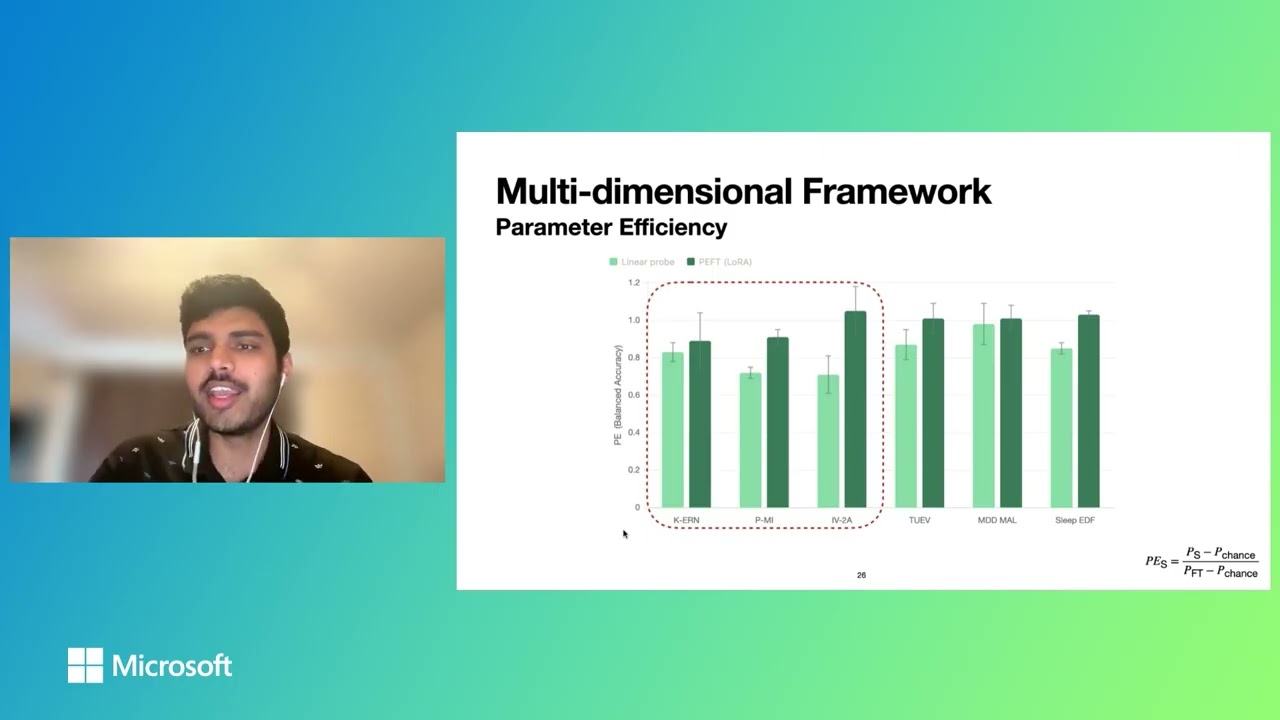
The Microsoft Research India Academic Summit 2026 opens with MSR India Lab Director Venkat Padmanabhan outlining the lab's collaborative research philosophy and Microsoft's evolution into an AI infrastructure powerhouse. He details MSR India's four core research pillars: fundamental AI advancements, specialized domain solutions, efficiency across the AI stack (including small language models), and the crucial diffusion of AI technologies for societal impact in India and the Global South, exemplified by diverse projects and collaborations.

Plenary Talk 3: Challenges and Research Opportunities for Global Hyperscale Services

Plenary Talk 3: Challenges and Research Opportunities for Global Hyperscale Services

This talk provides a comprehensive overview of cellular aging, brain function, and the mechanisms of cognitive decline, particularly focusing on Alzheimer's disease. It delves into the role of various cell types, neural communication, and methods for assessing cognition. The speaker highlights research challenges, the limitations of current pharmacological interventions, and the critical importance of non-pharmacological lifestyle interventions. A significant portion of the discussion is dedicated to the Centre for Brain Research's (CBR) multi-disciplinary efforts in India, including large-scale cohort studies, multimodal data collection, and the development of AI-driven tools and a localized foundation model for the Indian brain to address neurodegeneration.

Technology

View All
Full Stack Greenfield Projects : Are they still relevant?

Full Stack Greenfield Projects : Are they still relevant?

Bharat Goenka, co-founder of Tally, discusses the company's unconventional approach to software development through "Full Stack Greenfield" projects. He explains why building every component from scratch, despite being a high-risk strategy, has been crucial for Tally's success in serving the SMB market, fostering extreme customer loyalty, and aspiring to connect 200 million businesses. The talk delves into the historical context, the philosophy of questioning and choosing constraints, and the distinction between product and custom engineering.

3‑2‑1 Backup Rule Explained: Protect Your Data from Disaster

3‑2‑1 Backup Rule Explained: Protect Your Data from Disaster

Jeff Crume outlines essential data resiliency strategies, starting with the 3-2-1 backup rule—three copies, two media types, one offsite—and expanding to include immutable or air-gapped backups, rigorous testing, and encryption. He emphasizes these principles for robust disaster recovery, ransomware protection, and minimizing costly downtime, highlighting the trade-offs in achieving high availability.

The Media Game Has Changed

The Media Game Has Changed

The conversation explores the shift from legacy media to creator-led platforms, why authenticity has become a competitive advantage, and how founders can build audiences by communicating directly with customers, employees, and the public. They discuss podcasts, social media, storytelling, corporate communications, and the changing relationship between companies, journalists, and audiences. Along the way, they examine how founders can develop a public voice, why some leaders become influential communicators, and what it means to build a brand in a world where distribution is increasingly decentralized.


Recent Post

Training an LLM from Scratch, Locally — Angelos Perivolaropoulos, ElevenLabs

Training an LLM from Scratch, Locally — Angelos Perivolaropoulos, ElevenLabs

A practical guide to the engineering principles and trade-offs involved in training a small language model from scratch on a local machine, based on a workshop by Angelos Perivolaropoulos from ElevenLabs.

Anthropic's Boris Cherny: Why Coding Is Solved, and What Comes Next

Anthropic's Boris Cherny: Why Coding Is Solved, and What Comes Next

Boris Cherny, creator of Claude Code, discusses the future of software development at AI Ascent 2026. He argues that coding is effectively a solved problem, detailing his personal workflow of shipping dozens of PRs daily from his phone. Cherny explores the shift from typeahead to autonomous agents, the rise of cross-disciplinary generalist teams, and uses the printing press as an analogy for the coming democratization of software creation for all.

Skill Issue: How We Used AI to Make Agents Actually Good at Supabase — Pedro Rodrigues, Supabase

Skill Issue: How We Used AI to Make Agents Actually Good at Supabase — Pedro Rodrigues, Supabase

A deep dive into building, testing, and iterating on Agent Skills to improve AI agent performance. This workshop covers the core concepts of progressive disclosure, eval-driven development, and practical application using a real-world Supabase and PostgreSQL security scenario.

Digital Freedom, AI Regulation, and the Fight for the Western Internet | The a16z Show

Digital Freedom, AI Regulation, and the Fight for the Western Internet | The a16z Show

Under Secretary for Public Diplomacy Sarah Rogers discusses the critical intersection of AI, free speech, and national security. She outlines the shift from promoting internet freedom to combating censorship, the threat of foreign regulations to American tech, and the strategic importance of developing "AI with a Western soul" grounded in democratic values and the rule of law.

CLI vs MCP: How AI Agents Choose the Right Tool for the Job

CLI vs MCP: How AI Agents Choose the Right Tool for the Job

AI agents can interact with the world through either the Command Line Interface (CLI) or the Model Context Protocol (MCP). This summary explores the trade-offs between the two, highlighting CLI's efficiency for tasks the model is trained on, versus MCP's power of abstraction and governance for more complex, high-level operations.

TLMs: Tiny LLMs and Agents on Edge Devices with LiteRT-LM — Cormac Brick, Google

TLMs: Tiny LLMs and Agents on Edge Devices with LiteRT-LM — Cormac Brick, Google

Cormac Brick from Google's AI Edge team details the dual trends of on-device AI: large, system-level models like Gemma 4 enabling complex agent skills, and fine-tuned tiny LLMs for high-performance, in-app tasks. The summary covers the architecture of on-device function calling, the engineering trade-offs for edge deployment, and the practical workflow for fine-tuning and deploying models under 1B parameters on platforms like Android and iOS.

Stay In The Loop! Subscribe to Our Newsletter.

Get updates straight to your inbox. No spam, just useful content.