Tokenless

Interactive discovery

Explore the topic map

Follow the connections between themes, people, and ideas across the Tokenless archive in an interactive topic modeling map.

Machine Learning

View All
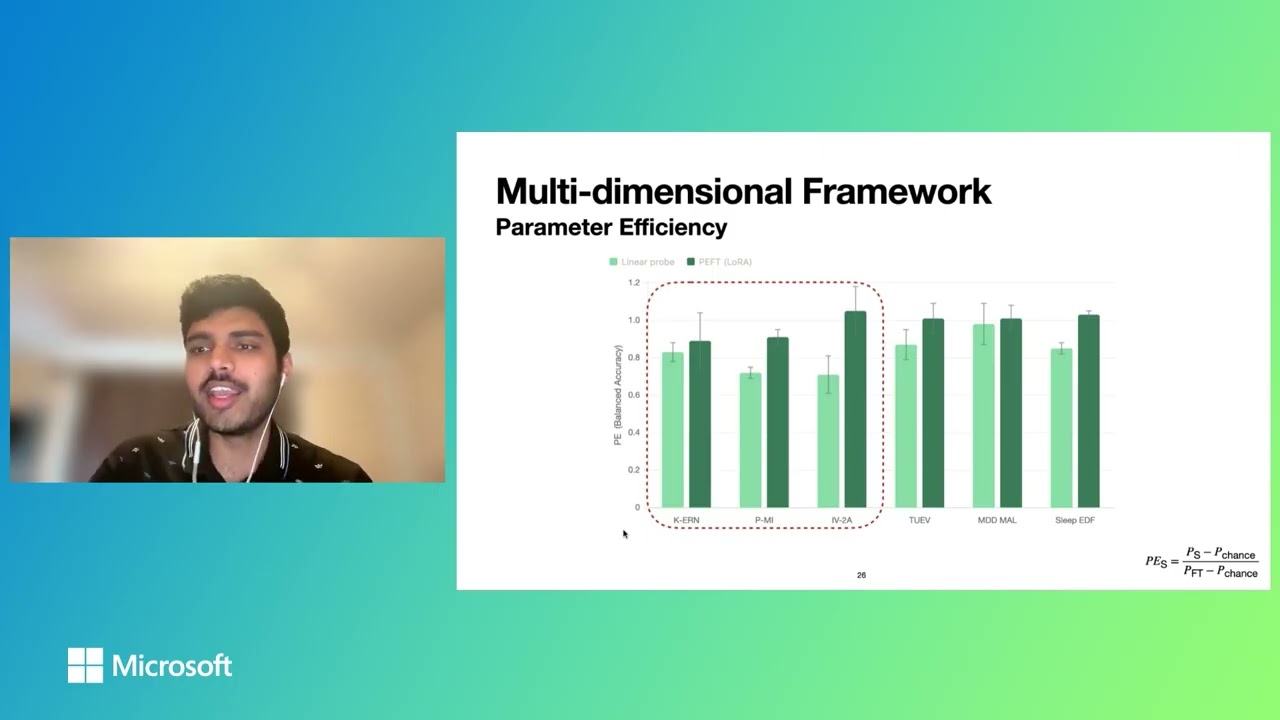
SWE-Marathon: Evaluating Coding Agents at Billion-Token Scale - Rishi Desai, Abundant AI

SWE-Marathon: Evaluating Coding Agents at Billion-Token Scale - Rishi Desai, Abundant AI

SWE-Marathon introduces a benchmark for long-horizon autonomous software engineering, pushing coding agents from bug fixes to full project ownership. It highlights the critical need for robust, multi-layered verification and anti-cheat mechanisms to prevent reward hacking in tasks spanning hundreds of millions of tokens, revealing that current agents achieve only a 26% success rate.

Frontier results, on device - RL Nabors, Arize

Frontier results, on device - RL Nabors, Arize

RL Nabors discusses the significant costs associated with using frontier AI models, covering security, latency, and financial implications. She introduces a framework for right-sizing AI solutions by leveraging smaller, task-specific models and Small Language Models (SLMs). The framework details how to prove task feasibility, establish success criteria with golden datasets, conduct capability evaluations (using tools like Phoenix), and select the most appropriate "Small And Good Enough" (SAGE) model. Nabors further demonstrates how prompt engineering, particularly few-shot prompting, and post-processing can close performance gaps with larger models, while advocating for continuous regression evaluations to maintain performance integrity. The overarching message is to "prototype big, deploy small" to optimize AI deployments.

Research to Reality: Bringing Frontier ML Research to Production - Vaidas Razgaitis, Higharc

Research to Reality: Bringing Frontier ML Research to Production - Vaidas Razgaitis, Higharc

Vaidas Razgaitis, Senior Research Engineer at Higharc, shares three tactical tips to accelerate the transition of novel AI/ML research into production-ready features. He emphasizes addressing the critical handoff challenge between ML researchers and software engineers through structured documentation (Research Prototype Taxonomy Document), a well-organized monorepo utilizing decoupled microservices, and a systematic approach to code decomposition and PR review. These strategies aim to improve legibility, maintainability, and delivery speed for ML-driven products.

Artificial Intelligence

View All
The 100,000 Sandbox Problem — Akshat Bubna, Modal CTO

The 100,000 Sandbox Problem — Akshat Bubna, Modal CTO

Modal CTO Akshat Bubna discusses the company's shift from developer to agent experience, highlighting why traditional cloud infrastructure fails for bursty AI workloads. He details Modal's primitives like elastic inference with GPU snapshotting and speculative decoding, agent sandboxes for RL rollouts, multi-node training with RDMA, and a "supercloud" strategy across 17 providers. The conversation also covers the importance of observability, hard guardrails for production agents, and AI's role in making infrastructure exciting again.

The next generation of ChatGPT Voice

The next generation of ChatGPT Voice

An in-depth look into GPT Live, the next generation of full-duplex voice models in ChatGPT, designed for natural, continuous interaction. It highlights breakthroughs in concurrent processing, intelligent delegation to advanced models like GPT 5.5, real-time semantic translation, and proactive language coaching, aiming to transform AI interactions into fluid, intelligent conversations akin to human dialogue.

What do we build now? — Theo Browne, @t3dotgg

What do we build now? — Theo Browne, @t3dotgg

Theo Browne's keynote from AIEWF2026 urges software engineers to fundamentally change product development in response to rapidly evolving AI models (Sonnet 3.5 to Mythos). He advocates for rejecting legacy mental models and tools (skeuomorphism), embracing a new "Markdown tier" for projects, and thinking "wider" instead of just "deeper" by building extensible platforms that can challenge industry giants. The core message is to be more ambitious, as AI has drastically lowered the barrier to entry for complex, broad-reaching solutions.

Technology

View All
Inside Zipline's Autonomous System: 140M Miles, Zero Incidents

Inside Zipline's Autonomous System: 140M Miles, Zero Incidents

Zipline co-founder Keller Rinaudo Cliffton and Eric Watson discuss how their autonomous logistics system evolved from addressing critical needs in Rwanda to becoming the largest commercial autonomous system globally. They highlight that the drone is only 15% of the solution, emphasizing the deep integration of software, vertical hardware design, advanced safety protocols like compute failover, and extensive testing required. The discussion also covers the immense market potential for autonomous delivery, the impending cost-effectiveness over traditional methods, and the necessary transformation of air traffic control to support a future of pervasive aerial autonomy.

Are Your Tests Slowing You Down? • Trisha Gee • GOTO 2025

Are Your Tests Slowing You Down? • Trisha Gee • GOTO 2025

Trisha Gee delivers a compelling talk on Developer Productivity Engineering (DPE) for testing, dissecting common pain points in writing, troubleshooting, and running tests. She advocates for strategic use of IDEs, advanced tooling like build caches and predictive test selection (leveraging ML), and a disciplined approach to test design to overcome these challenges, emphasizing that good tests serve as crucial living documentation.

The new post-quantum cryptography executive order. Plus: What is Q-Day, really?

The new post-quantum cryptography executive order. Plus: What is Q-Day, really?

This episode delves into Q-Day, the anticipated future when quantum computers can break public key cryptography, and the U.S. Executive Order accelerating the transition to post-quantum cryptography. Experts discuss why Q-Day is a gradual process rather than a sudden event, the critical importance of "crypto-agility" as a long-term strategy, and the necessity for organizations to begin immediate discovery and planning to secure data against "collect now, decrypt later" threats. The discussion also touches upon the broader, transformative benefits of quantum computing beyond just security.


Recent Post

Introducing GPT-5

Introducing GPT-5

OpenAI introduces GPT-5, a significant upgrade focused on expert-level reasoning, agentic capabilities, and real-world utility, particularly for developers and enterprises. The model introduces a new reasoning paradigm, "software on demand" capabilities, and state-of-the-art performance on coding, reasoning, and long-context benchmarks. The launch also includes major updates to the ChatGPT application and a powerful new API for developers.

Reimagining healthcare delivery and public health with AI

Reimagining healthcare delivery and public health with AI

Dr. Umair Shah, former Washington State Secretary of Health, and Dr. Gianrico Farrugia, CEO of Mayo Clinic, discuss the practical applications and strategic imperatives of AI in public health and clinical care. They explore how AI can shift public health from a reactive to a proactive model, the necessity for a new data-centric architecture in healthcare systems, and the transformative potential of generative AI beyond mere optimization of current workflows.

Streamline evaluation, monitoring, optimization of AI data flywheel with NVIDIA and Weights & Biases

Streamline evaluation, monitoring, optimization of AI data flywheel with NVIDIA and Weights & Biases

A walkthrough of the NVIDIA Data Flywheel Blueprint, demonstrating how to use production data and Weights & Biases to systematically fine-tune AI agents. This process enhances model accuracy and efficiency by creating a continuous improvement cycle, moving beyond the limitations of prompt engineering.

Some Principles From Real World Internal Developer Platform Engineering • Russ Miles • GOTO 2024

Some Principles From Real World Internal Developer Platform Engineering • Russ Miles • GOTO 2024

Russ Miles shares his deeply personal and professional journey to define the principles of effective internal developer platform engineering. He argues for a shift from a technology-first approach to 'compassionate technical product stewardship,' using powerful metaphors like the 'ski resort' to illustrate how platforms should create safe, empowering habitats for developers to thrive.

The AI-Native Notebook That Thinks Like a Spreadsheet

The AI-Native Notebook That Thinks Like a Spreadsheet

Akshay Agrawal, CEO of Marimo, discusses how Marimo addresses the critical flaws of traditional notebooks like Jupyter. He explains its reactive architecture, the benefits of storing notebooks as pure Python files for version control and reusability, and its AI-native features that leverage runtime context for more intelligent LLM-assisted coding.

Gpt-oss, Genie 3, Personal Superintelligence and Claude pricing

Gpt-oss, Genie 3, Personal Superintelligence and Claude pricing

The panel discusses OpenAI's strategic release of open-weight models (`gpt-oss`), the implications of Google DeepMind's immersive 3D world generator (`Genie 3`), the economic realities behind Anthropic's `Claude Code` rate-limiting, and the competing visions of "Personal Superintelligence" from major players like Meta, OpenAI, and Anthropic.

Stay In The Loop! Subscribe to Our Newsletter.

Get updates straight to your inbox. No spam, just useful content.