Greetings, Earthlings: Philip Johnston of Starcloud on Data Centers in Space
Philip Johnston of Starcloud argues that space will become the primary location for AI compute within a decade. He explains how plummeting launch costs, superior solar energy economics in orbit, and the physics of heat dissipation will soon make space-based data centers cheaper and more scalable than their terrestrial counterparts, predicting a future where nearly a trillion dollars in annual CapEx shifts to space.
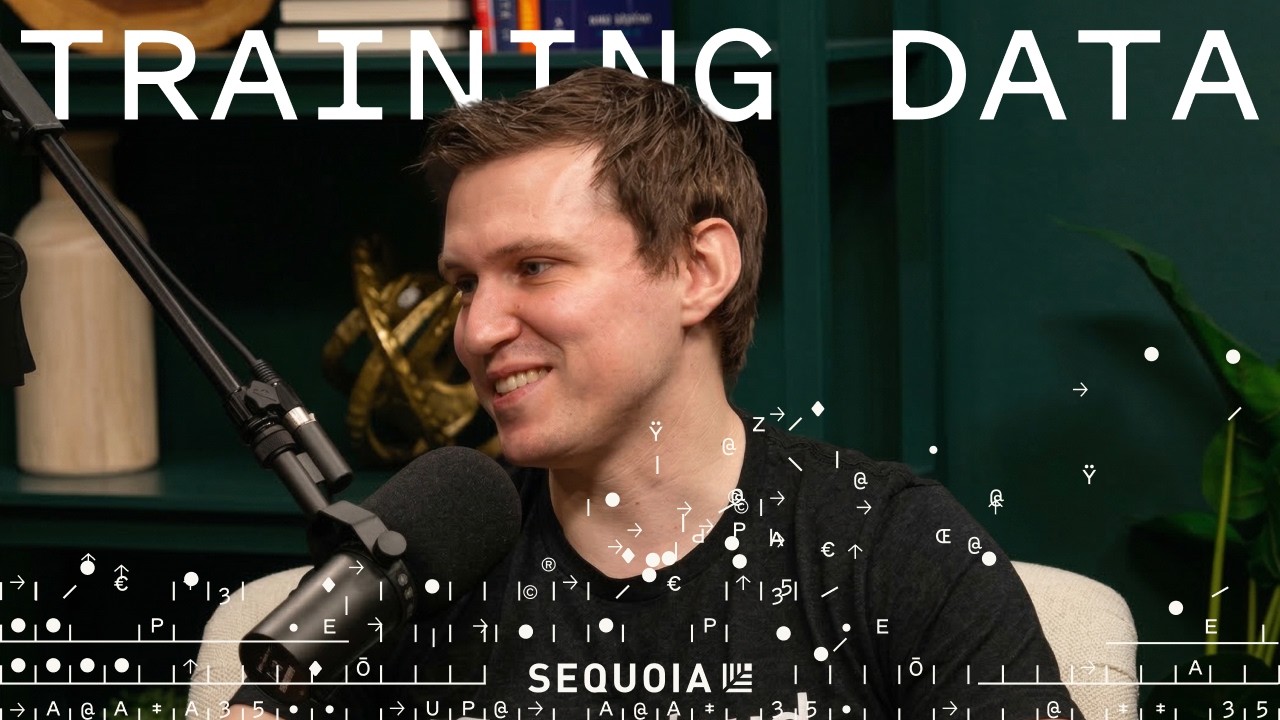
Philip Johnston, CEO of Starcloud, argues that a fundamental economic and physical shift will make space the primary location for new AI compute infrastructure within the next decade. This transition is driven by a crossover point where the decreasing marginal costs of space-based systems fall below the increasing marginal costs of terrestrial data centers.
The Terrestrial Bottleneck vs. The Space Advantage
Building AI infrastructure on Earth faces escalating challenges:
- Rising Marginal Costs: Every new terrestrial data center is more expensive than the last, as we have already utilized the most accessible locations for energy projects.
- Regulatory and Land Use Hurdles: New energy projects, such as large-scale solar farms, face 5-10 year permitting lead times and significant local opposition.
In contrast, space offers a compelling alternative with decreasing marginal costs:
- Energy Economics: Space-based solar is fundamentally more efficient. One square meter of solar panel in a sun-synchronous orbit produces eight times the energy of its terrestrial counterpart. This is due to 24/7 sun exposure, no atmospheric filtering, and no need for battery storage for nighttime power.
- Cost Crossover: The primary additional cost for space is launch. As launch costs plummet—driven by reusable rockets like SpaceX’s Starship—a breakeven point is reached. Johnston estimates this at around $500-$1000/kg, after which it becomes cheaper to build in space. Ultimately, he projects the all-in energy cost will be less than 0.5 cents per kilowatt-hour.
- Infrastructure Savings: Space data centers eliminate the need for costly terrestrial components like chillers, cooling towers, backup batteries, and AC/DC converters. This reduces the infrastructure cost from $15-20 million per megawatt on Earth to less than $5 million per megawatt in space.
Solving the Engineering Challenges of Space
Starcloud’s engineering efforts focus on two main problems:
- Heat Dissipation (70% of engineering time): Space is a vacuum and an excellent insulator. The only way to shed heat is through infrared radiation. The solution involves running liquid coolant past the GPUs to large, low-mass deployable radiators. The efficiency of this process scales with the fourth power of the radiator’s temperature, so the system is designed to run the radiators as hot as possible.
- Radiation & Reliability (30% of engineering time): Ensuring chips are not more prone to failure in space is critical. This involves extensive testing in particle accelerators to simulate years of radiation exposure, which informs shielding design and software-based mitigations for bit-flips. Johnston notes that GPU workloads for AI are inherently stochastic and resilient; a random bit-flip often does not degrade the quality of the output.
Starcloud’s Go-to-Market Strategy
Starcloud’s approach is sequenced to de-risk the business while aligning with the development of launch capabilities.
- Phase 1 (Pre-Starship): Serve as an edge compute provider for other spacecraft (e.g., military, earth observation). This addresses the significant data downlink bottleneck, where satellites collect far more data than they can send to Earth. By processing data in orbit, Starcloud can unlock value for these customers at a high price per GPU-hour.
- Phase 2 (With Starship): Once Starship is flying frequently, Starcloud will deploy its Starcloud 3 constellation, designed to be cost-competitive with terrestrial data centers. The architecture is designed for mass production, with each 200 kW unit fitting into Starship’s “Pez dispenser,” allowing for 10 megawatts of new capacity per launch.
Business Model: The “Equinix of Space”
Rather than competing with cloud providers like AWS, Starcloud aims to be the core infrastructure provider—the “Equinix of space.” They will offer a “box” with power, cooling, and connectivity, allowing hyperscalers and other customers to deploy their own preferred chip architectures. This model allows Starcloud to focus on its core competency—building heat-dissipating, radiation-hardened satellites—while customers finance the expensive silicon. Johnston believes that within 3-5 years, hyperscalers will realize they are strategically vulnerable without a space compute strategy, making Starcloud a critical partner.
Johnston projects this market will grow to nearly a trillion dollars per year in CapEx within a decade, representing one of the largest market opportunities in history.