Data centers

AI, Infrastructure, and the Next Investment Cycle

AI, Infrastructure, and the Next Investment Cycle

David George, Sarah Wang, Alex Immerman, and Santiago Rodriguez from a16z walk through 25 charts from their State of Markets presentation, covering why markets are rising on earnings rather than multiple expansion, the roughly $780B hyperscaler capex race, the new age of atoms in physical infrastructure, enterprise AI adoption gaps, agent economics and falling inference costs, consumer AI and marketplace disruption, the bifurcation of SaaS, the rise of mega private companies, and the sectors they are most excited about next.
The End of TCP for AI Clusters — John Ousterhout, Stanford

The End of TCP for AI Clusters — John Ousterhout, Stanford

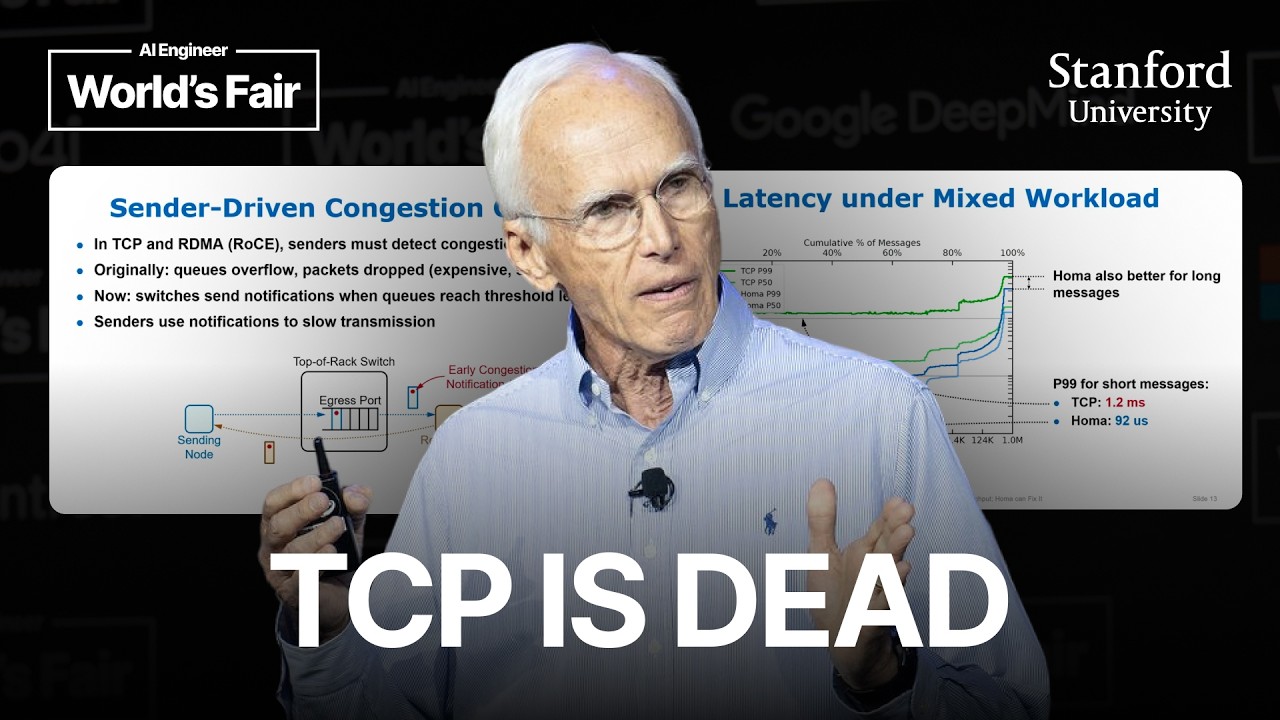
John Ousterhout argues that AI workloads are shifting from large data transfers to small, frequent coordination messages, making network latency (especially tail latency) a critical bottleneck. He explains why traditional protocols like TCP and RDMA are ill-suited due to sender-side congestion control and their byte-stream model. Ousterhout then introduces Homa, a new protocol designed from scratch with message-based communication, receiver-side congestion control, and switch priority queue utilization, demonstrating significant improvements in tail latency for AI applications.

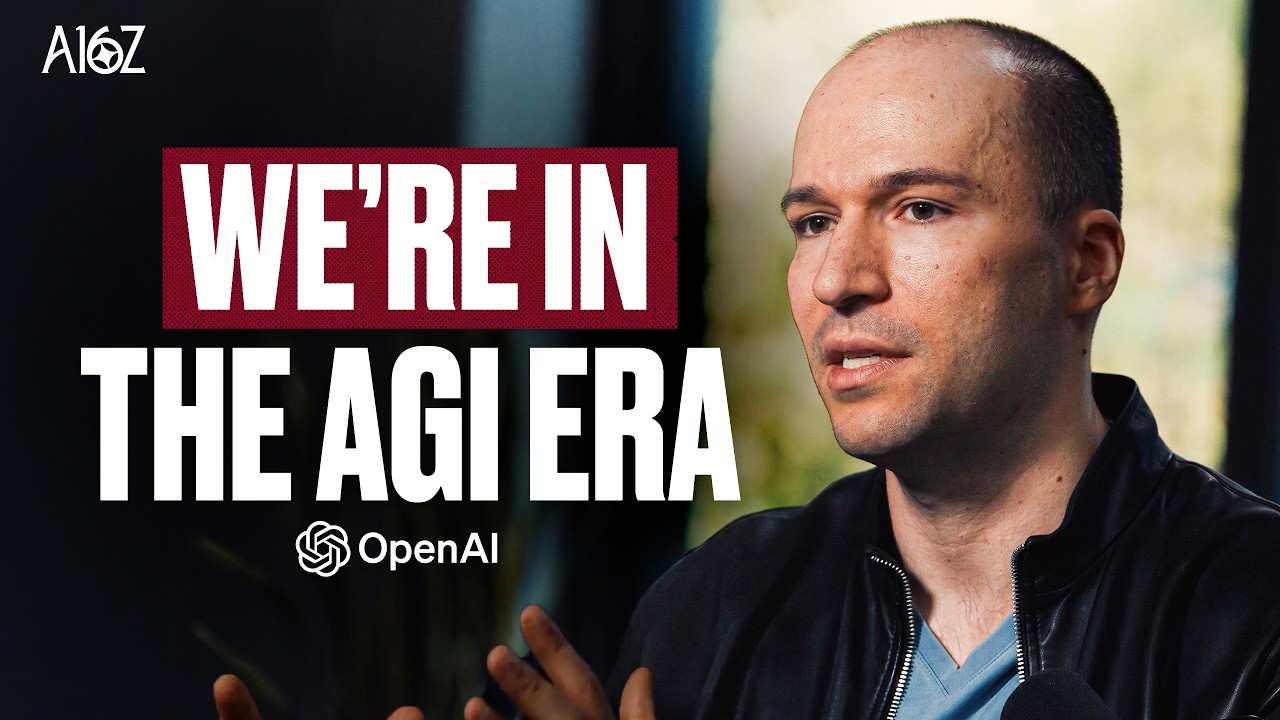
Greg Brockman Says AGI Has Arrived

Greg Brockman Says AGI Has Arrived

OpenAI President Greg Brockman discusses the advent of the "AGI era" with models like Astra, highlighting the transformative power of AI agents capable of computer use and autonomous task execution. He delves into critical safety and security challenges, emphasizing the "defender's window" for proactive cybersecurity, and explores AI's evolving impact on employment, global sentiment, and the future of proactive AI assistants.

How AI Is Rewriting the Power Law of Venture Capital

How AI Is Rewriting the Power Law of Venture Capital

This episode delves into how AI is fundamentally altering the power law of technology investing, making capital a compounding advantage for AI companies and expanding the total addressable market far beyond traditional software. The guests discuss rethinking portfolio construction, the challenges of evaluating true AI traction amidst hype, the struggles of legacy SaaS businesses, and future trillion-dollar opportunities in robotics, autonomy, healthcare, and physical infrastructure, emphasizing that the real bottleneck for AI's growth is often on the supply side, particularly compute and energy infrastructure.

Why AI Demand Is Outrunning Compute Supply

Why AI Demand Is Outrunning Compute Supply

A deep dive into the current AI boom, exploring why demand for intelligence is likely underestimated and the outcome won't necessarily be winner-take-all. The discussion covers the rapid economics of AI infrastructure, the risk of an AI shortage over a bubble, the potential for orbital compute and re-industrializing America, and NVIDIA's central role as the "central bank of AI" in a multi-model future.

Why Top Founders Are Racing Into AI Infrastructure

Why Top Founders Are Racing Into AI Infrastructure

a16z's new Machine Age Fund addresses the unprecedented demand for AI infrastructure, shifting the bottleneck from models to the foundational hardware. The discussion highlights surging Hyperscaler CapEx, component supply crunch extending to 2028, and the exponential compute needs driven by reasoning and agents. It explores how AI turns engineering problems into capital/compute challenges, identifying opportunities for new infrastructure companies in chips, power, and data center redesign, and the emergence of experienced "systems founders" to rebuild the computing stack for this new era.