Building AI for better healthcare — the OpenAI Podcast Ep. 14
OpenAI's Dr. Nate Gross and Karan Singhal detail their strategy for applying AI in healthcare, focusing on the rigorous, physician-led process for training models on sensitive health data. They discuss the challenges of deployment in siloed systems and how AI is evolving from a Q&A tool into an integrated assistant for patients and a critical safety net for clinicians.
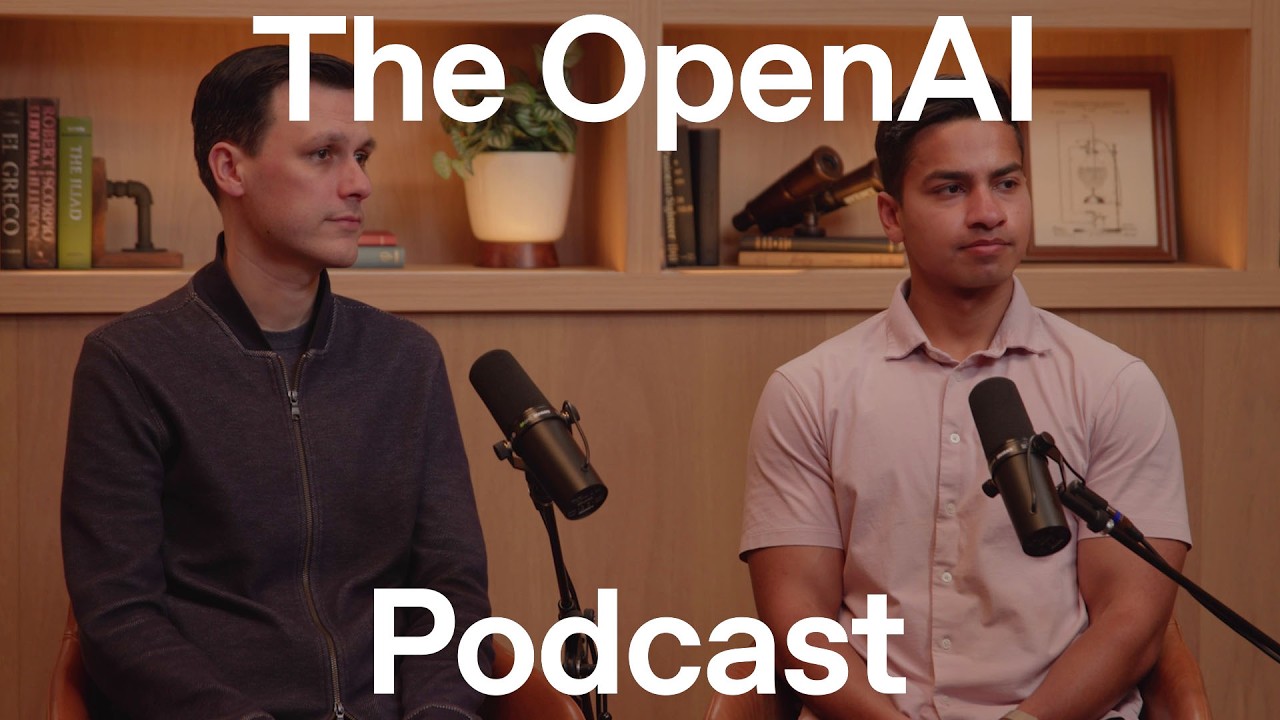
Dr. Nate Gross and Karan Singhal from OpenAI’s health team outline the vision and technical underpinnings of applying large language models to the complex healthcare landscape. The current healthcare system is often reactive and fragmented, leading to gaps in care. The core mission is to leverage AI to make healthcare more proactive and accessible, empowering patients, assisting clinicians, and enabling the entire healthcare ecosystem.
Strategy: From High Demand to Proactive Empowerment
The initiative is both a reaction to and a proactive strategy for the immense user demand for health information. With an estimated 40 million people using ChatGPT for health-related queries daily, there is a clear responsibility to provide a safe and effective environment.
The strategy is built on two pillars:
- Security: ChatGPT Health is designed with extra security layers and a “one-way valve” to ensure user healthcare data is never used for model training.
- Empowerment: Unlike traditional search engines which have “amnesia,” the goal is to create a persistent, context-aware assistant. By enabling users to securely connect their own health records and data, the AI can provide personalized, grounded information, moving beyond one-size-fits-all answers.
A Deep Dive into Model Training and Evaluation
Given the high-stakes nature of healthcare, safety and alignment are not afterthoughts but the foundational principles of the health initiative at OpenAI. Health considerations are integrated into every stage of the model lifecycle, from pre-training and mid-training to post-training and evaluation.
The evaluation process is particularly rigorous, moving beyond simplistic benchmarks like medical school exams, which fail to capture the nuance of real-world clinical practice.
- HealthBench: This is a comprehensive evaluation framework developed over a year in close collaboration with a cohort of 250 physicians. It analyzes multi-turn conversations and measures performance across approximately 49,000 different dimensions.
- Key Training Objectives: The training process focuses on crucial real-world capabilities:
- Adaptive Literacy: The model adjusts its language and technical depth depending on whether it’s interacting with an oncologist, a pharmacist in a low-resource setting, or a patient with a third-grade literacy level.
- Context Seeking: The model is trained to ask clarifying questions when faced with ambiguous queries (e.g., “it burns”) rather than jumping to conclusions. This is crucial for both safety and utility.
- Uncertainty Quantification: A primary focus is training the model to “know when it doesn’t know.” Instead of providing overconfident or hallucinatory responses, the model is encouraged to express uncertainty and suggest appropriate next steps, such as consulting a healthcare professional or running specific tests.
Key Challenges and Frontiers
Deploying AI in healthcare presents a unique set of challenges that the team is actively working to solve.
- Building Trust with Clinicians: To be useful, AI-generated answers must be grounded in the latest medical literature and clinical guidelines, not just the model’s training data. It also needs to account for regional and institutional variations in care.
- Overcoming System Silos: Healthcare is notoriously fragmented, with data locked in hundreds of different systems—some analog, some digital, many not on the cloud. A significant challenge is creating a unified AI layer that can connect these disparate sources to prevent patients and information from falling through the cracks.
- The “Waymo Moment” for Health AI: The goal is to reach an inflection point where AI serves as a trusted safety net. An example is the AI clinical co-pilot study with PandaHealth in Nairobi, where an AI assistant monitored clinicians’ notes in the EHR and provided real-time alerts. The study showed a statistically significant reduction in diagnostic and treatment errors, to the point where clinicians felt it was unsafe to work without the AI.
The Power of Ecosystem Collaboration
No single entity can solve healthcare’s challenges alone. The strategy relies heavily on collaboration across the entire ecosystem. This involves:
- Working with government bodies like the Centers for Medicare and Medicaid Services (CMS) to adopt national standards for Electronic Health Record (EHR) syncing.
- Integrating with popular consumer health products, biosensors, and wearables to allow patients to easily and consensually bring their personal health data into the conversation.
This connectivity enables powerful, practical applications, such as an agent referencing a user’s recent sleep and exercise data to help plan their day or suggest a meal. The AI can act as an attentive assistant—a “spouse with a clipboard”—to help patients manage complex care plans, reducing the friction that often leads to non-adherence. This work is framed by three goals: raise the floor (improve access for everyone), sweep the floor (reduce administrative burdens on clinicians), and raise the ceiling (enable new scientific discoveries, such as finding novel uses for existing medications).