Tokenless

Interactive discovery

Explore the topic map

Follow the connections between themes, people, and ideas across the Tokenless archive in an interactive topic modeling map.

Machine Learning

View All
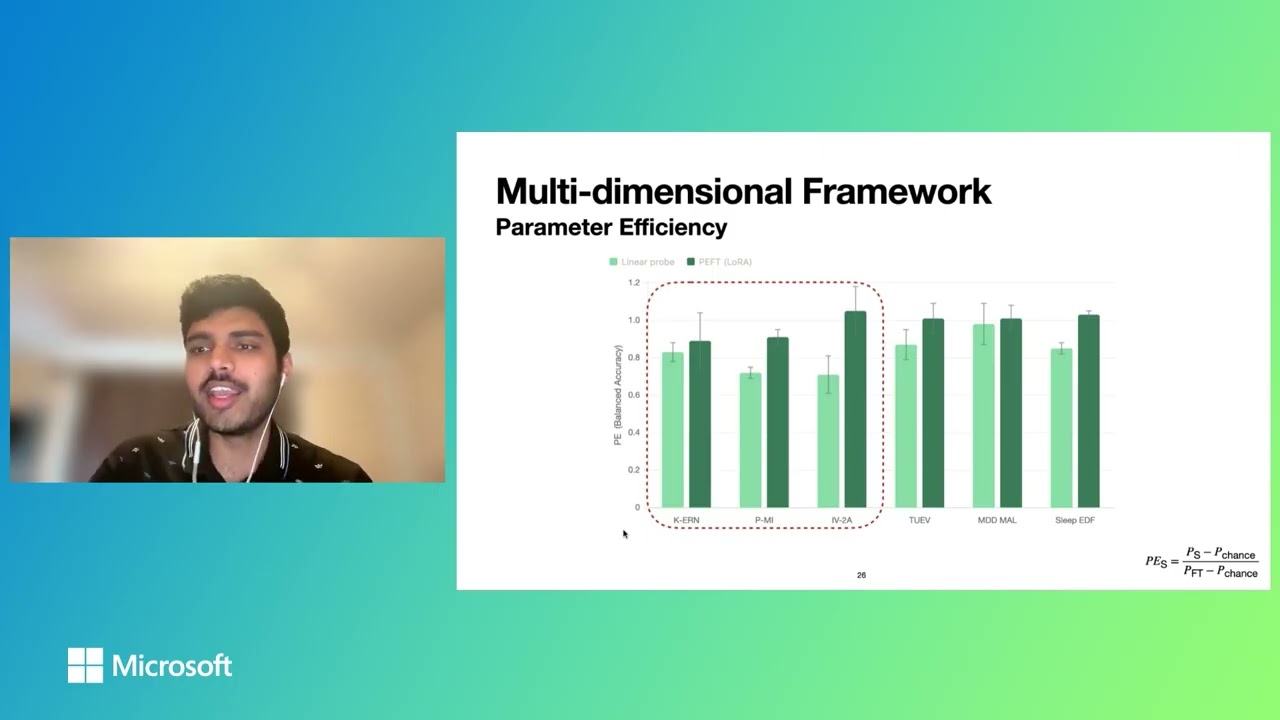
SWE-Marathon: Evaluating Coding Agents at Billion-Token Scale - Rishi Desai, Abundant AI

SWE-Marathon: Evaluating Coding Agents at Billion-Token Scale - Rishi Desai, Abundant AI

SWE-Marathon introduces a benchmark for long-horizon autonomous software engineering, pushing coding agents from bug fixes to full project ownership. It highlights the critical need for robust, multi-layered verification and anti-cheat mechanisms to prevent reward hacking in tasks spanning hundreds of millions of tokens, revealing that current agents achieve only a 26% success rate.

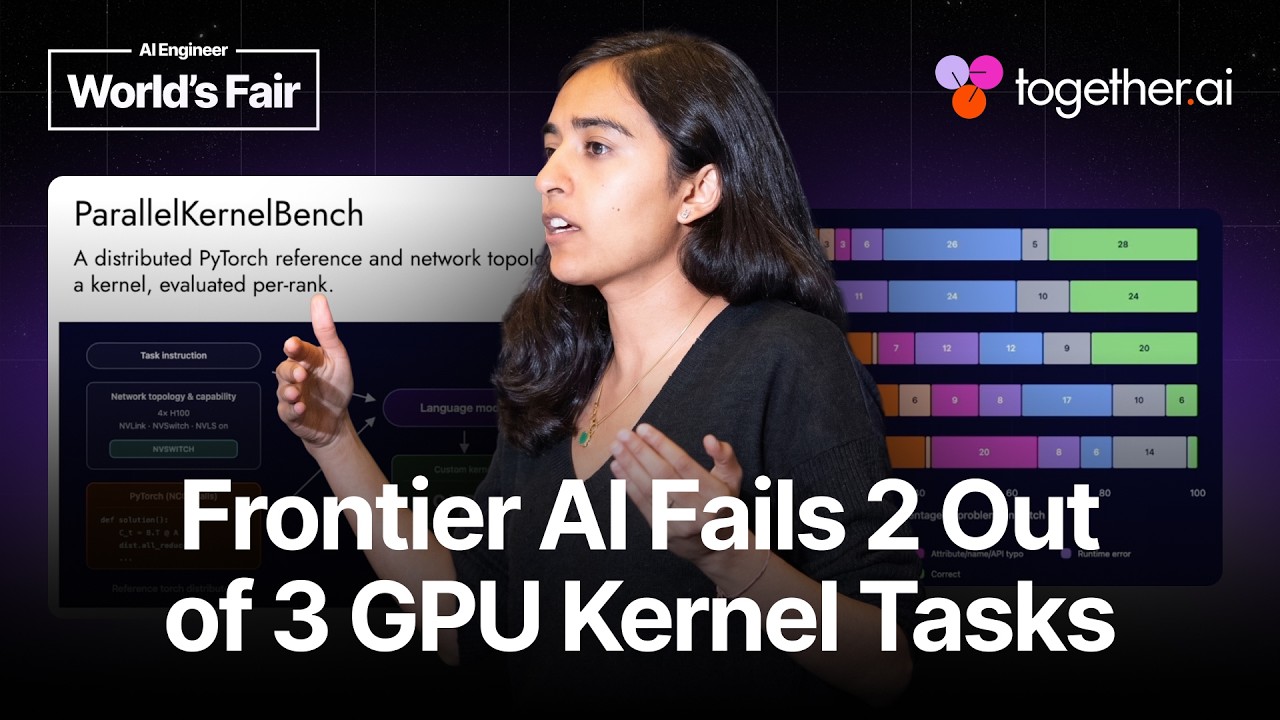
Frontier results, on device - RL Nabors, Arize

Frontier results, on device - RL Nabors, Arize

RL Nabors discusses the significant costs associated with using frontier AI models, covering security, latency, and financial implications. She introduces a framework for right-sizing AI solutions by leveraging smaller, task-specific models and Small Language Models (SLMs). The framework details how to prove task feasibility, establish success criteria with golden datasets, conduct capability evaluations (using tools like Phoenix), and select the most appropriate "Small And Good Enough" (SAGE) model. Nabors further demonstrates how prompt engineering, particularly few-shot prompting, and post-processing can close performance gaps with larger models, while advocating for continuous regression evaluations to maintain performance integrity. The overarching message is to "prototype big, deploy small" to optimize AI deployments.

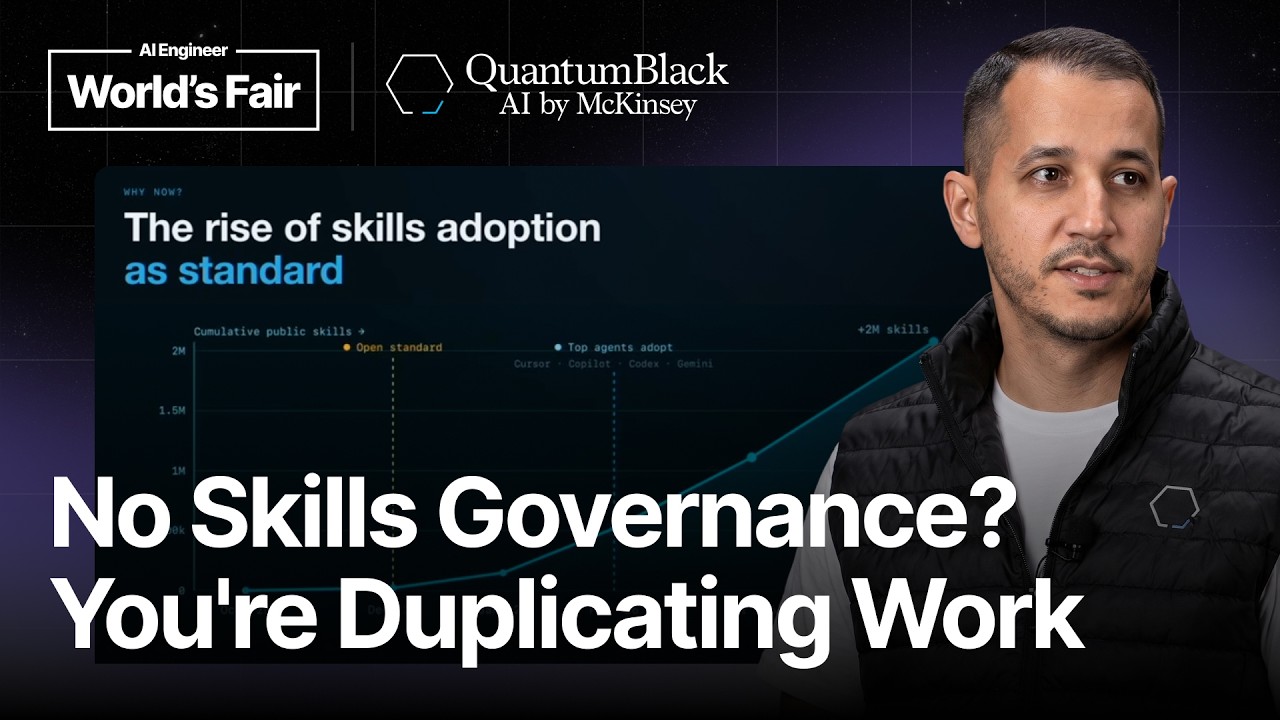
Research to Reality: Bringing Frontier ML Research to Production - Vaidas Razgaitis, Higharc

Research to Reality: Bringing Frontier ML Research to Production - Vaidas Razgaitis, Higharc

Vaidas Razgaitis, Senior Research Engineer at Higharc, shares three tactical tips to accelerate the transition of novel AI/ML research into production-ready features. He emphasizes addressing the critical handoff challenge between ML researchers and software engineers through structured documentation (Research Prototype Taxonomy Document), a well-organized monorepo utilizing decoupled microservices, and a systematic approach to code decomposition and PR review. These strategies aim to improve legibility, maintainability, and delivery speed for ML-driven products.

Artificial Intelligence

View All
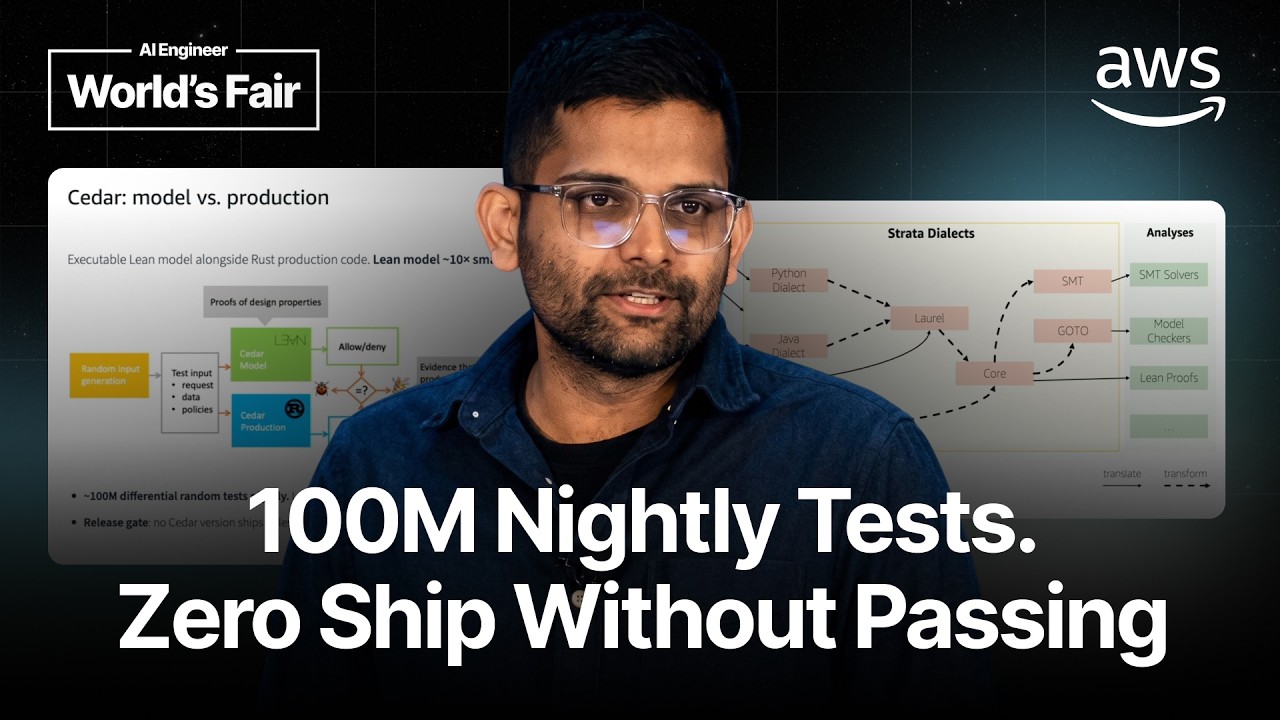
Building an ACP-Compatible Agent Live — Bennet Fenner, Zed

Building an ACP-Compatible Agent Live — Bennet Fenner, Zed

This session explores building an AI coding agent that integrates with the Agent Client Protocol (ACP), Zed's open-source JSON RPC-based standard for agent-client communication. It covers essential architectural elements, including protocol design, session lifecycle management, real-time streaming of model output via session updates, and sophisticated handling of tool calls, such as proxied file system operations and self-modifying code for new capabilities like a terminal tool.

Fable 5, GPT-5.6 and the high stakes of AI safeguards. Agentic ransomware, ClickFix reigns supreme

Fable 5, GPT-5.6 and the high stakes of AI safeguards. Agentic ransomware, ClickFix reigns supreme

This podcast explores the critical role of safeguards in frontier AI models like Anthropic's Fable 5 and OpenAI's GPT-5.6 Sol, analyzing the tension between powerful capabilities and misuse prevention. It also dissects the emergence and debate around agentic ransomware, specifically Jade Puffer, and covers the rise of ClickFix as a dominant social engineering attack targeting developers. Finally, it provides an in-depth analysis of UnregStealer, a credential-theft campaign impacting Latin American financial institutions, detailing its attack chain and mitigation strategies.

Shipping Production AI Inside Government — William Tarr, Ministry of Justice (DO NOT PUBLISH)

Shipping Production AI Inside Government — William Tarr, Ministry of Justice (DO NOT PUBLISH)

The UK Ministry of Justice Justice AI Unit operates as a startup within government, deploying engineers directly into prisons and probation offices. This 'forward deployed' model enables rapid, user-centric AI product development, overcoming bureaucratic hurdles by prioritizing real-world feedback and agile implementation to empower frontline staff and solve critical operational challenges.

Technology

View All
Inside Zipline's Autonomous System: 140M Miles, Zero Incidents

Inside Zipline's Autonomous System: 140M Miles, Zero Incidents

Zipline co-founder Keller Rinaudo Cliffton and Eric Watson discuss how their autonomous logistics system evolved from addressing critical needs in Rwanda to becoming the largest commercial autonomous system globally. They highlight that the drone is only 15% of the solution, emphasizing the deep integration of software, vertical hardware design, advanced safety protocols like compute failover, and extensive testing required. The discussion also covers the immense market potential for autonomous delivery, the impending cost-effectiveness over traditional methods, and the necessary transformation of air traffic control to support a future of pervasive aerial autonomy.

Are Your Tests Slowing You Down? • Trisha Gee • GOTO 2025

Are Your Tests Slowing You Down? • Trisha Gee • GOTO 2025

Trisha Gee delivers a compelling talk on Developer Productivity Engineering (DPE) for testing, dissecting common pain points in writing, troubleshooting, and running tests. She advocates for strategic use of IDEs, advanced tooling like build caches and predictive test selection (leveraging ML), and a disciplined approach to test design to overcome these challenges, emphasizing that good tests serve as crucial living documentation.

The new post-quantum cryptography executive order. Plus: What is Q-Day, really?

The new post-quantum cryptography executive order. Plus: What is Q-Day, really?

This episode delves into Q-Day, the anticipated future when quantum computers can break public key cryptography, and the U.S. Executive Order accelerating the transition to post-quantum cryptography. Experts discuss why Q-Day is a gradual process rather than a sudden event, the critical importance of "crypto-agility" as a long-term strategy, and the necessity for organizations to begin immediate discovery and planning to secure data against "collect now, decrypt later" threats. The discussion also touches upon the broader, transformative benefits of quantum computing beyond just security.


Recent Post

No Priors Ep. 128 | With DeepLearning.AI Founder Andrew Ng

No Priors Ep. 128 | With DeepLearning.AI Founder Andrew Ng

Andrew Ng discusses the rise of agentic AI, moving beyond scale as the sole driver of progress. He explores how AI-assisted coding is creating a new startup paradigm, shifting the bottleneck from engineering to product management and favoring technical founders. Ng argues for smaller, highly-skilled teams and predicts AI will profoundly empower individuals across all job functions.

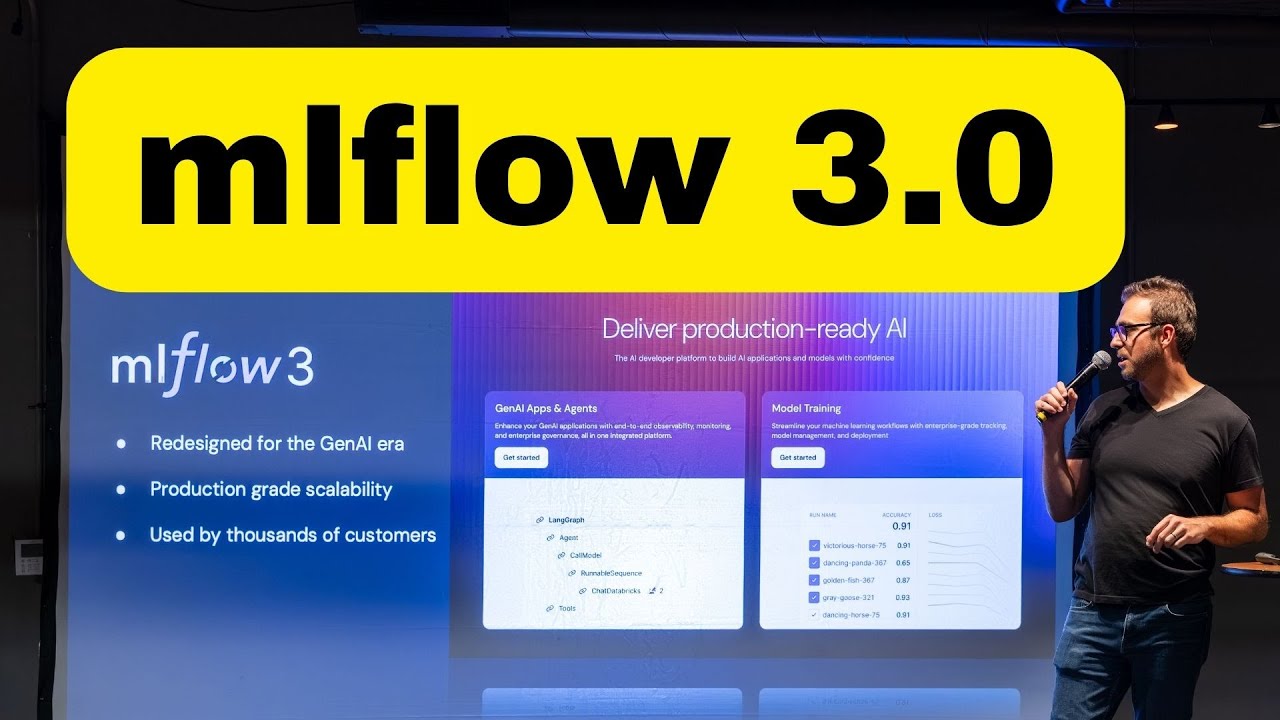
Evaluation-Driven Development with MLflow 3.0

Evaluation-Driven Development with MLflow 3.0

Yuki Watanabe from Databricks introduces Evaluation-Driven Development (EDD) as a critical methodology for building production-ready AI agents. This talk explores the five pillars of EDD and demonstrates how MLflow 3.0's new features—including one-line tracing, automated evaluation, human-in-the-loop feedback, and monitoring—provide a comprehensive toolkit to ensure agent quality and reliability.

Fraud Detection with AI: Ensemble of AI Models Improve Precision & Speed

Fraud Detection with AI: Ensemble of AI Models Improve Precision & Speed

A detailed look at a multi-model AI architecture for fraud detection that combines the speed of predictive machine learning for structured data with the contextual understanding of encoder LLMs for unstructured data, enabling faster and more accurate real-time decisions.

Why Language Models Need a Lesson in Education

Why Language Models Need a Lesson in Education

Stephanie Kirmer, a staff machine learning engineer at DataGrail, adapts her experience as a former professor to address the challenge of evaluating LLMs in production. She proposes a robust methodology using LLM-based evaluators guided by rigorous, human-calibrated rubrics to bring objectivity and scalability to the subjective task of assessing text generation quality.

How Reinforcement Learning can Improve your Agent

How Reinforcement Learning can Improve your Agent

This talk addresses the unreliability of current AI agents, arguing that prompting is insufficient. It posits that Reinforcement Learning (RL) is the most promising solution, delving into the mechanisms of RLHF and RLVR. The core challenge identified is 'reward hacking', and the discussion explores future directions to overcome it, such as RLAIF, data augmentation, and the development of interactive, online models that can learn in real-time.

AI Changed Stack Overflow for the Better

AI Changed Stack Overflow for the Better

Stack Overflow CEO Prashanth Chandrashekar discusses the platform's evolution in the AI era, focusing on licensing its trusted Q&A corpus to major AI labs, expanding beyond Q&A to include discussions and live chat, and the critical role of its enterprise solution in powering internal AI agents. A key insight from their upcoming developer survey reveals that while AI adoption for coding is rising, developer trust in AI-generated output is declining, reinforcing Stack Overflow's position as a vital source of human-curated, reliable knowledge.

Stay In The Loop! Subscribe to Our Newsletter.

Get updates straight to your inbox. No spam, just useful content.