Tokenless

Interactive discovery

Explore the topic map

Follow the connections between themes, people, and ideas across the Tokenless archive in an interactive topic modeling map.

Machine Learning

View All
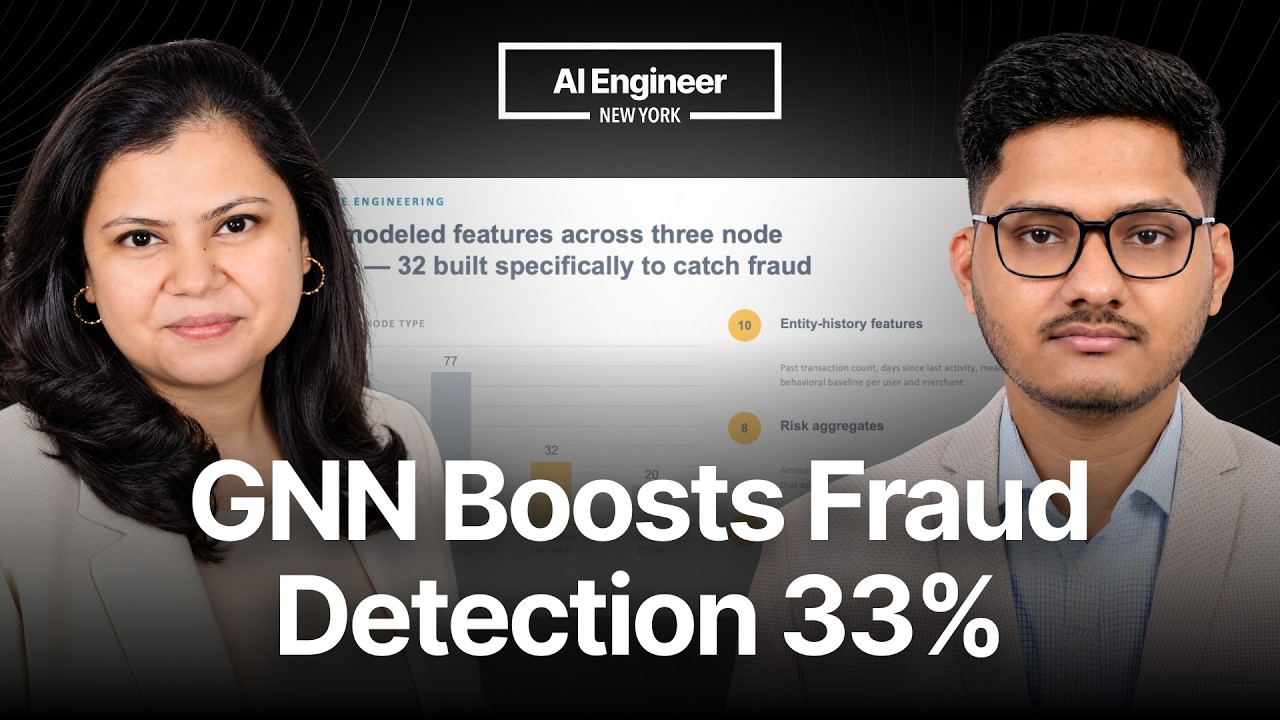
Judge a Transaction by the Company It Keeps — Somya Rai & MD Sharique, EXL

Judge a Transaction by the Company It Keeps — Somya Rai & MD Sharique, EXL

EXL developed an advanced fraud detection system that augments XGBoost with Graph Neural Network (GNN) embeddings. Traditional tabular models struggle to capture fraud signals residing in transaction neighborhoods. The system's innovative design includes meticulous sampling strategies, disjoint monthly graph construction for leakage control, and a GraphSAGE architecture that aggregates mean, max, and standard deviation of neighbor features to detect subtle fraud patterns. Emphasizing explainability for regulatory compliance and analyst trust, it also features a highly optimized serving architecture achieving 3ms P99 latency, pivoting to edge prediction to reduce cache footprint from 60GB to 2-3GB. This led to a 27-33% relative lift in true positive rates and a projected $65 million incremental fraud capture.
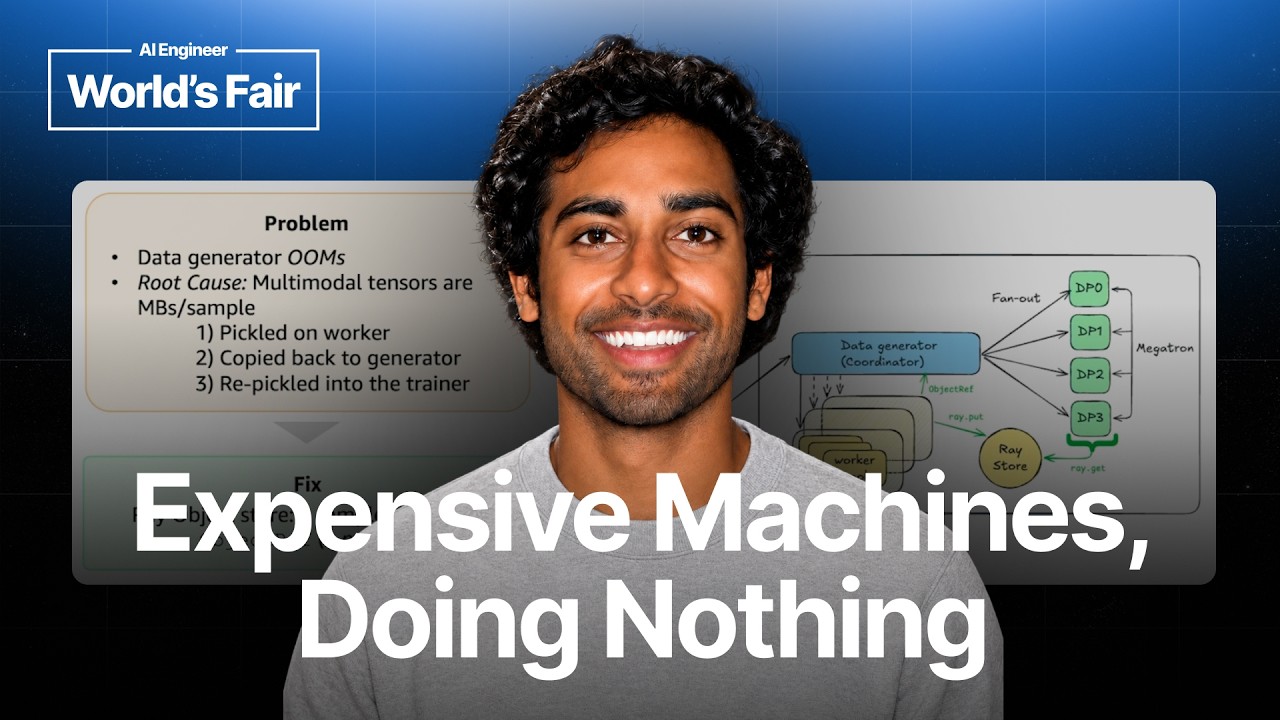

From 15% to 90% GPU Utilization: Fix the Data Pipeline, Not the Model

From 15% to 90% GPU Utilization: Fix the Data Pipeline, Not the Model

Tarun Sunkaraneni from Amazon AGI shows how a multimodal SFT pipeline that spent about 85% of its time waiting on data was brought to roughly 90% GPU utilization. He walks through concurrency with asyncio and Ray actors, prefetching, zero-copy transfer via Ray's object store, and a network-card bottleneck that appears only at scale, and argues that the hardest part of training throughput is often keeping GPUs fed rather than optimizing the model.

Small Models, Big Results: Training a Finance Agent for Under $500 — Charles Dickens, Snorkel AI

Small Models, Big Results: Training a Finance Agent for Under $500 — Charles Dickens, Snorkel AI

Snorkel AI and UC Berkeley's Sky Computing Lab show that a 4B Qwen3 model, trained with reinforcement learning for under $500 using the rLLM framework, beats its 235B sibling on expert-validated financial question answering built from SEC 10-K filings. The talk covers the FinQA dataset construction and verification, common failure modes of frontier models, transfer to multi-table and general tool-use tasks, and ablations showing that simple data and binary rewards outperform more elaborate setups, since the real bottleneck is disciplined tool use rather than reasoning depth.

Artificial Intelligence

View All
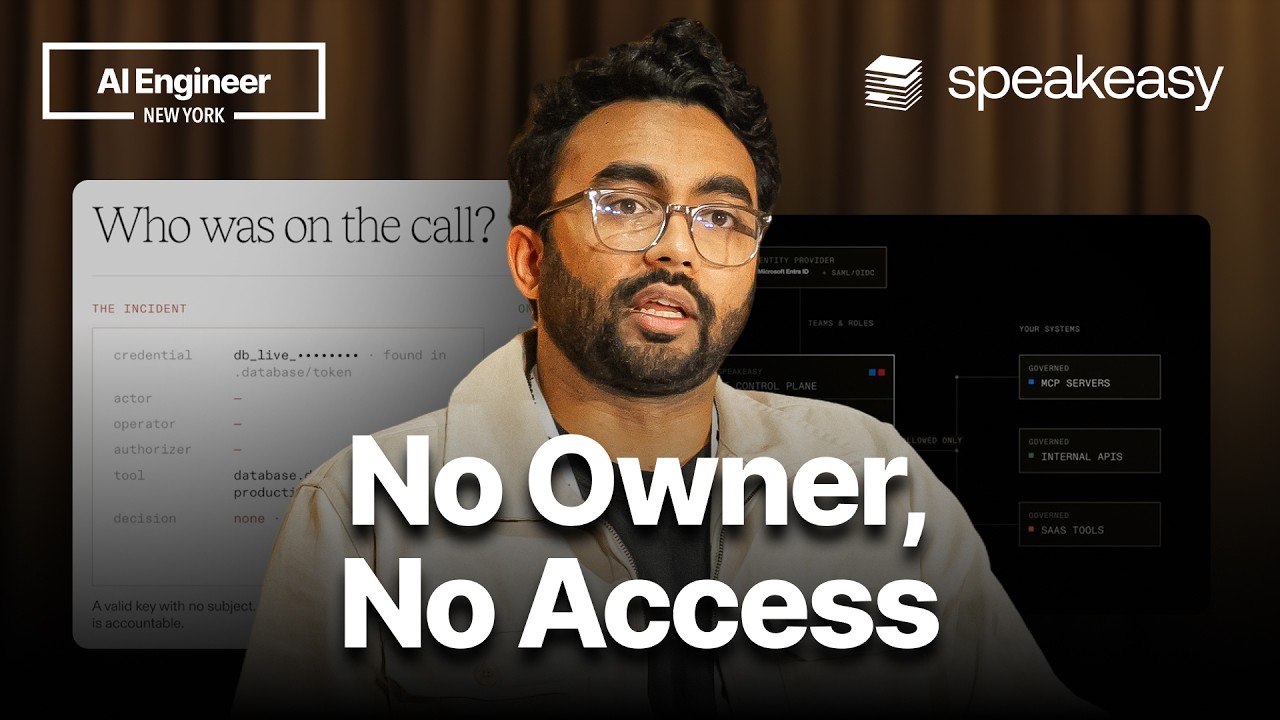
A Valid Key Let an AI Agent Delete Production - Sagar Batchu, Speakeasy

A Valid Key Let an AI Agent Delete Production - Sagar Batchu, Speakeasy

A coding agent with valid credentials deleted a production database and its backup while trying to fix a staging issue. Sagar Batchu of Speakeasy uses the incident to lay out a control layer for agents in regulated industries, where every action is tied to an identity, checked against policy in real time, bounded by its owner's rights, and recorded for compliance.

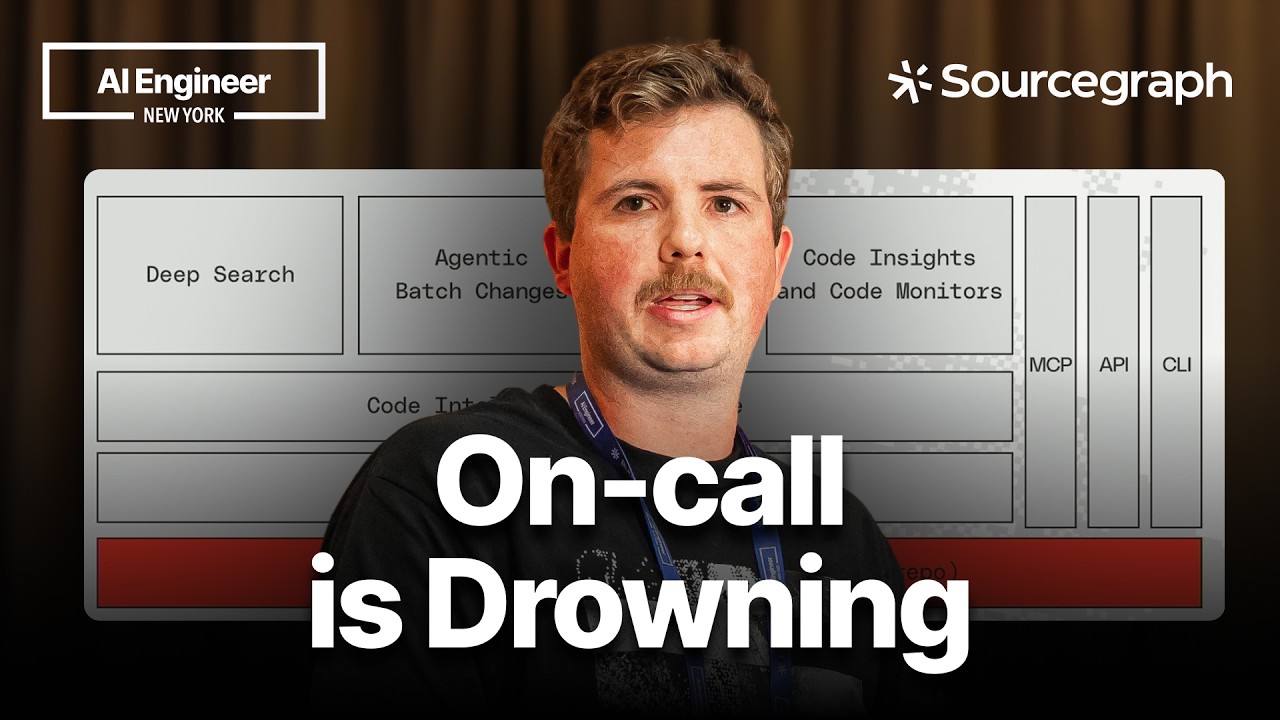
AI Writes Code Faster Than Your Team Can Review It - Andrew Norrish, Sourcegraph

AI Writes Code Faster Than Your Team Can Review It - Andrew Norrish, Sourcegraph

AI has shifted the bottleneck in software delivery from writing code to reviewing it, and SREs are absorbing the incidents that unreviewed AI code produces. This talk examines why trust in AI-generated code is lagging, why SRE and platform teams are best placed to respond, and how code search and a code graph context engine support investigation, prevention, and remediation across large codebases.

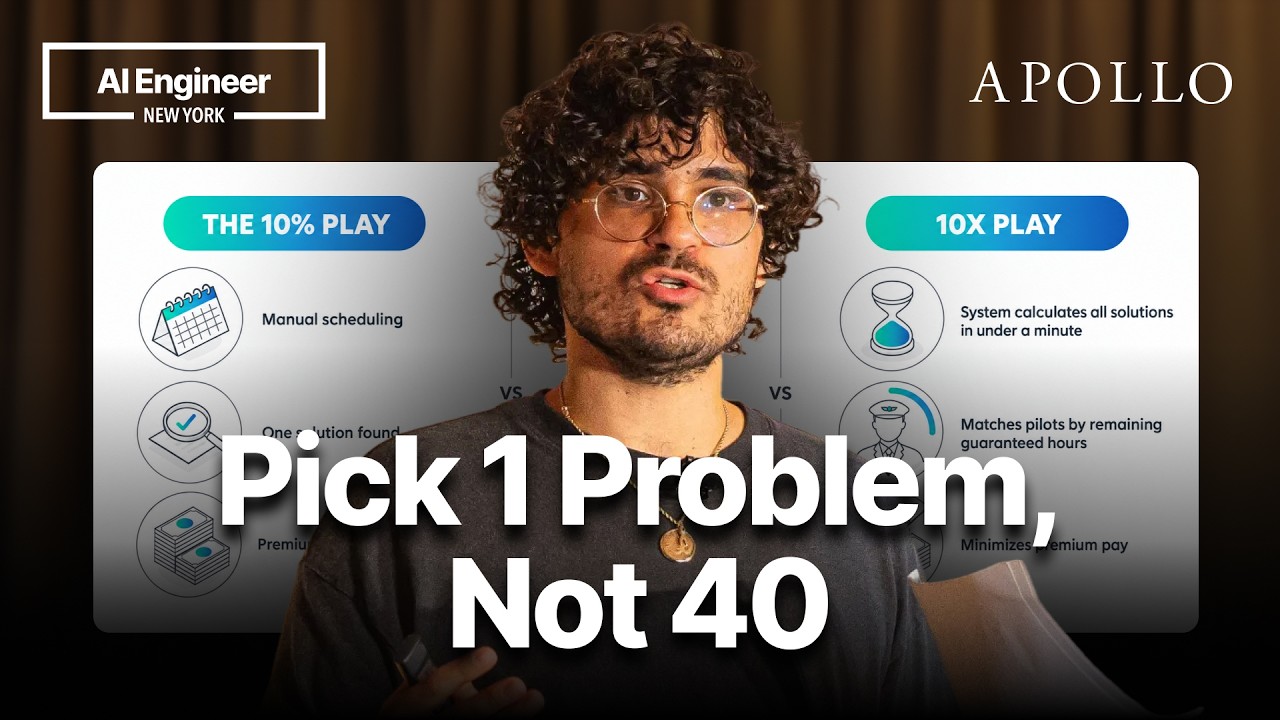
Your AI Pilots Won't Move the P&L. Here's What Will - Adam Nahari, Apollo

Your AI Pilots Won't Move the P&L. Here's What Will - Adam Nahari, Apollo

Most companies use AI, but few see it in their margins. Adam Nahari of Apollo Global Management argues that engineering is the smaller part of an AI transformation and lays out six moves, illustrated by an airline's crew-scheduling desk, for turning AI into measurable EBIT impact.

Technology

View All
What iPhone Packaging Reveals About the Robotics Opportunity

What iPhone Packaging Reveals About the Robotics Opportunity

Tutor Intelligence CEO Josh Gruenstein explains why robotics is a systems problem spanning AI, hardware, manufacturing, and customers, and how deploying robots into real factories and warehouses, with human tutors as backup, generates the data that makes them more capable. The discussion covers the company's own robot designs, its focus on small and mid-sized businesses, the economics of flexible robotic labor, and the implications for American manufacturing and supply chains.

Why Founders Are Betting Big on Factories, Mines, and Energy

Why Founders Are Betting Big on Factories, Mines, and Energy

Erin Price-Wright and Connor Love unpack the AD50 and the rebuilding of America's industrial base, covering how defense demand is financing manufacturing capacity for commercial markets, how AI is reshaping factory economics, how a new generation of founders applies lessons from SpaceX, Tesla, Anduril, and Palantir to mining, energy, and manufacturing, and why private capital is now willing to fund physical infrastructure before government demand is guaranteed.

Mark Cuban’s Plan to Make Healthcare Affordable

Mark Cuban’s Plan to Make Healthcare Affordable

Mark Cuban and Julie Yoo discuss how transparency, direct contracting, and AI could reshape healthcare economics, from Cost Plus Drugs and modular pod manufacturing to personalized medicine, the future of physicians, and advice for founders who want to use AI to learn rather than to stop thinking.


Recent Post

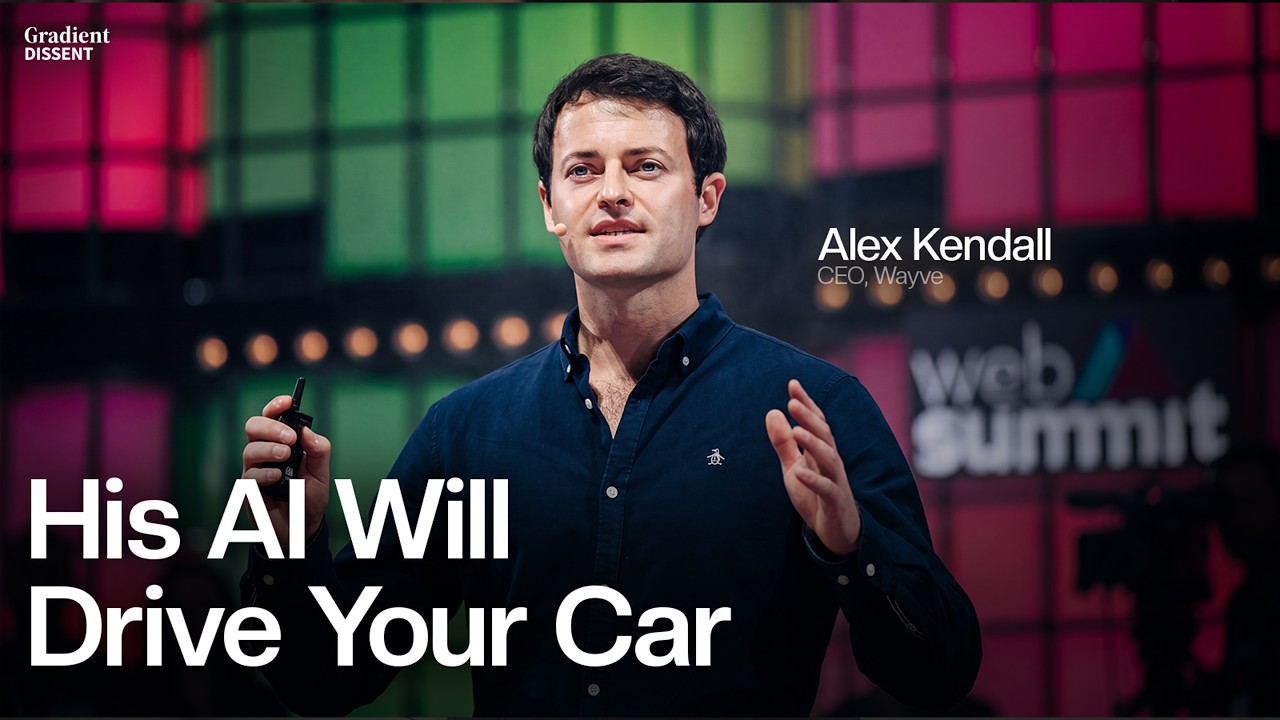
Why Uber, Nissan, and Mercedes Chose This Self-Driving Startup | Alex Kendall, Wayve

Why Uber, Nissan, and Mercedes Chose This Self-Driving Startup | Alex Kendall, Wayve

Wayve CEO Alex Kendall discusses their contrarian, AI-first approach to autonomous driving. He explains their journey from a garage prototype using reinforcement learning to developing a generalizable AI driver that has driven zero-shot in over 500 cities. Kendall emphasizes a strategy focused on licensing this embodied AI for mass-market consumer vehicles—a 100-million-unit-per-year opportunity—rather than building bespoke robotaxis, arguing that the future is an AI that can drive any car, anywhere.

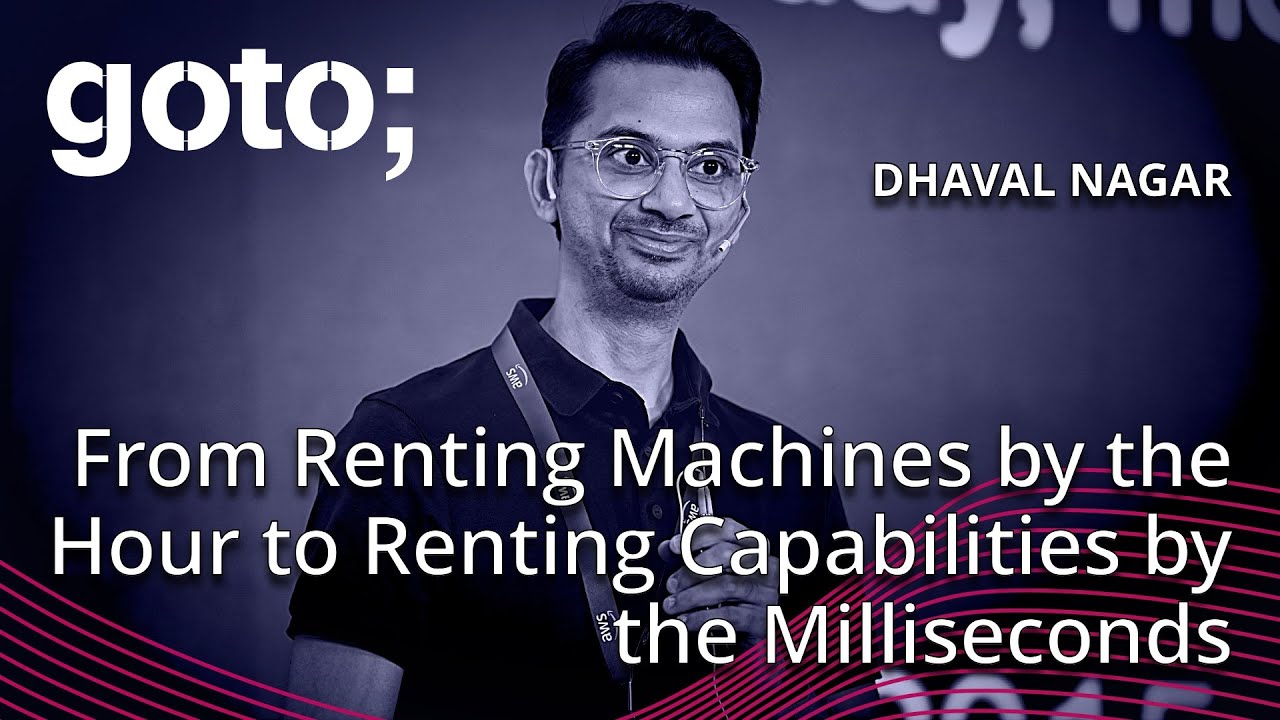
From Renting Machines by the Hour to Renting Capabilities by the MSeconds • Dhaval Nagar • GOTO 2025

From Renting Machines by the Hour to Renting Capabilities by the MSeconds • Dhaval Nagar • GOTO 2025

Dhaval Nagar chronicles the evolution of cloud economics from hourly-billed virtual machines a decade ago to the current 'capability economy.' The talk is structured in three acts, detailing the journey from the initial launch of AWS Lambda, through the maturation of the serverless ecosystem with frameworks and new platforms, to the present day where complex capabilities like AI models are consumed as millisecond-metered APIs. This shift demands a new developer mindset focused on composing services, event-driven architecture, and eliminating infrastructure management.

Enter the Matrix • Conor Hoekstra • YOW! 2025

Enter the Matrix • Conor Hoekstra • YOW! 2025

Conor Hoekstra demonstrates how to achieve exponential productivity by combining AI-assisted development, array programming, and high-performance computing. Using a financial dashboard app built entirely with AI (Vibe Coding), he showcases a custom array-based DSL with a dual backend (interpreted BQN and compiled NVIDIA Parrot for GPUs), urging developers to fully embrace modern tools and elevate their expectations of what is possible.

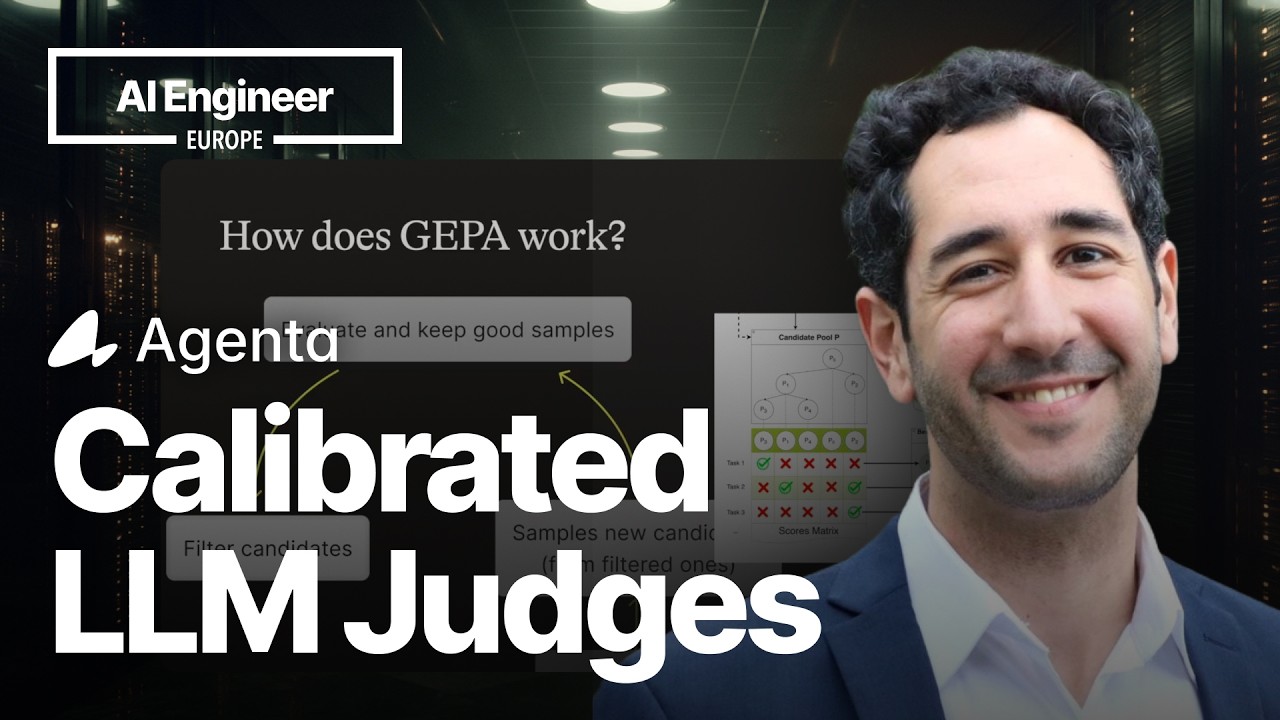
Judge the Judge: Building LLM Evaluators That Actually Work with GEPA — Mahmoud Mabrouk, Agenta AI

Judge the Judge: Building LLM Evaluators That Actually Work with GEPA — Mahmoud Mabrouk, Agenta AI

This workshop by Mahmoud Mabrouk, CEO of Agenta AI, delves into building calibrated LLM-as-a-judge evaluations that reliably align with human judgment. It highlights how miscalibrated judges lead to false confidence and presents a practical workflow, including designing use-case specific metrics, detailed data annotation, and optimizing judge prompts using the GAPA algorithm. The talk emphasizes the importance of iterative debugging, model selection, and custom reflection templates for achieving trustworthy and effective LLM evaluations.

Ideas: Steering AI toward the work future we want

Ideas: Steering AI toward the work future we want

Microsoft researchers unpack the New Future of Work Report 2025, exploring AI's real-world impact. They discuss adoption trends, the shift in job tasks, and the crucial distinction between viewing AI as a simple tool versus a collaborator. The conversation emphasizes moving beyond pure efficiency to consciously design a future where AI supports human flourishing and meaningful work.

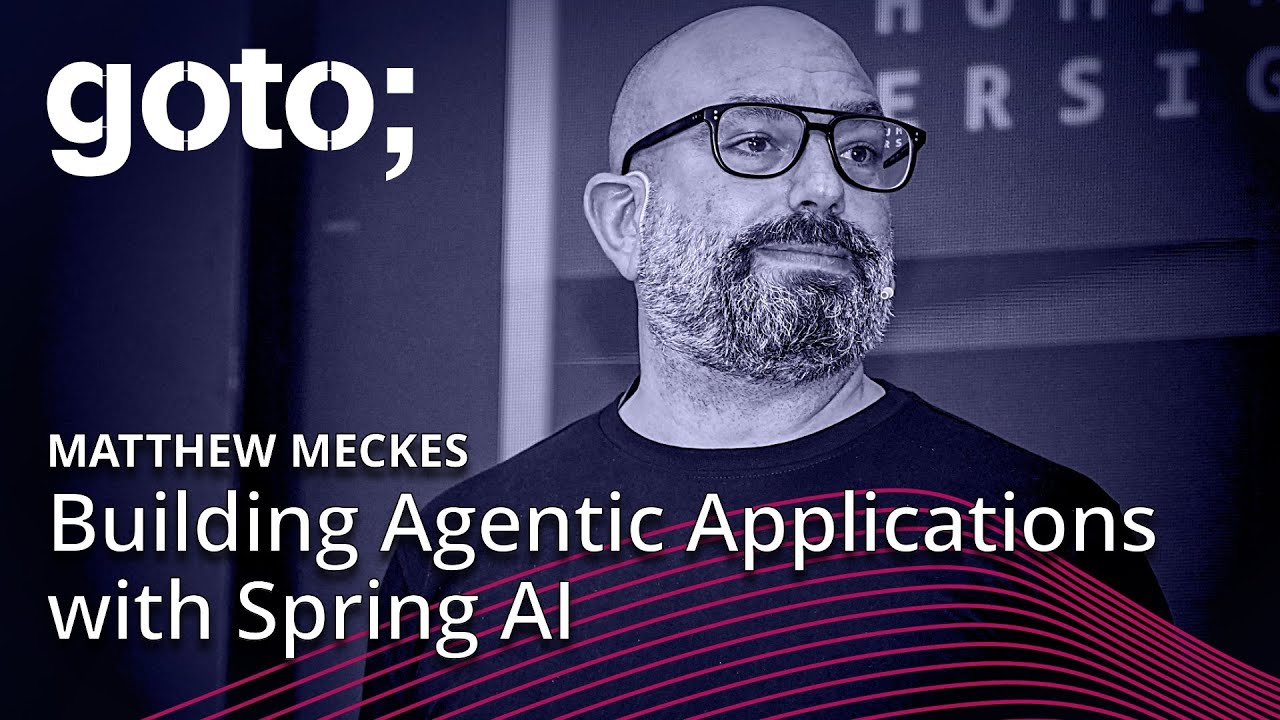
Building Agentic Applications with Spring AI • Matthew Meckes • GOTO 2025

Building Agentic Applications with Spring AI • Matthew Meckes • GOTO 2025

Matthew Meckes from AWS makes a compelling case for Java's central role in the future of enterprise AI. This talk explores how Spring AI empowers developers to build robust, production-ready agentic applications by integrating LLMs with existing Java services, moving beyond proofs-of-concept to solve real-world business problems.

Stay In The Loop! Subscribe to Our Newsletter.

Get updates straight to your inbox. No spam, just useful content.