Tokenless

Interactive discovery

Explore the topic map

Follow the connections between themes, people, and ideas across the Tokenless archive in an interactive topic modeling map.

Machine Learning

View All
Judge a Transaction by the Company It Keeps — Somya Rai & MD Sharique, EXL

Judge a Transaction by the Company It Keeps — Somya Rai & MD Sharique, EXL

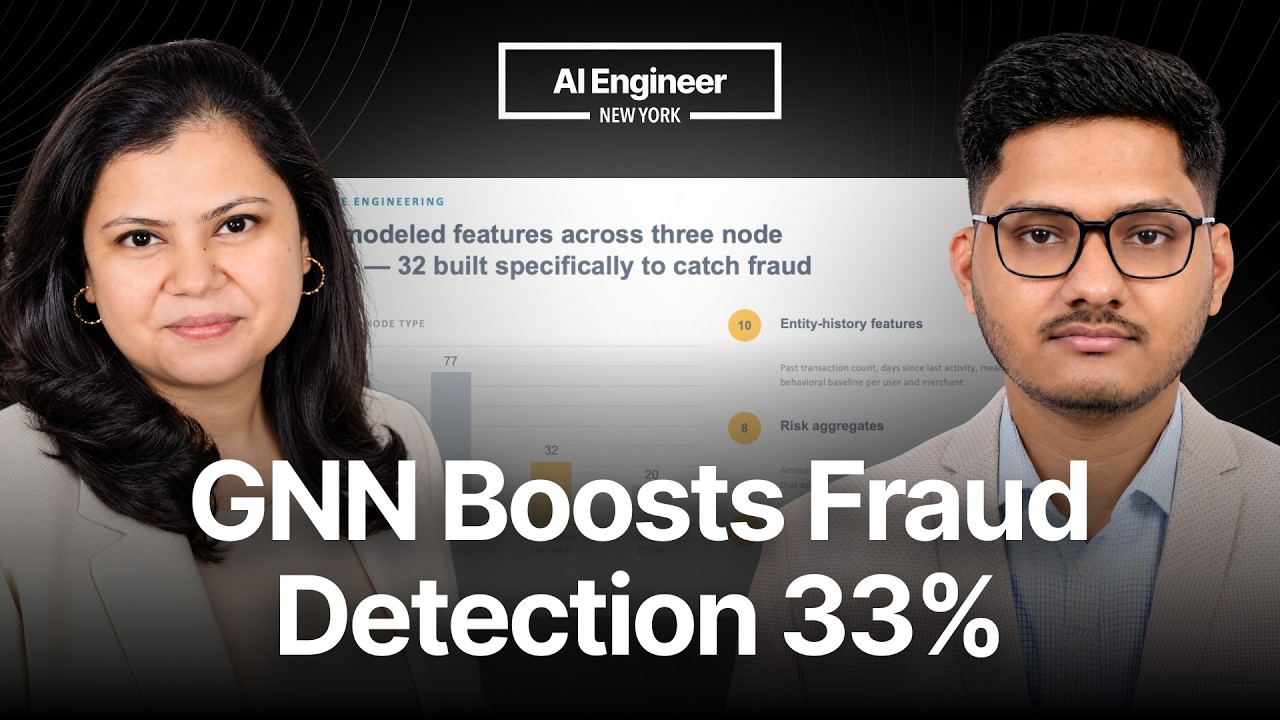
EXL developed an advanced fraud detection system that augments XGBoost with Graph Neural Network (GNN) embeddings. Traditional tabular models struggle to capture fraud signals residing in transaction neighborhoods. The system's innovative design includes meticulous sampling strategies, disjoint monthly graph construction for leakage control, and a GraphSAGE architecture that aggregates mean, max, and standard deviation of neighbor features to detect subtle fraud patterns. Emphasizing explainability for regulatory compliance and analyst trust, it also features a highly optimized serving architecture achieving 3ms P99 latency, pivoting to edge prediction to reduce cache footprint from 60GB to 2-3GB. This led to a 27-33% relative lift in true positive rates and a projected $65 million incremental fraud capture.

From 15% to 90% GPU Utilization: Fix the Data Pipeline, Not the Model

From 15% to 90% GPU Utilization: Fix the Data Pipeline, Not the Model

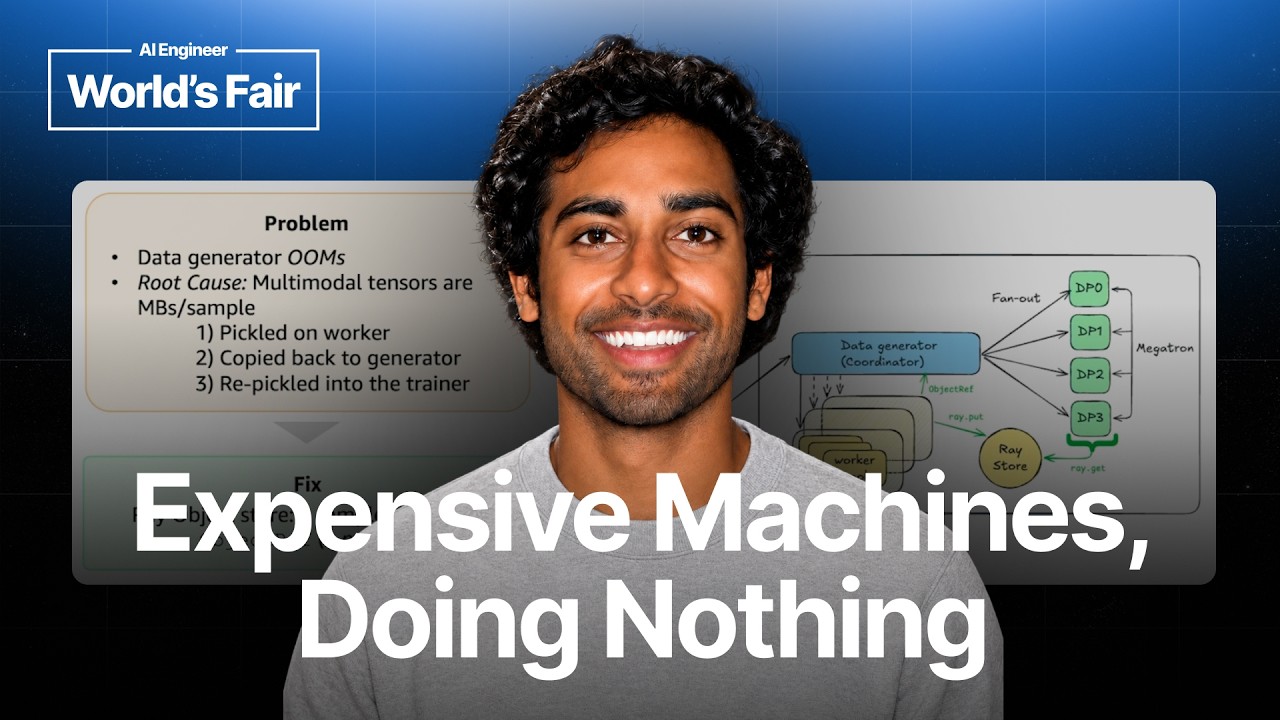
Tarun Sunkaraneni from Amazon AGI shows how a multimodal SFT pipeline that spent about 85% of its time waiting on data was brought to roughly 90% GPU utilization. He walks through concurrency with asyncio and Ray actors, prefetching, zero-copy transfer via Ray's object store, and a network-card bottleneck that appears only at scale, and argues that the hardest part of training throughput is often keeping GPUs fed rather than optimizing the model.

Small Models, Big Results: Training a Finance Agent for Under $500 — Charles Dickens, Snorkel AI

Small Models, Big Results: Training a Finance Agent for Under $500 — Charles Dickens, Snorkel AI

Snorkel AI and UC Berkeley's Sky Computing Lab show that a 4B Qwen3 model, trained with reinforcement learning for under $500 using the rLLM framework, beats its 235B sibling on expert-validated financial question answering built from SEC 10-K filings. The talk covers the FinQA dataset construction and verification, common failure modes of frontier models, transfer to multi-table and general tool-use tasks, and ablations showing that simple data and binary rewards outperform more elaborate setups, since the real bottleneck is disciplined tool use rather than reasoning depth.

Artificial Intelligence

View All
A Valid Key Let an AI Agent Delete Production - Sagar Batchu, Speakeasy

A Valid Key Let an AI Agent Delete Production - Sagar Batchu, Speakeasy

A coding agent with valid credentials deleted a production database and its backup while trying to fix a staging issue. Sagar Batchu of Speakeasy uses the incident to lay out a control layer for agents in regulated industries, where every action is tied to an identity, checked against policy in real time, bounded by its owner's rights, and recorded for compliance.

AI Writes Code Faster Than Your Team Can Review It - Andrew Norrish, Sourcegraph

AI Writes Code Faster Than Your Team Can Review It - Andrew Norrish, Sourcegraph

AI has shifted the bottleneck in software delivery from writing code to reviewing it, and SREs are absorbing the incidents that unreviewed AI code produces. This talk examines why trust in AI-generated code is lagging, why SRE and platform teams are best placed to respond, and how code search and a code graph context engine support investigation, prevention, and remediation across large codebases.

Your AI Pilots Won't Move the P&L. Here's What Will - Adam Nahari, Apollo

Your AI Pilots Won't Move the P&L. Here's What Will - Adam Nahari, Apollo

Most companies use AI, but few see it in their margins. Adam Nahari of Apollo Global Management argues that engineering is the smaller part of an AI transformation and lays out six moves, illustrated by an airline's crew-scheduling desk, for turning AI into measurable EBIT impact.

Technology

View All
What iPhone Packaging Reveals About the Robotics Opportunity

What iPhone Packaging Reveals About the Robotics Opportunity

Tutor Intelligence CEO Josh Gruenstein explains why robotics is a systems problem spanning AI, hardware, manufacturing, and customers, and how deploying robots into real factories and warehouses, with human tutors as backup, generates the data that makes them more capable. The discussion covers the company's own robot designs, its focus on small and mid-sized businesses, the economics of flexible robotic labor, and the implications for American manufacturing and supply chains.

Why Founders Are Betting Big on Factories, Mines, and Energy

Why Founders Are Betting Big on Factories, Mines, and Energy

Erin Price-Wright and Connor Love unpack the AD50 and the rebuilding of America's industrial base, covering how defense demand is financing manufacturing capacity for commercial markets, how AI is reshaping factory economics, how a new generation of founders applies lessons from SpaceX, Tesla, Anduril, and Palantir to mining, energy, and manufacturing, and why private capital is now willing to fund physical infrastructure before government demand is guaranteed.

Mark Cuban’s Plan to Make Healthcare Affordable

Mark Cuban’s Plan to Make Healthcare Affordable

Mark Cuban and Julie Yoo discuss how transparency, direct contracting, and AI could reshape healthcare economics, from Cost Plus Drugs and modular pod manufacturing to personalized medicine, the future of physicians, and advice for founders who want to use AI to learn rather than to stop thinking.


Recent Post

Claude Opus 4.7, Apple’s AI glasses and Allbirds AI pivot

Claude Opus 4.7, Apple’s AI glasses and Allbirds AI pivot

Experts analyze Anthropic's surprise release of Claude 4.7, speculating it's a distilled version of the Mythos model. The discussion also covers Apple's new three-pronged AI wearables strategy, a Gallup poll showing rising but incremental AI adoption in the workplace, and DeepMind's research into harmful AI manipulation.

My Bets on Where Open LLMs Go Next

My Bets on Where Open LLMs Go Next

An analysis of the current unstable equilibrium between open and closed AI models, arguing that closed models will likely pull ahead due to economic and data feedback advantages. The long-term, stable future for open models lies in a specialized ecosystem of cheaper, faster models, potentially funded by new structures like consortiums.

Episode 16: Building AI for Life Sciences

Episode 16: Building AI for Life Sciences

OpenAI research lead Joy Jiao and product lead Yunyun Wang detail the development of specialized AI models for the life sciences. They discuss the new biochemistry-focused model series designed to accelerate research in genomics and protein understanding, the critical challenge of managing biosecurity risks through a "differentiated access" model, and the future vision of AI-powered autonomous labs that could revolutionize drug discovery and personalized medicine.

Post‑Quantum Security: How Lattice Cryptography Keeps Data Safe

Post‑Quantum Security: How Lattice Cryptography Keeps Data Safe

This video explains the imminent threat quantum computers pose to current cryptographic standards like RSA. It introduces lattice-based cryptography as a leading quantum-safe solution, using analogies to demystify how high-dimensional spaces and 'noise' create math problems that are intractable even for quantum machines. The summary provides a clear action plan for organizations, emphasizing the need for 'crypto-agility' and the urgency driven by the 'Harvest Now, Decrypt Later' attack strategy.

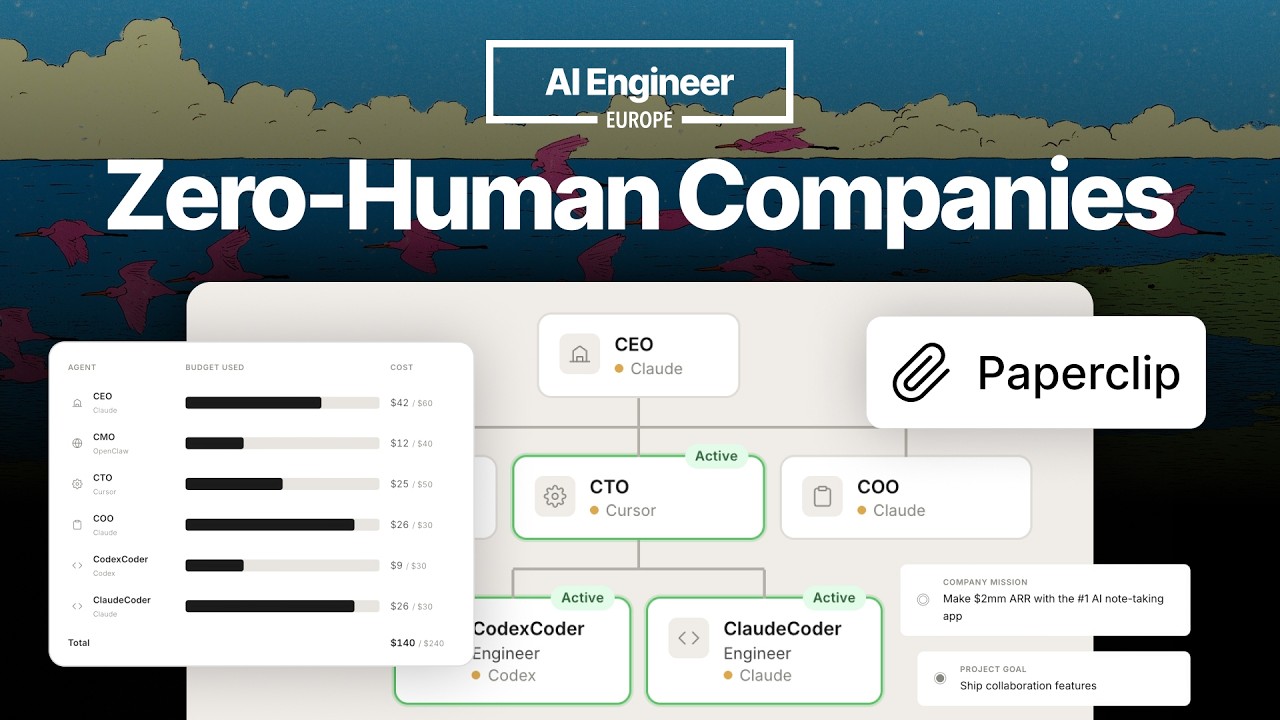
Paperclip: Open Source Human Control Plane for AI Labor — Dotta Bippa

Paperclip: Open Source Human Control Plane for AI Labor — Dotta Bippa

Dotta, the creator of Paperclip, introduces it as an open-source orchestrator for building "zero-human companies." This talk demonstrates how to set up an organization of AI agents, leverage skills and custom instructions for reliable work, and automate business processes. Through a live demo, Dotta showcases creating a company from scratch, managing agent workflows with QA and routines, and outlines the exciting future roadmap for the platform.

Jensen Huang – Will Nvidia’s moat persist?

Jensen Huang – Will Nvidia’s moat persist?

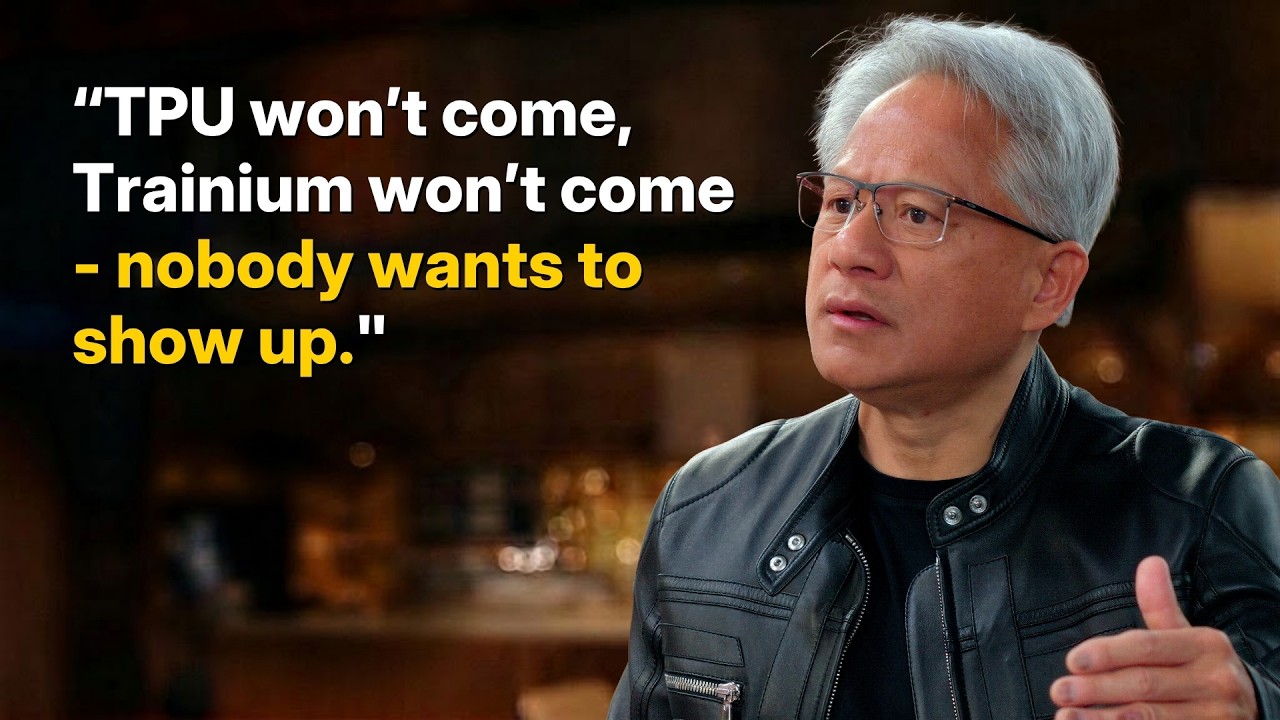
Nvidia CEO Jensen Huang discusses the company's core strategy, which he defines as transforming electrons into tokens by orchestrating a vast supply chain. He details how Nvidia's true moat lies in its ecosystem and its ability to manage supply bottlenecks. Huang contrasts Nvidia's versatile 'accelerated computing' platform with competitors like TPUs, arguing programmability via CUDA is key to AI innovation. He also presents a strong case against broad AI chip export controls on China, warning it could backfire by forcing the creation of a competing tech stack. Finally, he explains why Nvidia invests in the ecosystem rather than becoming a hyperscaler itself.

Stay In The Loop! Subscribe to Our Newsletter.

Get updates straight to your inbox. No spam, just useful content.