Ai

How Companies Are Building Their Own Intelligence | Sonya Huang, Sequoia Capital

How Companies Are Building Their Own Intelligence | Sonya Huang, Sequoia Capital

Sonya Huang of Sequoia Capital discusses the strategic imperative for companies to embrace "sovereign AI" by owning their AI models and weights. She identifies cost, speed, performance, and controlling destiny as the four driving forces behind this shift. Huang argues that the competitive landscape is moving towards owning the intelligence layer, positioning application companies as the new innovation labs. She provides a practical, opinionated framework covering strategy (what to own vs. rent), team building, ensuring external legibility of research, and a technical roadmap for implementation, emphasizing how open-weight models now enable frontier-level performance through ownership and customization.
The RAG Mistake Almost Every Team Is Making (with Pete Johnson)

The RAG Mistake Almost Every Team Is Making (with Pete Johnson)

Pete Johnson, Field CTO of AI at MongoDB, discusses effective AI strategies, why most organizations struggle with AI ROI, and how to build reliable AI systems. He covers the importance of choosing the right embedding models for RAG pipelines, introduces Matryoshka embeddings, and explains the evolution of agentic memory to combat token maxing and ensure consistency in production AI.

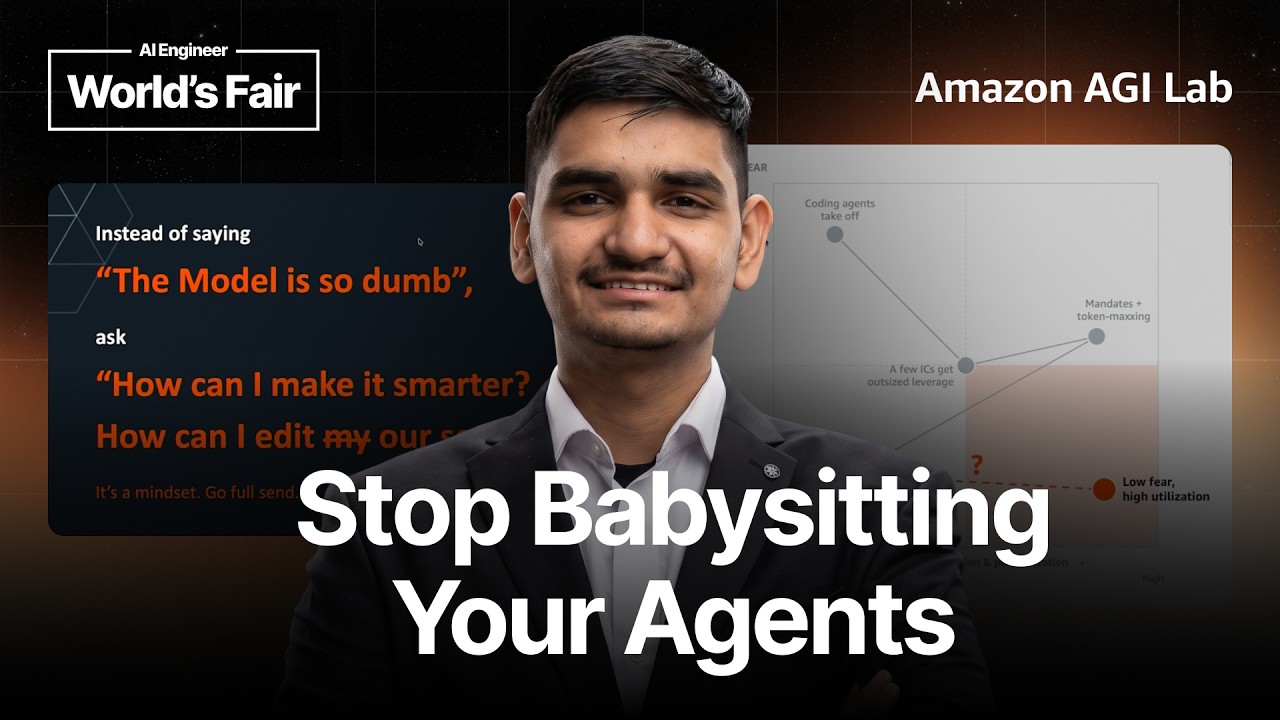
Agents, codebases, and teams — Aditya Khandelwal, Amazon AGI Lab

Agents, codebases, and teams — Aditya Khandelwal, Amazon AGI Lab

Aditya Khandelwal argues that scaling AI agent adoption within engineering teams is a leadership challenge, not an individual contributor problem. He highlights common pitfalls like agent "babysitting" and "slop," and provides a playbook emphasizing progressive disclosure, high-value automation, robust feedback loops, and a critical mindset shift to successfully integrate agents into team workflows.

Peter Steinberger: What Happens When 4.7 Million People Let It Cook

Peter Steinberger: What Happens When 4.7 Million People Let It Cook

Peter Steinberger, founder of OpenClaw, shares the candid story of building one of the world's largest open-source AI projects. Starting from a personal annoyance, OpenClaw went viral, leading to both immense success and unforeseen challenges, including burnout, security pressures, and feature creep. He offers invaluable lessons on product-market fit, managing hyper-growth in open source, the peril of dependencies, and the philosophy that "fun is velocity" in building impactful technology.

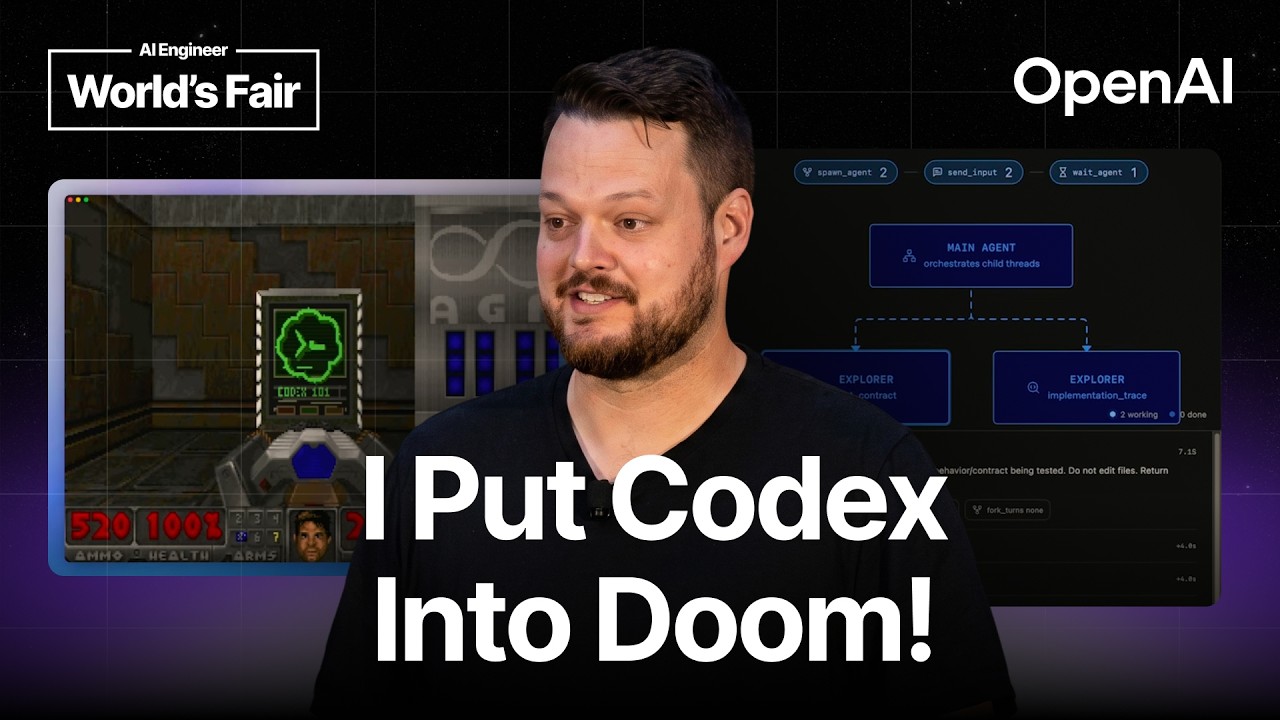
Codex, Behind the Harness — Dominik Kundel, OpenAI

Codex, Behind the Harness — Dominik Kundel, OpenAI

Once GPT 5.3 Codex Spark achieved 1000 tokens/sec on Cerebras, network latency superseded inference as the bottleneck for agents. This talk details how the Codex harness addresses this and other agentic challenges through innovations like WebSocket mode for stateful context, deferred tools for efficient context construction, robust sandboxing (Seatbelt, Bubblewrap, custom Windows solution), and an auto-review subagent to mitigate approval fatigue while ensuring security. It also covers structured actions via 'apply patch' for file edits, shell tools for system interaction, and sophisticated long-horizon goal management, with most distinct features exposed through the open Responses API.

Kavak's Playbook for Rebuilding a Company Around AI

Kavak's Playbook for Rebuilding a Company Around AI

Alejandro Maza Ayala, Chief Product & AI Officer at Kavak, details how the used-car marketplace transformed into an AI-native company. He explains the 'agent-per-customer' architecture, where individual agents handle 96% of customer interactions and 95% of transactions, outperforming human teams in sales (2.1x better conversion) and even acting as an 'AI CEO' that boosted profits by 50% in an experimental city. The discussion covers the need to redesign company structures, the importance of robust evaluations, and how a 'Jedi Academy' trains all employees, from executives to mechanics, to build and collaborate with AI agents. Ayala argues for 'creative destruction,' suggesting that true AI leverage comes from rebuilding organizations from the ground up, rather than incremental adoption, presenting a massive opportunity for new founders.