Ai

5 Best Practices for Building AI Agent Skills

5 Best Practices for Building AI Agent Skills

This video outlines five essential best practices for developing reliable, secure, and effective AI agent skills. It covers optimizing skill triggering through descriptive metadata, leveraging real-world domain expertise over generic LLM output, managing context windows efficiently by writing lean skills and using progressive disclosure, implementing deterministic logic with scripts for fragile operations, and critically vetting all skills for security vulnerabilities before deployment. These practices are crucial for professionals building robust agentic systems.
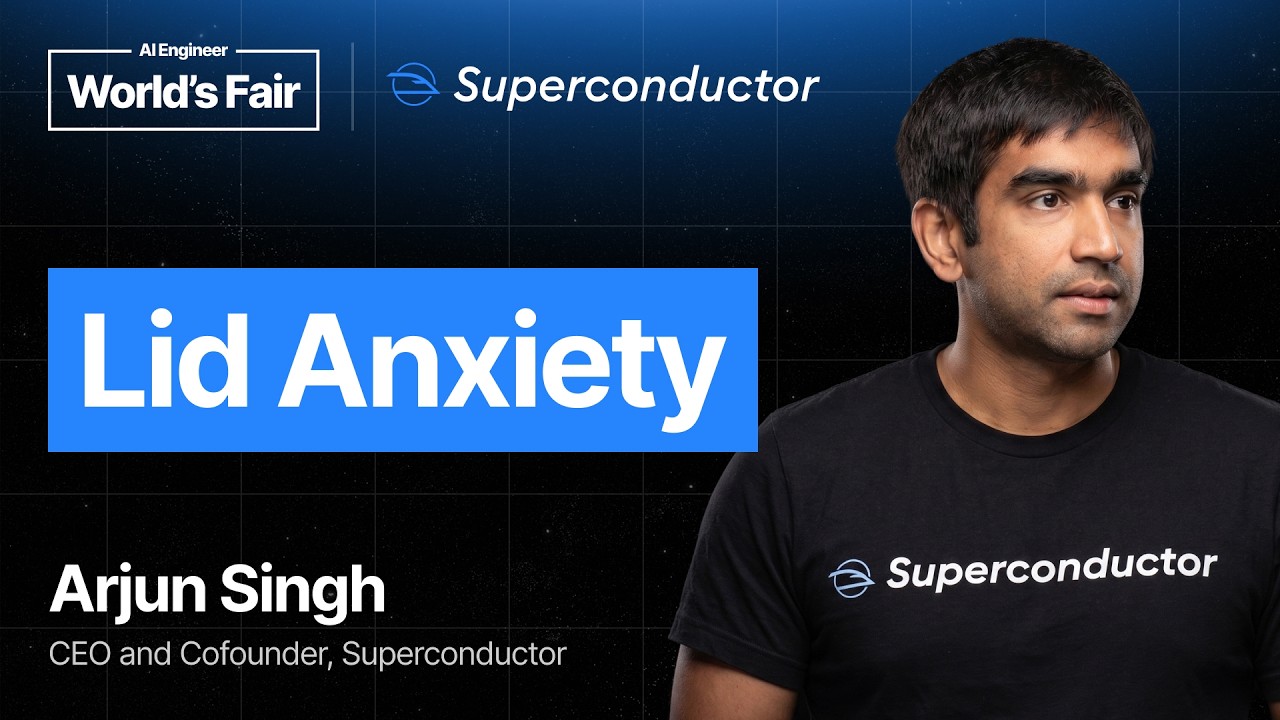
Multiplayer agentic engineering — Arjun Singh, Superconductor

Multiplayer agentic engineering — Arjun Singh, Superconductor

Arjun Singh, co-founder of Superconductor, discusses the six crucial lessons learned from integrating AI agents into their software development workflow. He emphasizes the importance of building "multiplayer agentic engineering" systems where human teams and AI agents collaborate seamlessly, focusing on model agnosticism, pervasive agent interfaces, transparent work visibility, automated signal-to-code conversion (like their "meeting bot"), secure isolated cloud environments, and internal code-base benchmarking to optimize cost, quality, and speed.

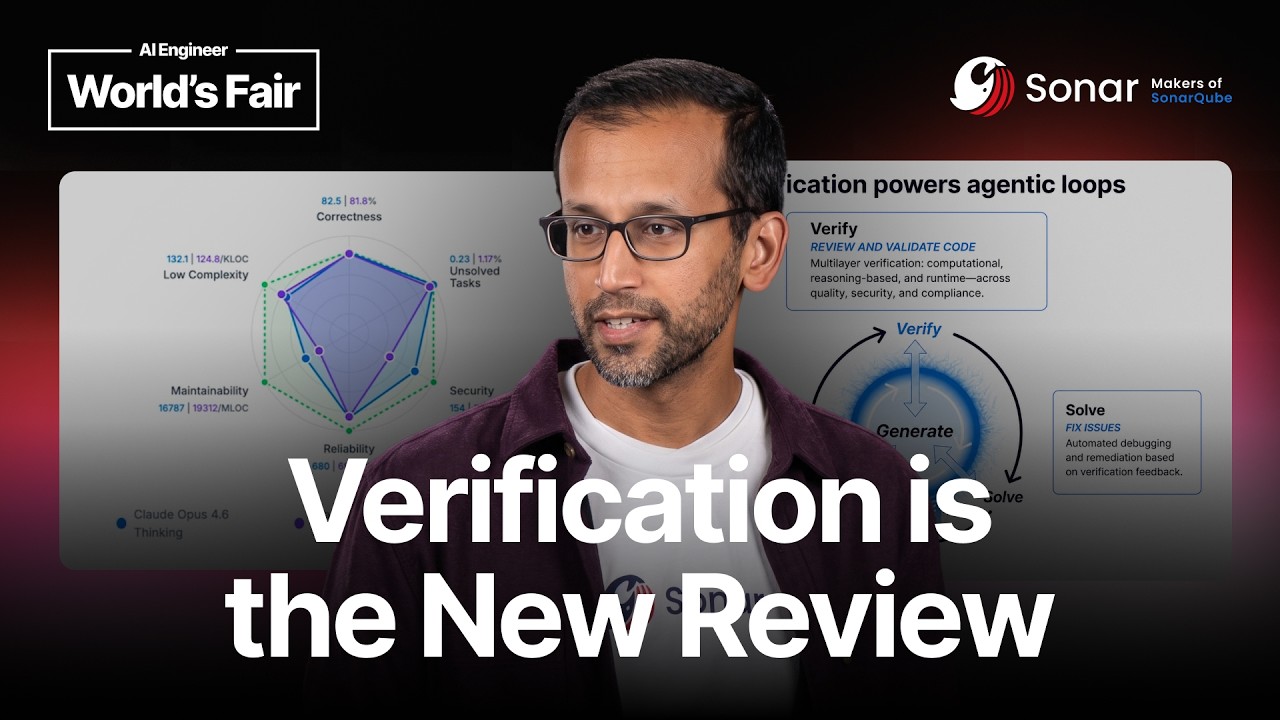
Guide, Verify, Solve — Anirban Chatterjee, Sonar

Guide, Verify, Solve — Anirban Chatterjee, Sonar

Anirban Chatterjee discusses the emergence of "verification debt" in AI-driven software development, where AI-generated code introduces persistent quality issues despite initial productivity gains. He proposes a **zero-trust, multi-layered verification** approach, integrating it into an "Agent-Centric Development Cycle" (ACDC) to ensure code quality, security, and compliance by empowering AI agents with real-time feedback and remediation capabilities through tools like SonarQube, Gitarr, and Sonar Vortex.

Velocity Sickness: What Happens When Your Whole Team Gets 10x Faster — Matt Dailey, Ref.

Velocity Sickness: What Happens When Your Whole Team Gets 10x Faster — Matt Dailey, Ref.

Matt Dailey introduces "velocity sickness" – the stress of increased AI output without impact. He proposes shifting from ephemeral chat-based agent interactions to durable, shared documents as the "decision layer" to separate planning from implementation, enabling teams to own their code and prioritize ideas effectively.

Always-on agents run production without the on-call tax — Justin Smith, Resolve AI

Always-on agents run production without the on-call tax — Justin Smith, Resolve AI

Justin Smith from Resolve AI discusses how AI agents address the increasing operational burden on engineers, highlighting that 70% of an engineer's time is spent running code. He introduces Resolve AI's background agents, which autonomously monitor deployments, perform health checks, generate reports, and answer engineering questions by leveraging deep production context and a self-learning knowledge system, effectively reducing the "on-call tax" and managing system complexity.

The playbook for building high talent density teams | Adam Ward, Head of Talent at Cursor

The playbook for building high talent density teams | Adam Ward, Head of Talent at Cursor

Adam Ward, Head of Talent at Cursor, dissects the hyper-competitive current hiring market, contrasting the inefficient "funnel of doom" with a strategic, executive-level approach to recruiting top 1% talent. He details a three-step playbook—scoping, mapping, and relentless pursuit—emphasizing personalized engagement, robust work trials, and continuous candidate care. Ward also outlines common founder mistakes in early recruiting hires, the rise of the "forward-deployed engineer," and the critical qualities of effective recruiters, arguing for their strategic importance and high compensation.