Ai

LLM Knowledge Bases: a practical guide — Ben Holmes, Warp

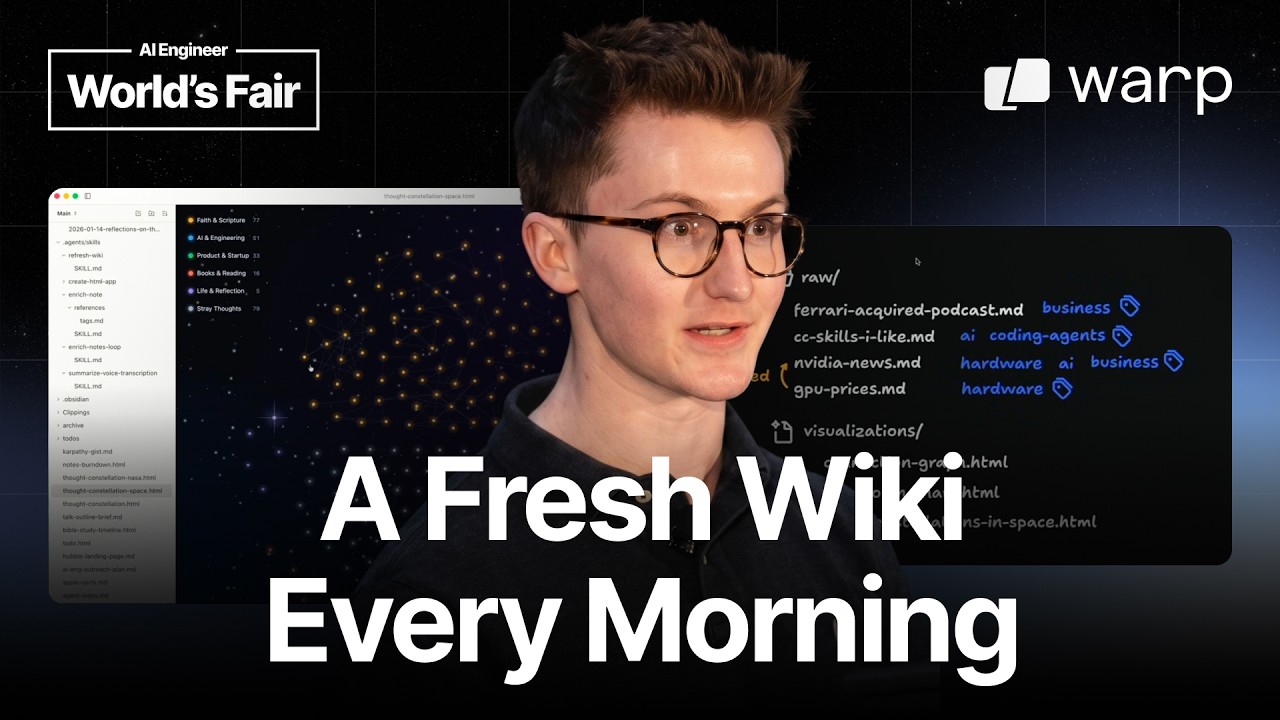
LLM Knowledge Bases: a practical guide — Ben Holmes, Warp

Ben Holmes outlines a personal knowledge management system leveraging LLMs and automation to transform raw voice-dictated notes into an organized, browsable wiki and visual graph. The process emphasizes rapid, "sloppy" capture, followed by AI agents enriching notes with tags, web research, and backlinks, then generating structured wikis based on Karpathy's methodology, all automated via cloud sandboxes and Obsidian's headless CLI.
Chelsea Finn: This is the State of the Art in Robotics

Chelsea Finn: This is the State of the Art in Robotics

Chelsea Finn, co-founder of Physical Intelligence, discusses the path to building general-purpose robots that operate reliably in the real world. She details how advanced reinforcement learning with human intervention, coupled with multi-scale memory systems, significantly boosts robot autonomy and throughput. Finn argues that robotics is entering its "GPT era," moving from specialized models to powerful, out-of-the-box foundation models like their PIO7, which demonstrates strong compositional generalization across tasks, objects, and robot platforms, matching or exceeding specialist performance without fine-tuning. The talk also covers the unique challenges and opportunities in robotics data, model deployment, and career paths.

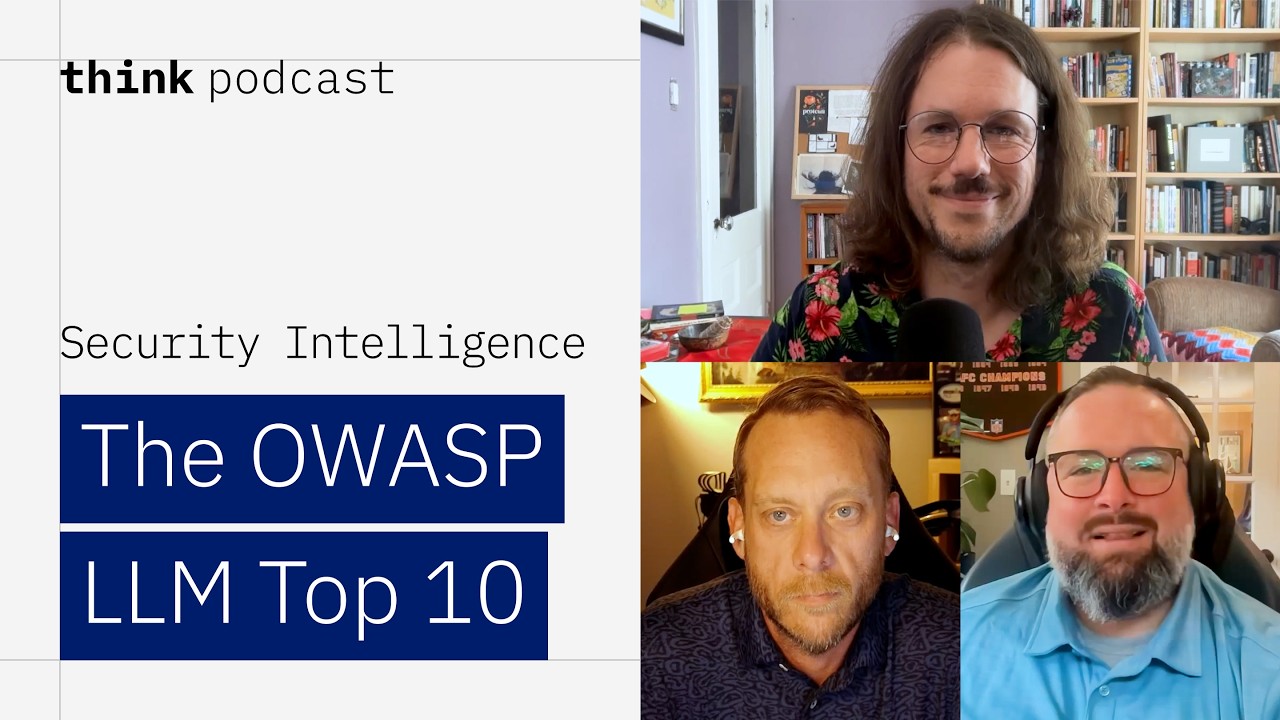
The OWASP LLM Top 10 has a few surprises for you

The OWASP LLM Top 10 has a few surprises for you

This podcast episode breaks down the 2026 OWASP LLM Top 10, highlighting a significant rise in concern for 'Excessive Agency' over traditional prompt injection. It explores the discrepancies between practitioner fears and incident data, particularly regarding misinformation, and advocates for viewing security frameworks as tools for operationalization and cyber resilience, not just compliance. The discussion also covers CISA's new SBOM guidance, emphasizing the need to operationalize supply chain data for effective risk reduction, and shares Black Hat 2026 insights on AI agents as a new attack surface, introducing the concept of 'intent collusion' and underscoring the critical need for foundational security principles like least privilege.

Evolution of agentic surfaces — Gagan Bhat & Isabella Kai He, Anthropic

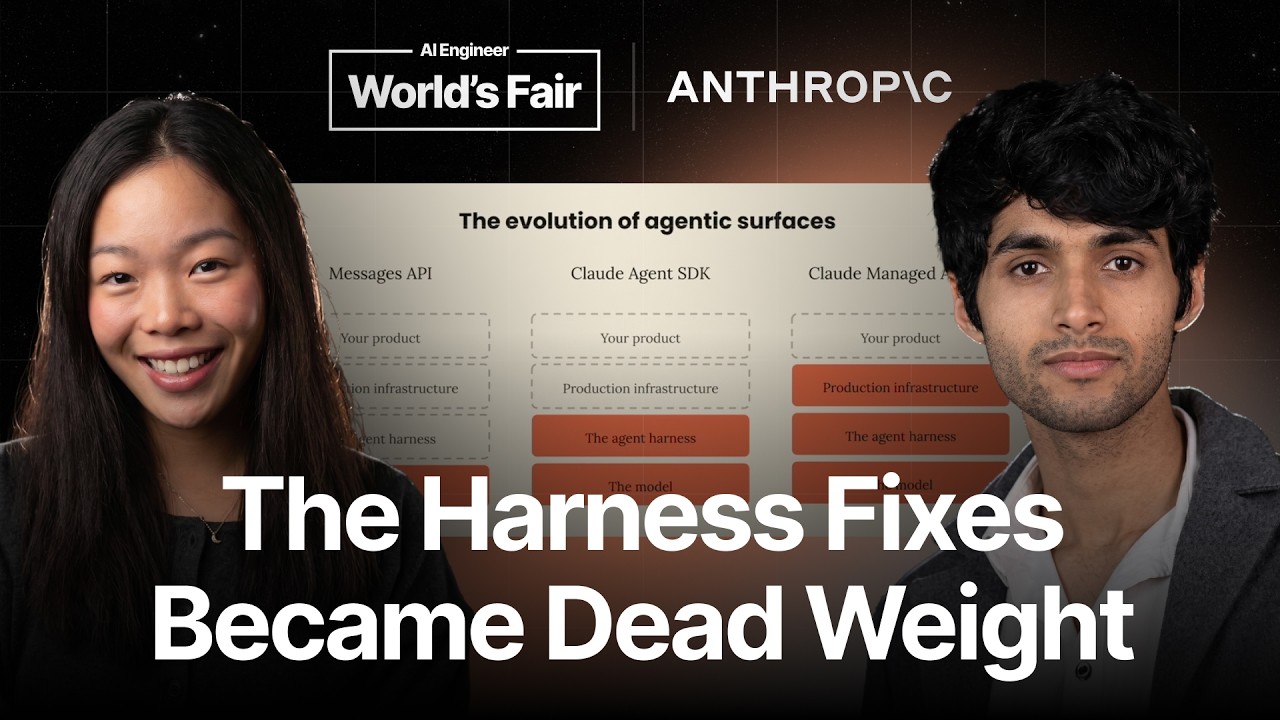
Evolution of agentic surfaces — Gagan Bhat & Isabella Kai He, Anthropic

Anthropic's Gagan Bhat and Isabella Kai He discuss how agent harnesses must evolve rapidly to keep pace with fast-improving LLMs. They introduce Claude Managed Agents, an architecture that decouples the agent's 'brain' (reasoning) from its 'hands' (tool execution) to address issues like stale assumptions, latency, and reliability. This approach enables dynamic adaptation, secure tool execution, and features like 'dreaming' for self-improving agents and 'outcomes' for goal-oriented task completion, ultimately aiming to close the gap between model capabilities and product offerings.

Circleback CEO Ali Haghani: Recording Company Meetings Will Become The Norm

Circleback CEO Ali Haghani: Recording Company Meetings Will Become The Norm

Ali Haghani, co-founder of CircleBack, shares his unique hardware setup and delves into how his AI notetaker streamlines business operations, from interview tracking to customer support. He discusses the shift from manual coding to AI-orchestrated development, the nuances of prompt engineering, and his vision for why recording meetings with AI is becoming essential for leveraging LLMs and agents effectively in enterprises, ultimately reshaping the future of software engineering.

How Harvey Built a Research Lab on a Budget | Gabe Pereyra

How Harvey Built a Research Lab on a Budget | Gabe Pereyra

Gabe Pereyra of Harvey details a playbook for application companies to compete with frontier AI labs by leveraging the ecosystem. Key strategies include building specialized benchmarks like Legal Agent Bench, using domain experts for synthetic data generation to overcome sensitive client data issues, partnering with multiple 'neo labs' for post-training, and developing robust model serving and evaluation infrastructure. He emphasizes open-sourcing data for validation and the 'Moneyball' philosophy for success, addressing challenges like talent acquisition and long-context management in the Q&A.