Systems thinking

Jensen Huang: The Mindset That Built NVIDIA

Jensen Huang: The Mindset That Built NVIDIA

Jensen Huang, CEO of NVIDIA, shares critical lessons from NVIDIA's journey, emphasizing how early failures and a commitment to learning new technologies, like purchasing textbooks from Fry's to pivot the company, laid the groundwork for their success. He discusses NVIDIA's strategic vision, driven by accelerating algorithm domains and seeing AlexNet as a universal function approximator, which led to a reinvention of the computing stack. Huang also explores the future of AI with agents, the importance of fine-grained control, and the "Linux moment" of open-source AI, while also forecasting the rise of physical AI and job creation. He concludes with profound advice on resilience, systems thinking, and the "how hard can it be?" mindset for aspiring entrepreneurs in this unprecedented era of technological reset.
Why Netflix is betting on systems thinkers—not specialists—in the AI era | Elizabeth Stone (CPTO)

Why Netflix is betting on systems thinkers—not specialists—in the AI era | Elizabeth Stone (CPTO)

Elizabeth Stone, Netflix CPTO, discusses how AI is transforming product development and company culture. She highlights the increasing importance of "systems thinking," managing the influx of AI-generated output with clear guardrails, fostering "AI fluency" across all roles, and maintaining Netflix's unique "excellence as an operating system" through high talent density and a comfort with risk-taking. The conversation also explores AI's impact on content creation, the future of entertainment, and talent management.

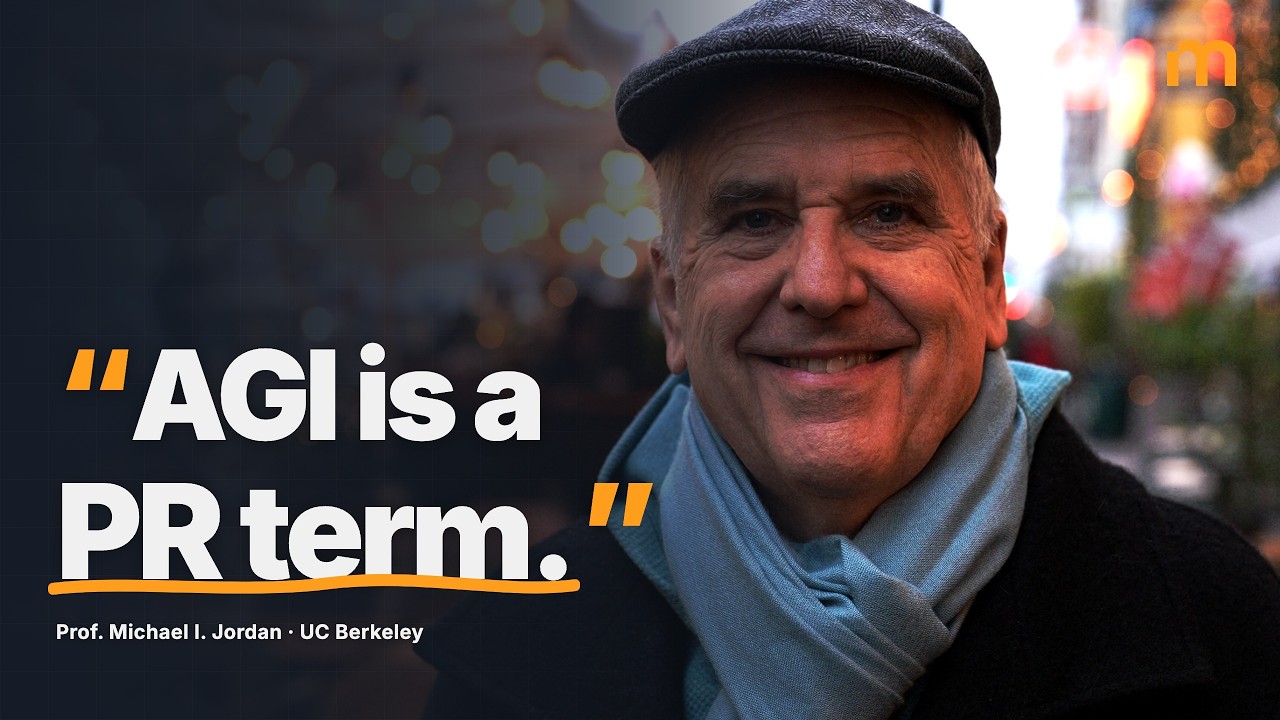
Inference, not prediction — Prof. Michael I. Jordan on what modern AI is still missing

Inference, not prediction — Prof. Michael I. Jordan on what modern AI is still missing

Michael I. Jordan, a leading figure in machine learning and statistics, argues for reframing AI from a race for disembodied superintelligence to the design of collective economic systems. He critiques the AGI hype, advocates for integrating economic principles and robust uncertainty quantification into ML, and proposes a new intellectual framework for building technology that augments, rather than replaces, human systems.

Why AI Infrastructure Is Everyone's Problem Now (with Linda Haviv)

Why AI Infrastructure Is Everyone's Problem Now (with Linda Haviv)

Linda Haviv discusses the evolving AI landscape, arguing that systems thinking is becoming more critical than coding. She highlights how non-linear career paths and domain-specific expertise provide a competitive edge, and explores how the democratization of technology is fueling a new wave of entrepreneurship and content creation for tech professionals.

AI Infrastructure, Ray, and Why Nonlinear Careers Win — with Linda Haviv

AI Infrastructure, Ray, and Why Nonlinear Careers Win — with Linda Haviv

Linda Haviv discusses the modern AI landscape, emphasizing that non-linear career paths and systems thinking are now more valuable than pure coding skills. She explores how open-source technology, like the Ray framework, is democratizing AI development and closing the gap with proprietary models, and why building a personal brand through content creation is essential for career growth and community building in a rapidly evolving industry.

Extreme Harness Engineering for the 1B token/day Dark Factory — Ryan Lopopolo, OpenAI Frontier

Extreme Harness Engineering for the 1B token/day Dark Factory — Ryan Lopopolo, OpenAI Frontier

Ryan Lopopolo of OpenAI's Frontier team discusses "Harness Engineering," a new paradigm where AI agents manage the entire software development lifecycle. He details an experiment building a 1M LOC product with zero human-written code, shifting the engineer's role from coding to designing systems and context for agents. The conversation covers the Symphony orchestration framework, the concept of "agent-legible" software, and the future of AI-driven development.