AI Infrastructure, Ray, and Why Nonlinear Careers Win — with Linda Haviv
Linda Haviv discusses the modern AI landscape, emphasizing that non-linear career paths and systems thinking are now more valuable than pure coding skills. She explores how open-source technology, like the Ray framework, is democratizing AI development and closing the gap with proprietary models, and why building a personal brand through content creation is essential for career growth and community building in a rapidly evolving industry.
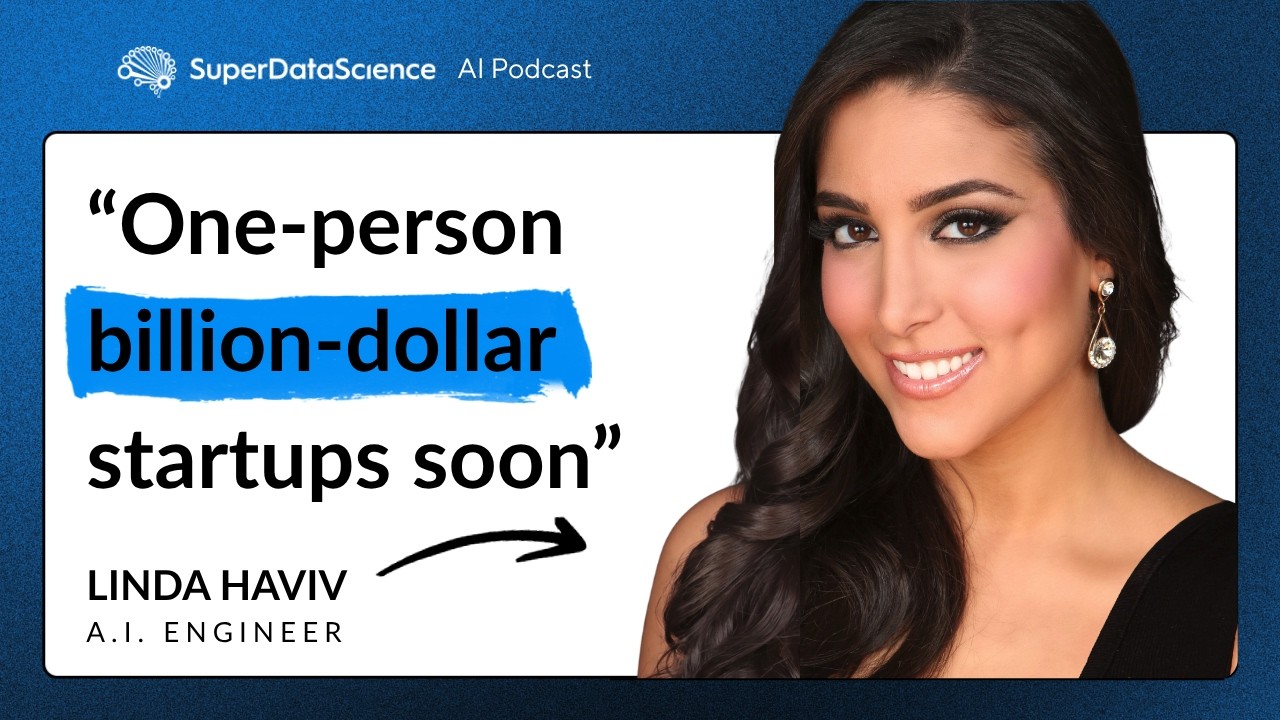
In the current AI era, where the pace of change can feel overwhelming, the key to a successful and fulfilling career lies in adapting, continuous upskilling, and embracing a new way of thinking about skills and opportunities. The journey for professionals can be made “a little less lonely and a lot more joyful” by focusing on community, transferable skills, and the power of open-source technology.
The New Career Paradigm: Systems Thinking Over Coding
The traditional, linear career path is fading. My own journey from a philosophy major and professional singer to a software developer and eventually a developer advocate at companies like AWS and Anyscale is a testament to this. Non-linear backgrounds are not a disadvantage; they are a source of unique, transferable skills. For instance, my experience in media gave me a deep understanding of the end-user when I was tasked with building a CMS for journalists. This domain expertise is a significant advantage.
We are in a period of abstraction where raw coding ability is becoming less critical than the ability to think in systems.
- Systems Thinking: This was once considered a principal-level skill, but it’s now essential for everyone in the field. As we build more complex agentic workflows, understanding the distributed systems layer is paramount.
- The Human Element: Skills like communication, creativity, and empathy are becoming more important. The ability to deliver education and technical concepts in an inspiring way is crucial. As I learned from my music career, there are many parallels between tech and the arts, especially in the creative process of building and interpreting systems.
- Upskilling to Stay Relevant: The necessity of being a “professional student” is a constant in tech. Whether it was shifting to the cloud or now adapting to AI, the core skill is learning how to learn effectively and joyfully.
AI Infrastructure and the Rise of Open Source
As AI applications move from toy examples to production at scale, AI infrastructure (AI Infra) challenges are coming to the forefront. This isn’t just traditional infrastructure; it’s a specialized stack built to handle the unique demands of AI/ML workloads, which are compute-heavy and GPU-dependent.
A key player in this space is Ray, an open-source, Python-native distributed computing framework.
- Purpose: Ray was created to let ML researchers and engineers focus on their models rather than becoming distributed systems experts. It simplifies the process of distributing workloads for training, data processing, and serving across multiple GPUs.
- Relevance: Originally built for reinforcement learning, its architecture is perfectly suited for today’s large-scale AI, including the Reinforcement Learning from Human Feedback (RLHF) techniques used to train major models. It integrates with other essential tools like vLLM and Hugging Face.
The open-source ecosystem is rapidly closing the gap with proprietary models. The move of key projects like Ray, vLLM, and the Model Context Protocol (MCP) to governance under the Linux Foundation is a critical step. It ensures these foundational technologies are not controlled by a single company, fostering community-driven innovation and preventing vendor lock-in. This democratization lowers the barrier to entry, allowing more people to build, fine-tune, and innovate.
Building in Public: Content Creation as a Career Catalyst
In today’s economy, having all your eggs in one basket is risky. Building a personal brand and creating content on the side is not just about being an “influencer”; it’s a form of career insurance and a powerful tool for growth.
- Attracting Opportunities: My role at AWS came about because they found my content about cloud computing on TikTok. By putting your knowledge and journey out there, you attract opportunities rather than having to chase them.
- Learning Through Teaching: The best way to solidify your understanding of a topic is to teach it to someone else. Building in public forces you to be precise and clear, accelerating your own learning.
- Finding Your Community: Especially for those in specialized fields, creating content helps you find like-minded individuals across the globe. This community becomes a source of support, collaboration, and shared learning.
It’s the best time in history to be an entrepreneur or a builder. The tools are more accessible than ever, and AI agents can help bridge skill gaps, whether in design, project management, or coding. The most important message is to be the “artist of your own journey.” Find where your unique skills intersect with what you find joyful, and lean into it.