Software engineering

What Is AI Code Refactoring? Agentic AI & Safe Code Changes

What Is AI Code Refactoring? Agentic AI & Safe Code Changes

This video explores AI code refactoring, differentiating between inline and autonomous agentic approaches. It highlights how AI can leverage pattern recognition for tasks like improving readability or reducing duplication, thereby addressing technical debt. A key focus is on the safety guardrails, detailing a multi-step, human-in-the-loop process involving planning, searching, reporting, human approval, patching, and verification through testing, ensuring AI-driven changes are safe for production and can integrate into CI/CD pipelines.
Sustainable Augmented Development • Kent Beck • YOW! 2025

Sustainable Augmented Development • Kent Beck • YOW! 2025

Kent Beck's presentation at YOW! Australia 2025 explores the transformative impact of augmented development ('the genie') on software engineering. He argues that AI shifts programming into an exploratory phase, requiring a re-evaluation of traditional practices. Beck introduces the concept of 'resting between the notes' to foster optionality over mere feature churn, and makes a compelling case for the increased value of junior developers as AI tools become powerful learning aids, emphasizing that 'nobody knows' the future but we must 'take our time' to adapt effectively.

Building an Autonomous Engineering Org - Angie Jones, Agentic AI Foundation

Building an Autonomous Engineering Org - Angie Jones, Agentic AI Foundation

Angie Jones details Block's journey in transforming its engineering organization into an autonomous one using AI agents. She outlines a five-stage AI maturity model, the strategic implementation of an 'AI Champions' program, and the technical steps taken to make repositories AI-ready and enable seamless agent delegation directly within developer workflows. The talk covers challenges in scaling multi-agent parallelism, including code review bottlenecks and resource management, and the development of an orchestrator ('Builder Bot') and 'Company World Model' to achieve full autonomy. It concludes with a critical reflection on the ethical implications of achieving such high levels of AI-driven automation.

Full Stack Greenfield Projects : Are they still relevant?

Full Stack Greenfield Projects : Are they still relevant?

Bharat Goenka, co-founder of Tally, discusses the company's unconventional approach to software development through "Full Stack Greenfield" projects. He explains why building every component from scratch, despite being a high-risk strategy, has been crucial for Tally's success in serving the SMB market, fostering extreme customer loyalty, and aspiring to connect 200 million businesses. The talk delves into the historical context, the philosophy of questioning and choosing constraints, and the distinction between product and custom engineering.

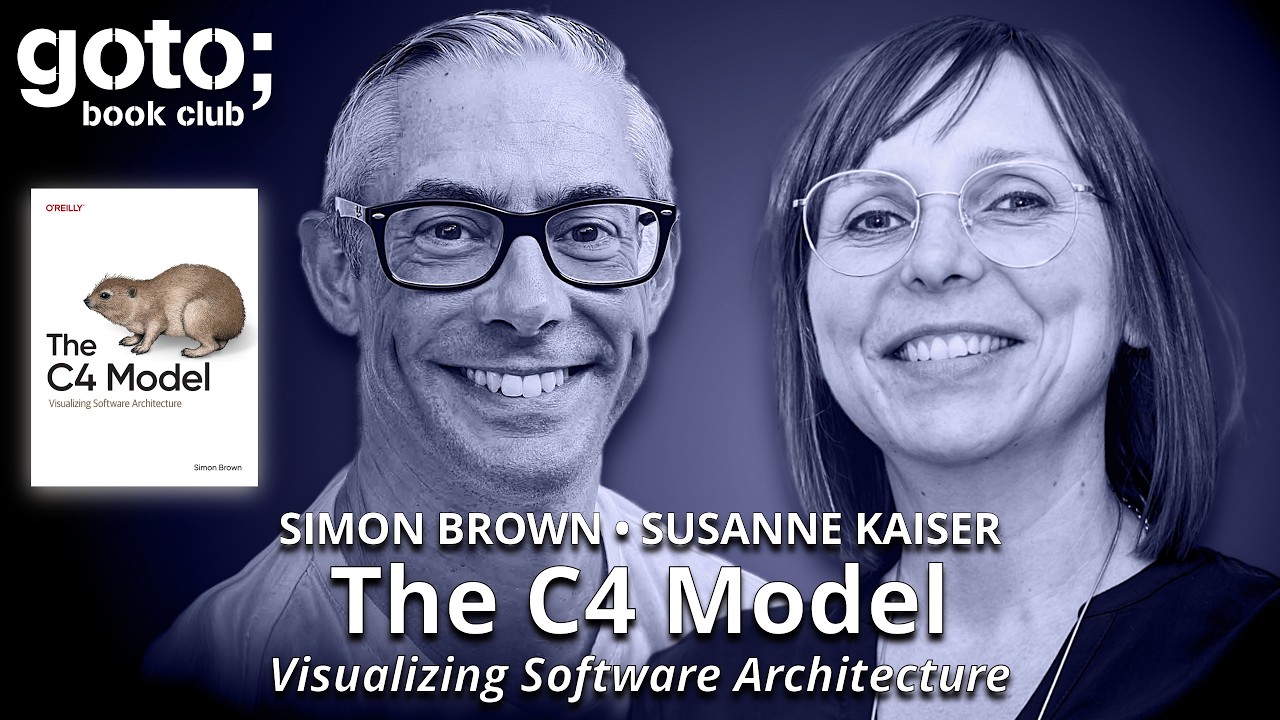
The C4 Model: Visualizing Software Architecture • Simon Brown & Susanne Kaiser • GOTO 2026

The C4 Model: Visualizing Software Architecture • Simon Brown & Susanne Kaiser • GOTO 2026

Simon Brown, creator of the C4 Model, discusses its origin as a practical solution to clarify messy software diagrams. He explains the four hierarchical levels (context, container, component, code), emphasizing that most teams only need the top two for significant value. The discussion highlights the importance of including technology in diagrams, C4's collaborative nature, and practical advice on modeling microservices and bounded contexts, all while advocating for a lightweight, accessible approach to architectural visualization.

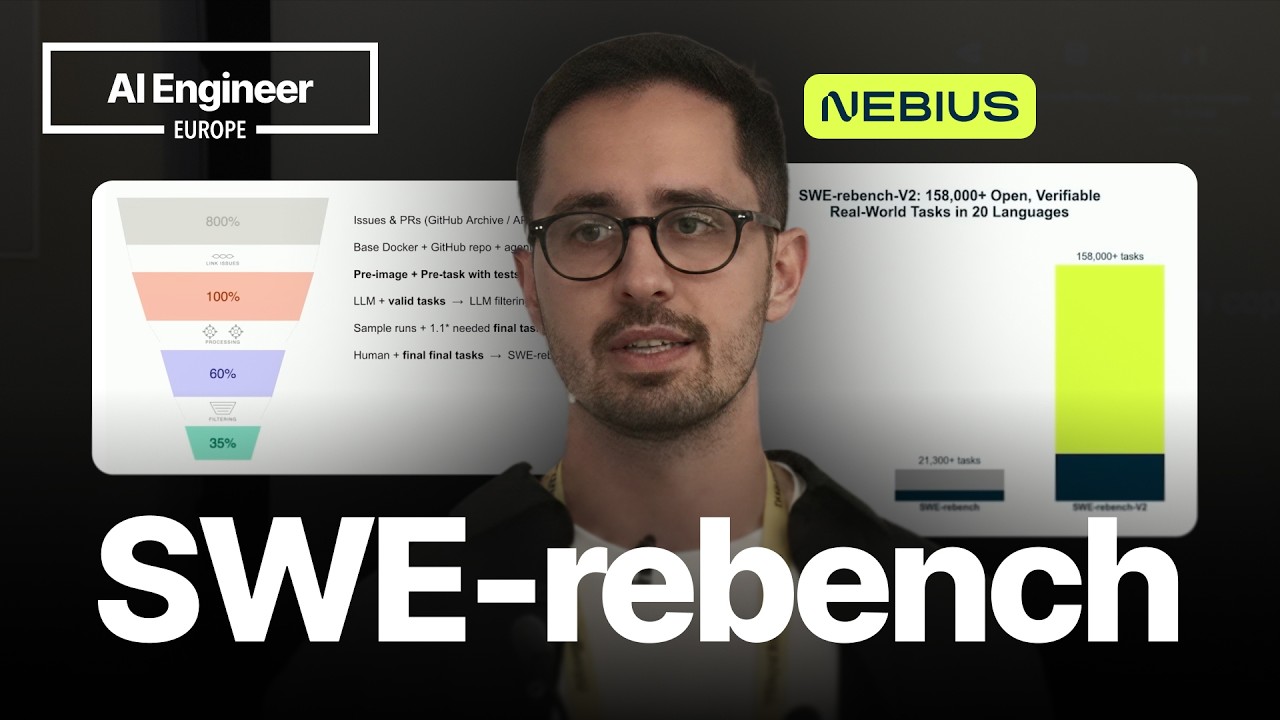
SWE-rebench: Lessons from Evaluating Coding Agents — Ibragim Badertdinov, Nebius

SWE-rebench: Lessons from Evaluating Coding Agents — Ibragim Badertdinov, Nebius

Ibragim Badertdinov from Nebius AI shares lessons from building and maintaining SWE-ReBench, a monthly leaderboard that evaluates coding agents on fresh, real-world software engineering tasks. The talk covers the anatomy of a good benchmark task, the challenges of filtering out noisy or flawed problems, and fascinating examples of how advanced models like Claude Code "cheat" by exploiting the environment. Finally, it explains how the same pipeline used for evaluation has produced large-scale, high-quality training datasets like SWE-bench, used by frontier AI labs.