Scientific discovery

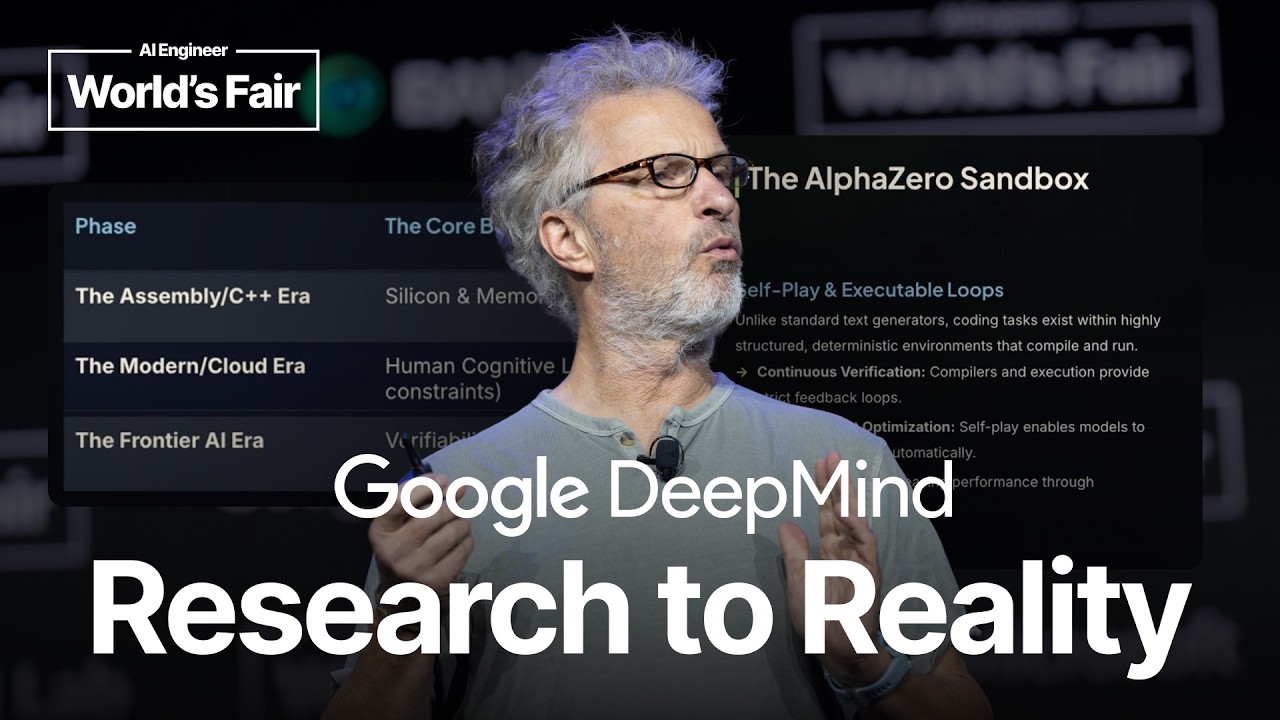
Research to Reality with Google DeepMind — Benoit Schillings, Google DeepMind, VP of Technology

Research to Reality with Google DeepMind — Benoit Schillings, Google DeepMind, VP of Technology

Benoit Schillings, VP of Technology at Google DeepMind, explores the evolution of AI's role in software development, highlighting the transition from human-limited coding to an AI frontier where syntax generation is solved. He delves into the power of self-play for model training, the shifting economics of software engineering, and the imperative for active guardrails. Schillings also discusses the need for inductive architecture, advanced model planning, multimodal reasoning (as seen in Gemini), and the potential for AI to drive scientific breakthroughs in fields like chemistry and biology by uncovering patterns imperceptible to human bias.
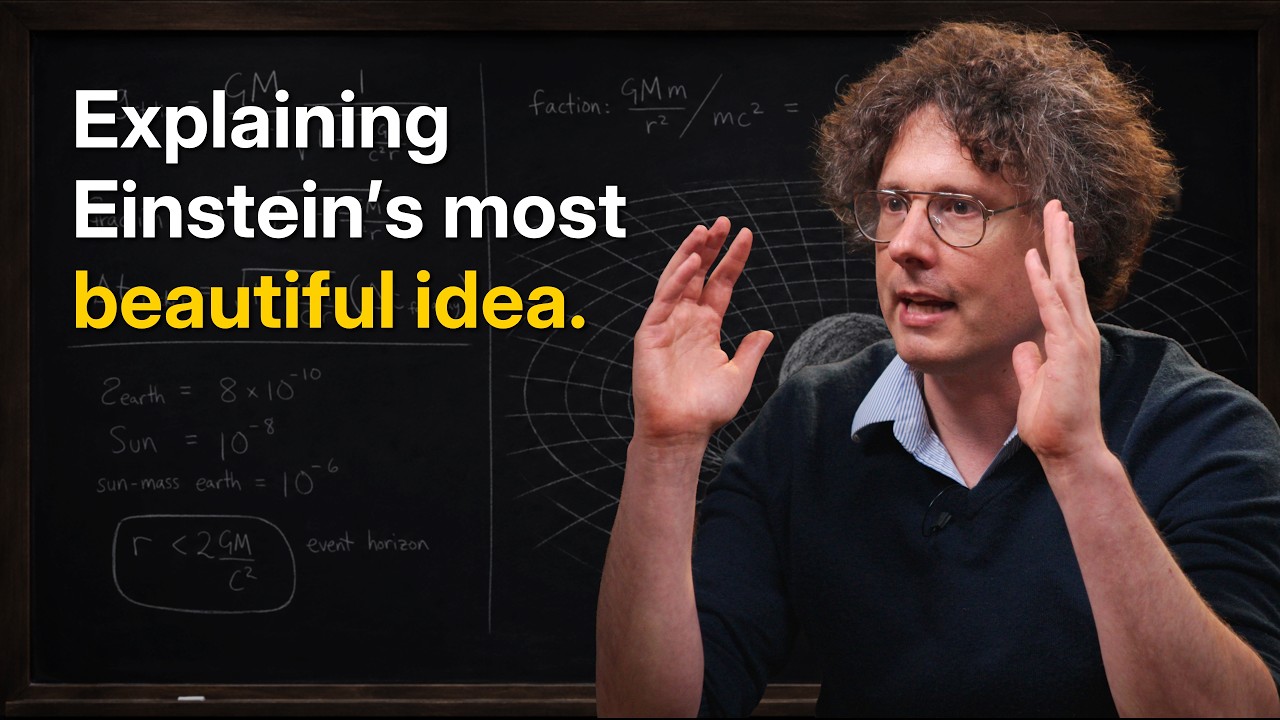
General relativity from first principles – Adam Brown

General relativity from first principles – Adam Brown

Adam Brown elucidates Einstein's General Relativity, tracing its origins from the equivalence principle and curved spacetime to the mind-bending physics of black holes. He covers the striking observational evidence for black holes and the historical confirmation of GR, concluding with a speculative discussion on how AI could accelerate scientific discovery as 'superhuman explainers'.

Why Tejal Patwardhan stopped underestimating the models - Episode 21

Why Tejal Patwardhan stopped underestimating the models - Episode 21

Tejal Patwardhan, head of OpenAI's frontier evals team, discusses the critical evolution of AI evaluations. She explains why traditional benchmarks fail as models become more capable, how OpenAI develops realistic, long-horizon tests (including groundbreaking wet lab experiments), and the implications of rapidly advancing multimodal and reasoning models for scientific discovery and the future of human work.

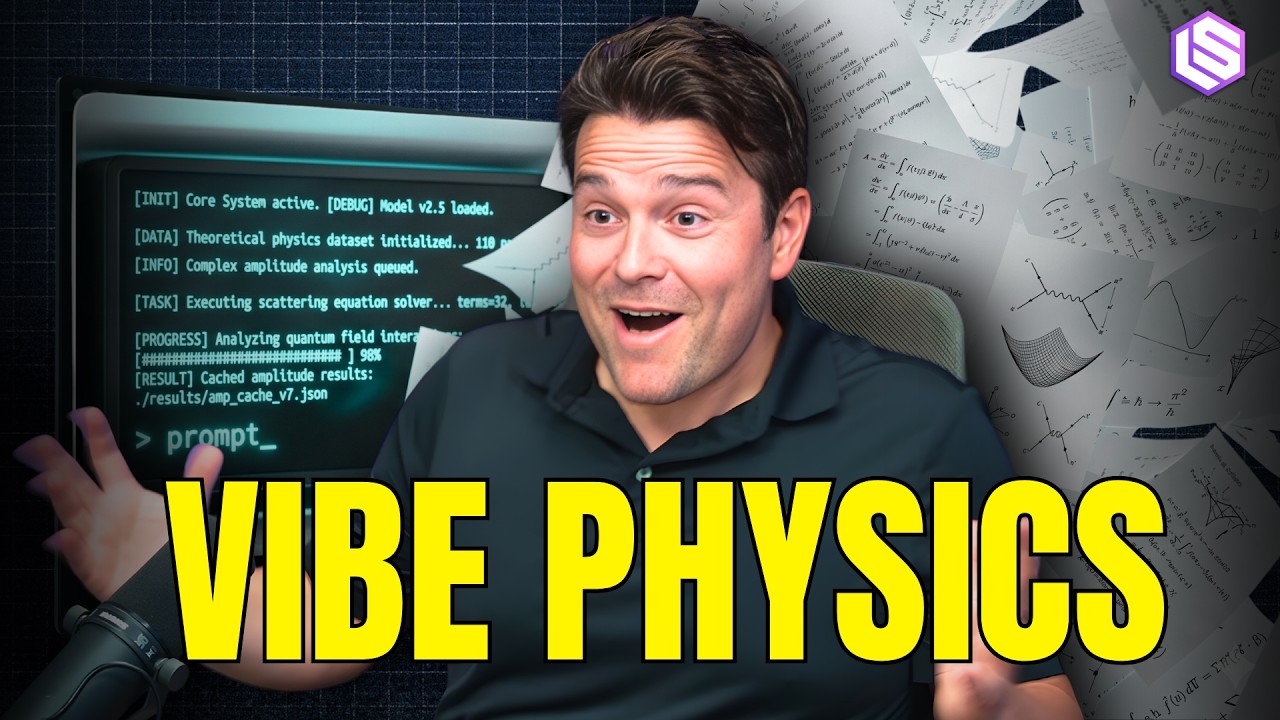
Top Black Holes Physicist: GPT5 can do Vibe Physics, here's what I found

Top Black Holes Physicist: GPT5 can do Vibe Physics, here's what I found

Theoretical physicist Alex Lupsaska shares his journey from AI skeptic to collaborator, detailing how advanced GPT models solved a year-long problem in quantum field theory concerning gluon scattering amplitudes, and then generalized the solution to gravitons, signaling a new era of AI-accelerated scientific discovery.

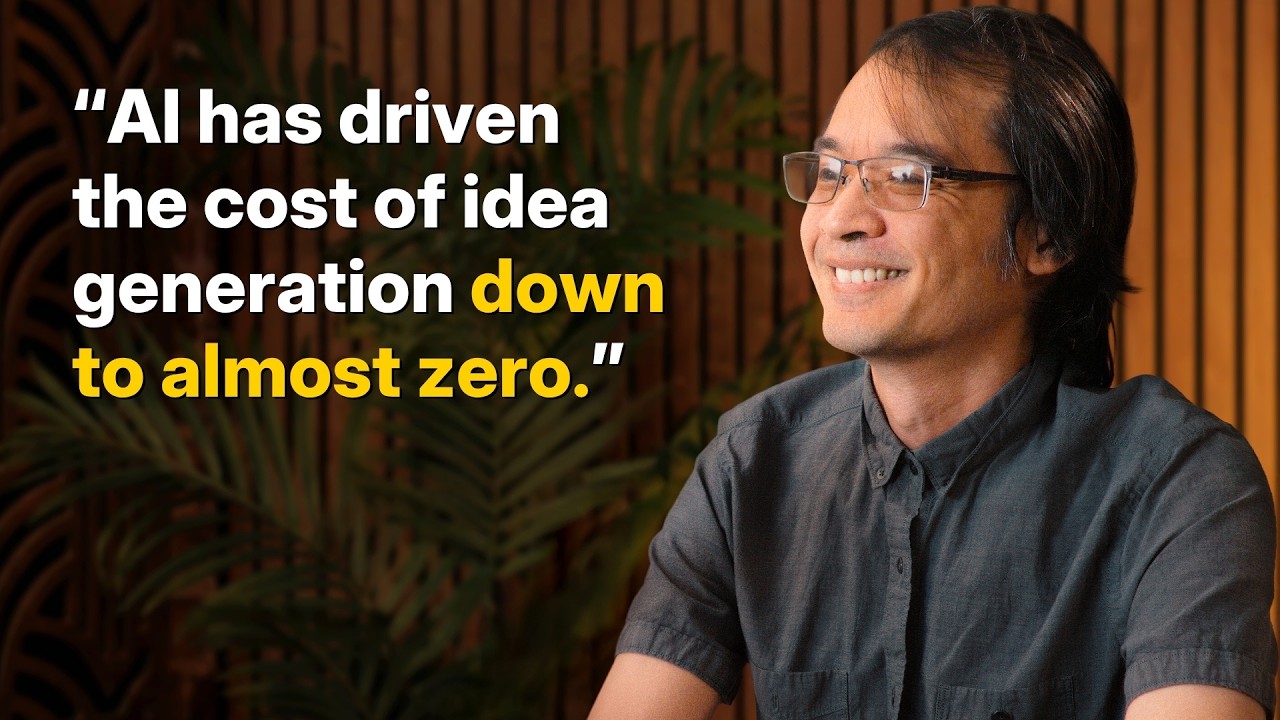
Terence Tao – Kepler, Newton, and the true nature of mathematical discovery

Terence Tao – Kepler, Newton, and the true nature of mathematical discovery

Terence Tao uses the story of Kepler's discovery of planetary motion as an analogy for AI's role in science. He argues that AI excels at broad, high-temperature idea generation but requires a robust verification process to be useful. The bottleneck in science is shifting from hypothesis generation to verification and curation, a challenge current scientific structures are not equipped to handle. Tao foresees a future of human-AI collaboration where humans provide deep insights and AI explores the vast breadth of possibilities, ultimately making scientific papers richer but not necessarily deeper.

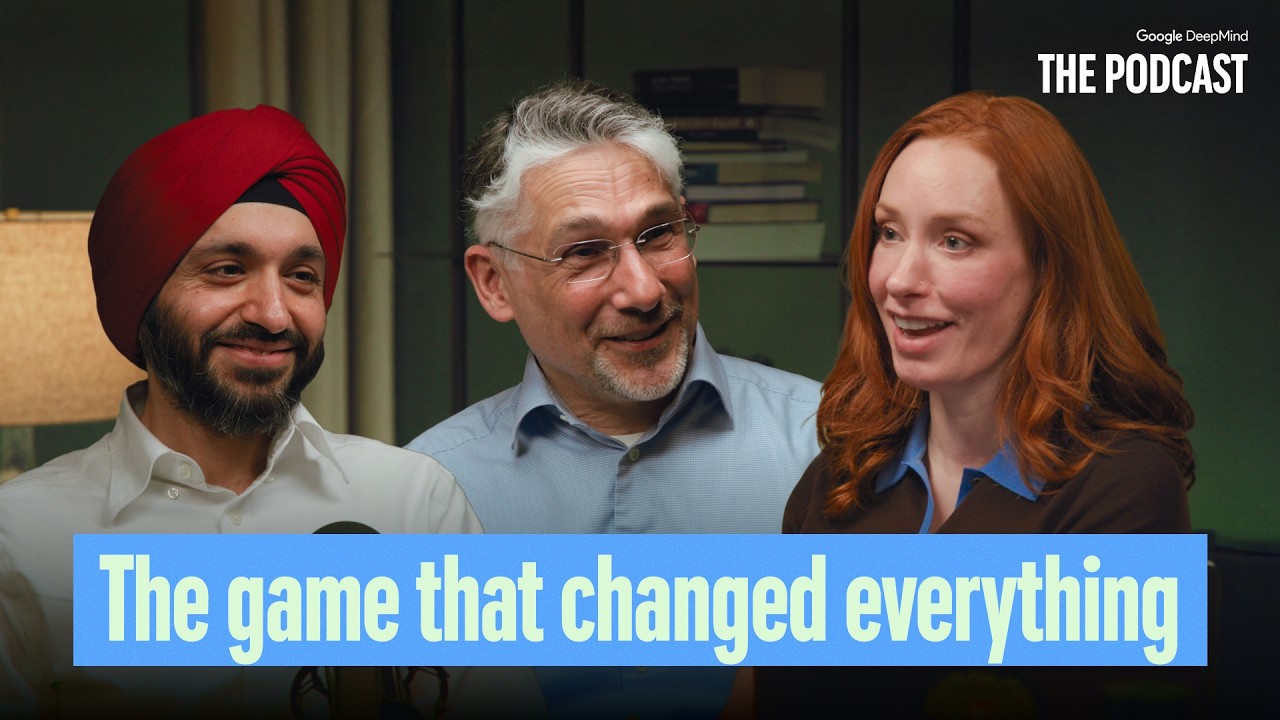
10 years of AlphaGo: The turning point for AI | Thore Graepel & Pushmeet Kohli

10 years of AlphaGo: The turning point for AI | Thore Graepel & Pushmeet Kohli

Ten years after the historic match between AlphaGo and Lee Sedol, Google DeepMind's Thore Graepel and Pushmeet Kohli reflect on its legacy. They discuss how AlphaGo's blend of deep learning and tree search conquered the game of Go, the significance of creative breakthroughs like 'Move 37', and how these foundational concepts evolved into systems like AlphaZero, which learns without human data. The conversation bridges the gap from game-playing to solving scientific grand challenges, detailing how the same principles are now used in tools like AlphaTensor to discover novel, more efficient algorithms for fundamental problems like matrix multiplication.