Root cause analysis

Learned Execution Graphs for Anomaly Detection & Drift in APIs — Ritvik Pandya, JP Morgan Chase

Learned Execution Graphs for Anomaly Detection & Drift in APIs — Ritvik Pandya, JP Morgan Chase

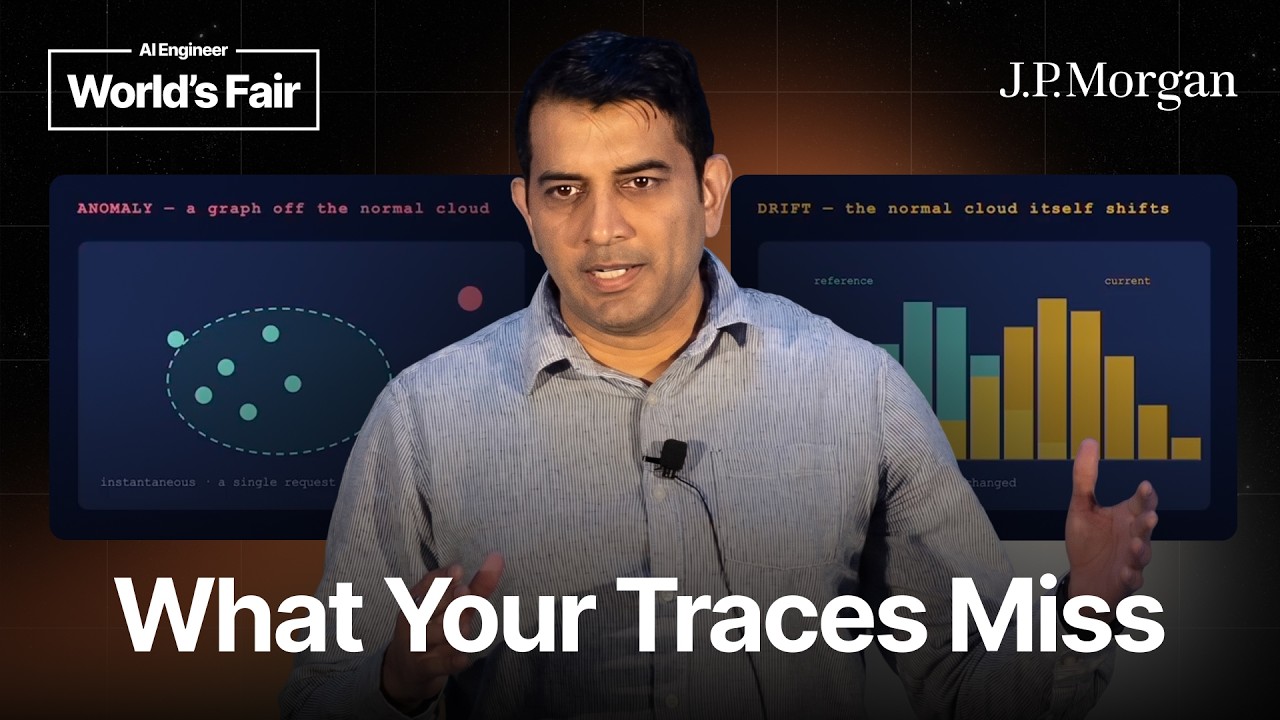
Ritvik Pandya from JP Morgan introduces 'learn execution graphs'—short-lived DAGs representing API request processing—to detect anomalies and drift in high-throughput systems. This approach localizes performance issues to exact nodes, identifies skipped or reordered steps, and differentiates between transient anomalies and fundamental system drift (structural, volume, or behavioral). It leverages per-client baselines and OpenTelemetry data to reduce mean time to discovery (MTTD) from hours to seconds, enhancing system reliability and observability.

AI Agents: Transforming Anomaly Detection & Resolution

AI Agents: Transforming Anomaly Detection & Resolution

Martin Keen explores how agentic AI can significantly reduce IT downtime and Mean Time To Repair (MTTR) by moving beyond naive data dumps and embracing context-aware analysis. The key lies in using topology-aware correlation to curate relevant data for an AI agent, which can then systematically identify the root cause, provide explainable insights, and generate actionable remediation steps, ultimately augmenting human SREs rather than replacing them.

From DevOps ‘Heart Attacks’ to AI-Powered Diagnostics With Traversal’s AI Agents

From DevOps ‘Heart Attacks’ to AI-Powered Diagnostics With Traversal’s AI Agents

Anish Agarwal and Raj Agrawal, co-founders of Traversal, discuss how their AI agents automate root cause analysis (RCA) for critical system failures. They detail their agent's architecture, which leverages causal inference and large-scale computation to systematically find the root cause in minutes, and argue that the rise of AI-generated code makes AI-powered debugging an essential capability for modern software engineering.