Productivity

Jensen Huang: The Mindset That Built NVIDIA

Jensen Huang: The Mindset That Built NVIDIA

Jensen Huang, CEO of NVIDIA, shares critical lessons from NVIDIA's journey, emphasizing how early failures and a commitment to learning new technologies, like purchasing textbooks from Fry's to pivot the company, laid the groundwork for their success. He discusses NVIDIA's strategic vision, driven by accelerating algorithm domains and seeing AlexNet as a universal function approximator, which led to a reinvention of the computing stack. Huang also explores the future of AI with agents, the importance of fine-grained control, and the "Linux moment" of open-source AI, while also forecasting the rise of physical AI and job creation. He concludes with profound advice on resilience, systems thinking, and the "how hard can it be?" mindset for aspiring entrepreneurs in this unprecedented era of technological reset.

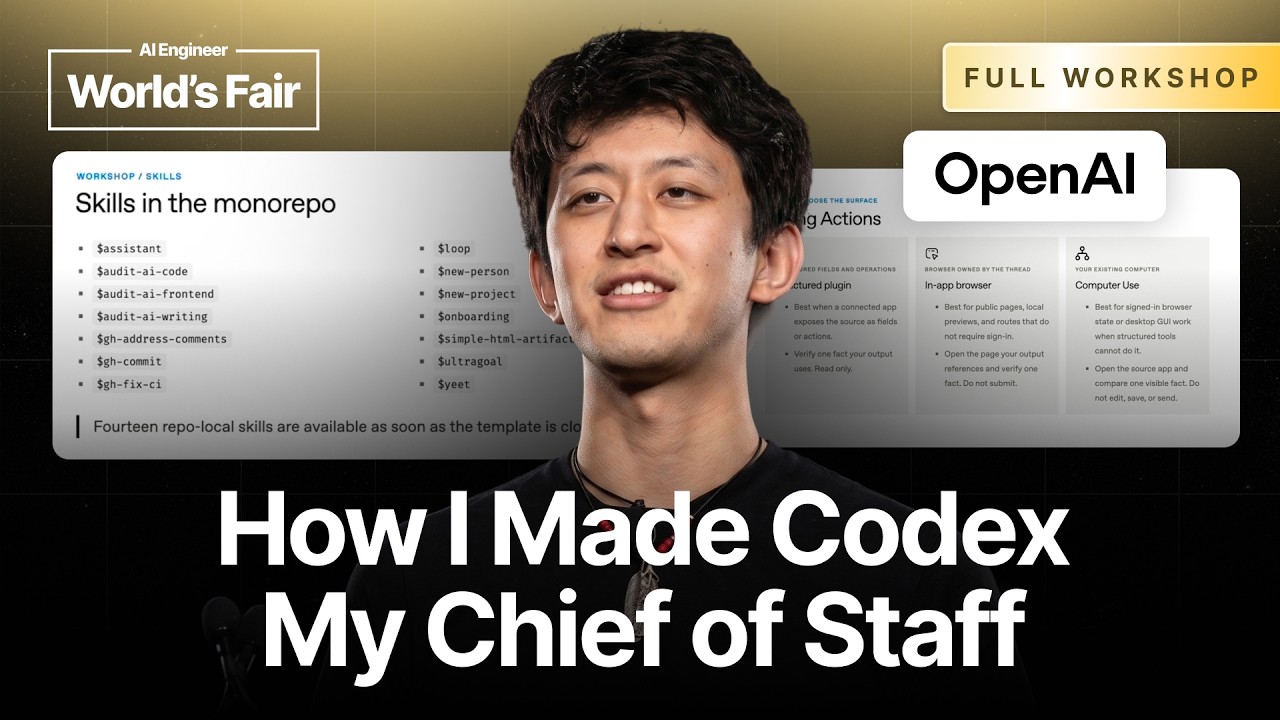
Full Workshop: Setting Yourself Up for Success —Jason Liu, OpenAI Codex

Full Workshop: Setting Yourself Up for Success —Jason Liu, OpenAI Codex

Jason Liu from OpenAI shares advanced strategies for using Codex to automate complex workflows and manage personal information. He introduces key concepts like "compaction," dictation for input, and "appshots" for contextual awareness. The talk covers bringing context into the system via plugins and a personal memory vault, working with AI through automations, goals, and interconnected threads, and taking actions out in the real world, emphasizing the transformative power of "Computer Use" for broad system control.

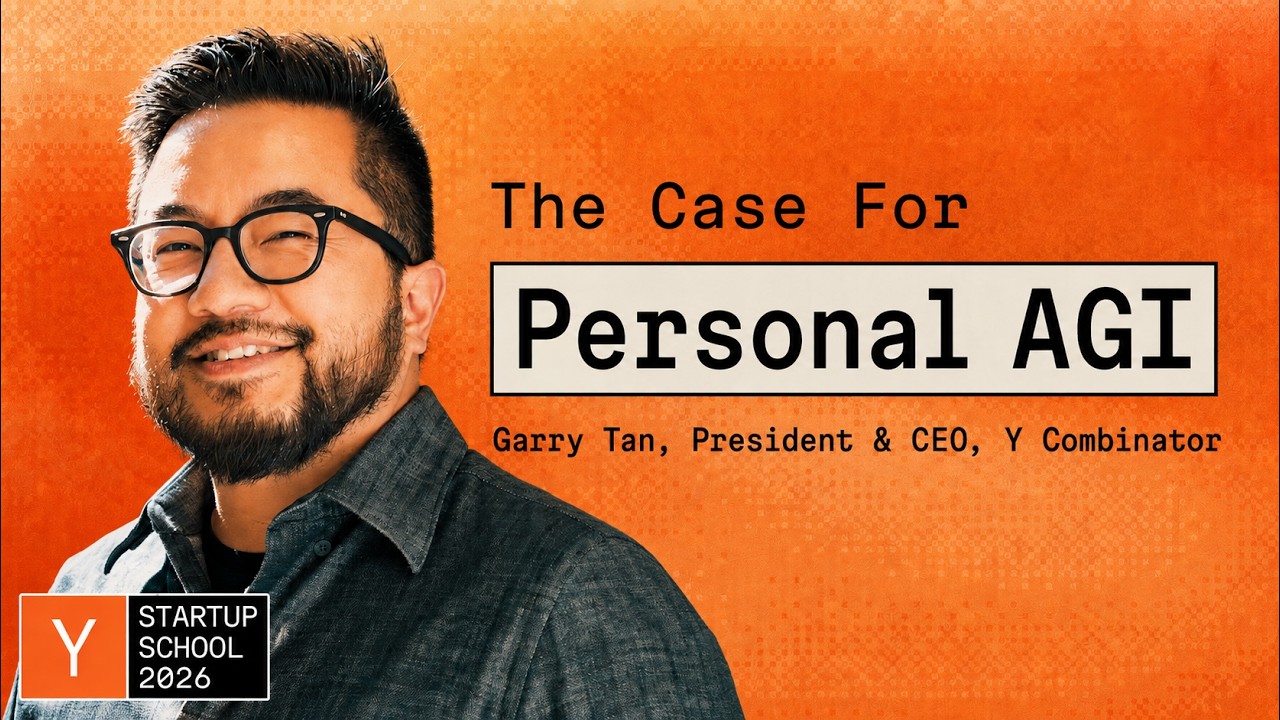
Closing Keynote: Garry Tan, Y Combinator

Closing Keynote: Garry Tan, Y Combinator

Garry Tan, President of Y Combinator, details how AI-native companies are achieving unprecedented productivity and scale with lean teams. He introduces the concept of "wiring the work" by treating AI as a workforce where organizational components are encoded into markdown "skill files." Tan explains how "company brains" act as a library and librarian, managing institutional knowledge to overcome human memory limits. He emphasizes the discipline of "skillifying" every task to ensure continuous learning and calls on founders to build these new AI-native infrastructures to "boil the ocean"—tackling previously insurmountable problems.

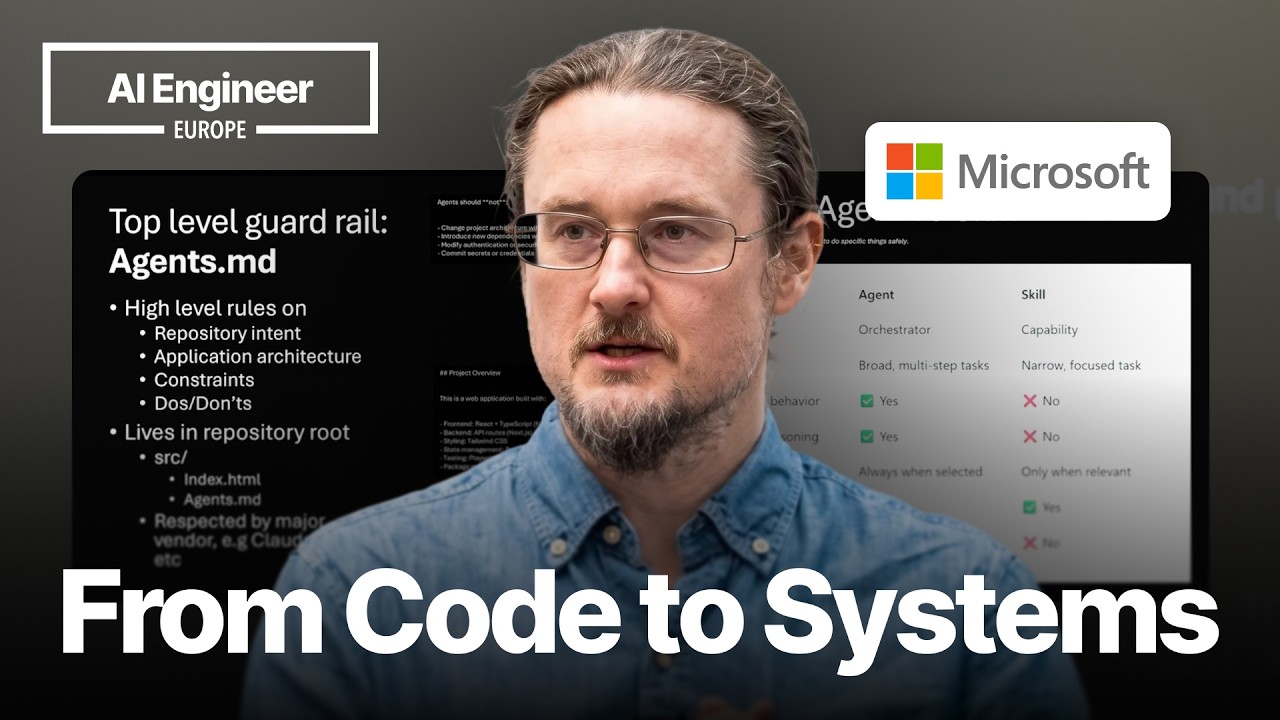
From Writing Code to Designing Systems: How the Developer Role is Changing — Chris Noring, Microsoft

From Writing Code to Designing Systems: How the Developer Role is Changing — Chris Noring, Microsoft

This talk introduces a paradigm shift in software development, moving developers from pure code producers to system designers and agent orchestrators. It details a new workflow leveraging GitHub Copilot CLI, custom Copilot agents, and explicit guardrails like `agents.md` and skills. The focus is on how to decompose complex problems, delegate implementation to AI, and encode architectural standards and constraints directly, enabling higher consistency, quality, and accelerated delivery through a "human-in-the-loop" delegation model.

Automate Workflows w/ Autonomous Tools Real-Time AI Agents | Aytekin Tank | Founder & CEO | Jotform

Automate Workflows w/ Autonomous Tools Real-Time AI Agents | Aytekin Tank | Founder & CEO | Jotform

Aytekin Tank, Founder and CEO of Jotform, discusses how AI is revolutionizing software development and customer support, highlighting "vibe coding" and Jotform's 80% AI-handled support with zero layoffs. He also shares his "Theory of Constraints" playbook for scaling businesses and explores the potential of ChatGPT apps, all within Jotform's 20-year bootstrapped journey.

OpenAI on OpenAI: Stacie Faggioli, Business Finance Officer Applications, OpenAI

OpenAI on OpenAI: Stacie Faggioli, Business Finance Officer Applications, OpenAI

OpenAI's finance team showcases how they've transformed operations using AI tools like ChatGPT, ChatGPT for Excel, and custom agents built with Codex. They highlight principles of AI-native design, headcount leverage, rapid iteration, and specific applications that significantly boost individual productivity and organizational efficiency, including investor relations, LBO modeling, marketing analytics, sales insights, financial reporting automation, and agent-driven procurement, credit checks, contract review, and vendor risk management.