Product development

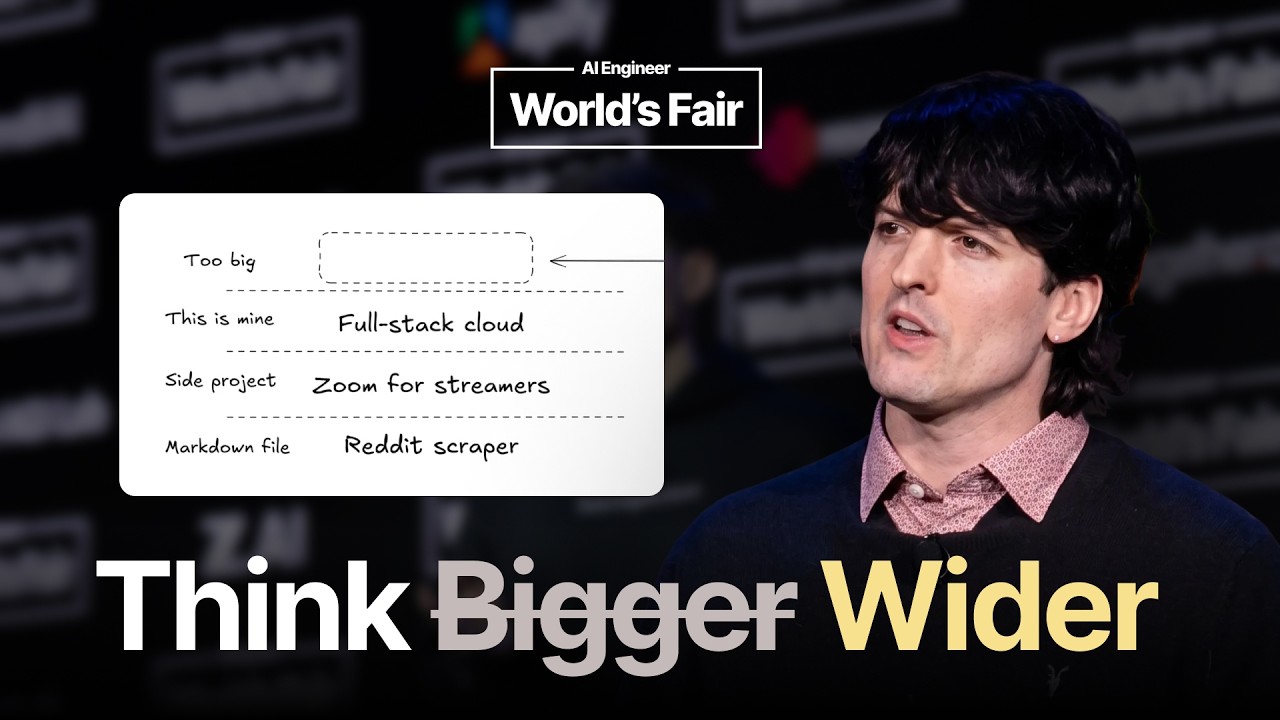
What do we build now? — Theo Browne, @t3dotgg

What do we build now? — Theo Browne, @t3dotgg

Theo Browne's keynote from AIEWF2026 urges software engineers to fundamentally change product development in response to rapidly evolving AI models (Sonnet 3.5 to Mythos). He advocates for rejecting legacy mental models and tools (skeuomorphism), embracing a new "Markdown tier" for projects, and thinking "wider" instead of just "deeper" by building extensible platforms that can challenge industry giants. The core message is to be more ambitious, as AI has drastically lowered the barrier to entry for complex, broad-reaching solutions.

OpenAI Codex lead on the new shape of product work | Andrew Ambrosino

OpenAI Codex lead on the new shape of product work | Andrew Ambrosino

Andrew Ambrosino, Product and Engineering Lead for the Codex app at OpenAI, details how AI is transforming product development, shifting focus from implementation to curation and the crucial role of "taste." He discusses AI's current limitations in design, the evolving nature of product roles, and OpenAI's "zone defense" approach to product management. Ambrosino shares his personal workflow with Codex and outlines the vision for it as an intelligent "home base" that orchestrates work across various applications, exemplified by a story of Codex building a Premiere Pro extension.

Full Stack Greenfield Projects : Are they still relevant?

Full Stack Greenfield Projects : Are they still relevant?

Bharat Goenka, co-founder of Tally, discusses the company's unconventional approach to software development through "Full Stack Greenfield" projects. He explains why building every component from scratch, despite being a high-risk strategy, has been crucial for Tally's success in serving the SMB market, fostering extreme customer loyalty, and aspiring to connect 200 million businesses. The talk delves into the historical context, the philosophy of questioning and choosing constraints, and the distinction between product and custom engineering.

The Age Of The 40-Year-Old Solo Founder Is Here

The Age Of The 40-Year-Old Solo Founder Is Here

Bryant Chou, co-founder of Webflow, introduces his new AI-powered platform, Ploy. This episode delves into how Ploy transcends traditional website builders by integrating analytics, CRM, and SEO to autonomously optimize marketing. Chou discusses Ploy's 'anti-slop' approach, leveraging curated data and expertise to produce high-quality web designs, and reflects on building a startup in the AI era compared to Webflow's early days. He also explores the competitive moat of purpose-built AI, the concept of 'agents as customers,' and how experienced founders can leverage AI to 'clone themselves' and achieve unprecedented speed and scale.

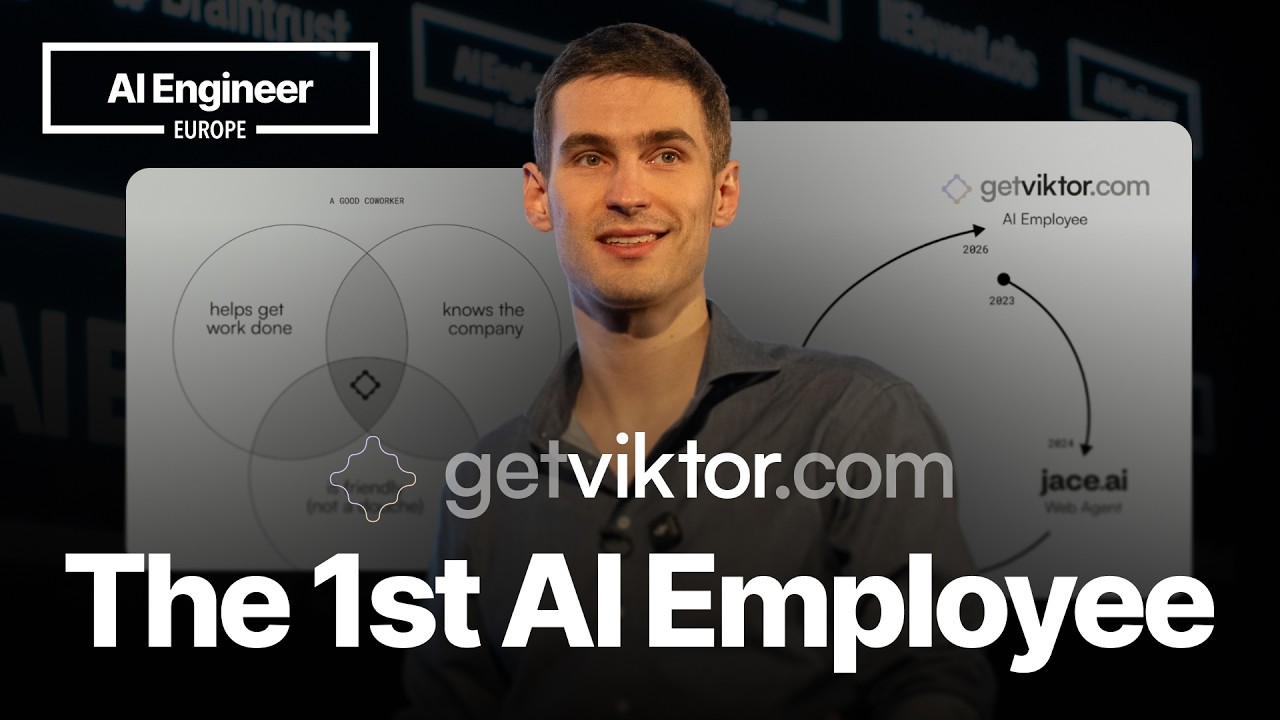
Viktor: AI Coworker That Lives in Slack — Fryderyk Wiatrowski

Viktor: AI Coworker That Lives in Slack — Fryderyk Wiatrowski

This talk explores the journey of building Viktor, an AI employee that lives entirely in Slack. It details the unique challenges of scaling an AI agent from a personal tool to a company-wide coworker, focusing on memory isolation, context management across different Slack interactions (DMs, channels, threads), and the surprising importance of the AI's personality for user adoption.

Why cultivating agency matters more than cultivating skills in the AI era | Max Schoening (Notion)

Why cultivating agency matters more than cultivating skills in the AI era | Max Schoening (Notion)

Max Schoening, Head of Product at Notion, discusses how AI is reshaping software development. He argues that agency—the drive to effect change—is now more critical than specific skills, as AI makes the first 10% of any project 'free'. Schoening introduces his 'tiny core' theory for great products, debates the 'SaaSpocalypse', and emphasizes the growing importance of software quality and taste in an era of exploding software quantity.