Open ai

Where AI products go next: voice, agents, and self-driving software | Tara Sesha and Nan Yu (OpenAI)

Where AI products go next: voice, agents, and self-driving software | Tara Sesha and Nan Yu (OpenAI)

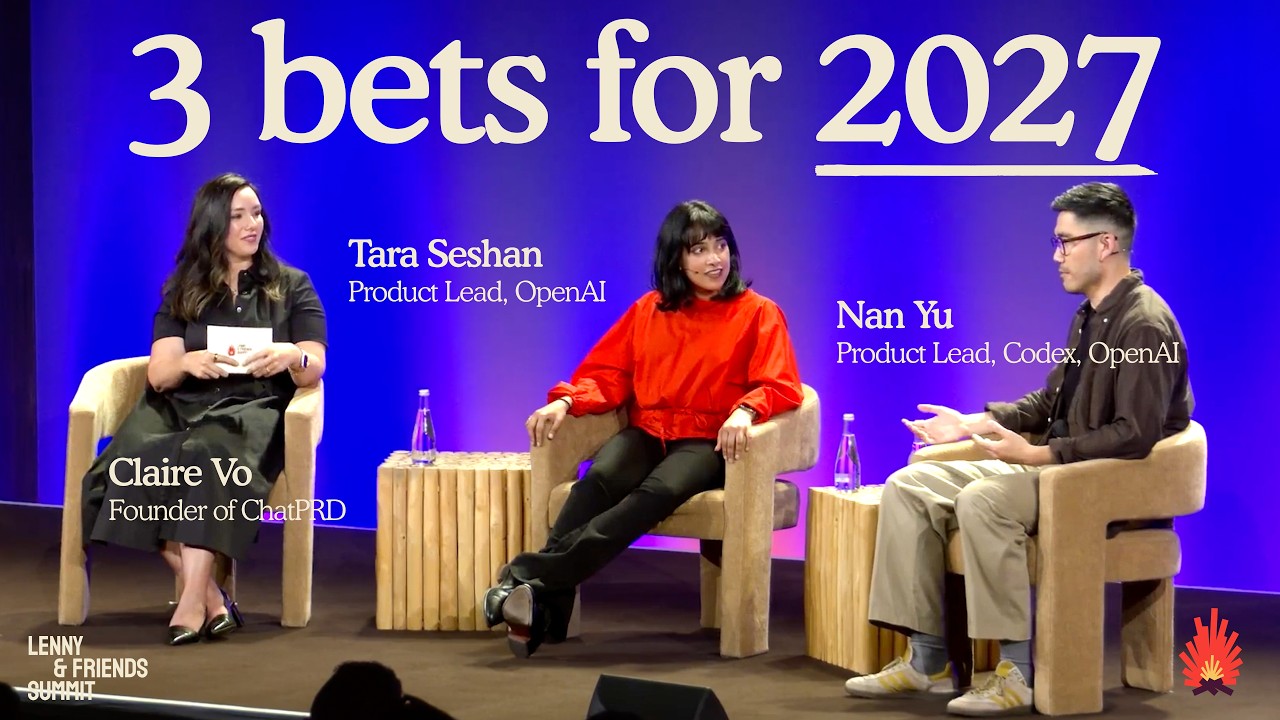
A live talk from the Lenny and Friends Summit with OpenAI's Tara Seshan and Nan Yu and host Claire Vo on building AI products when both technology and user expectations change rapidly. Topics include shipping imperfect features (the ChatGPT "toggle"), the 2 to 3 month model-capability horizon, enterprise absorption limits, single versus multi-agent design, platform layering with computer use as a fallback, working with research through evals, direct user relationships, and predictions for voice, proactive agents, and hardware.
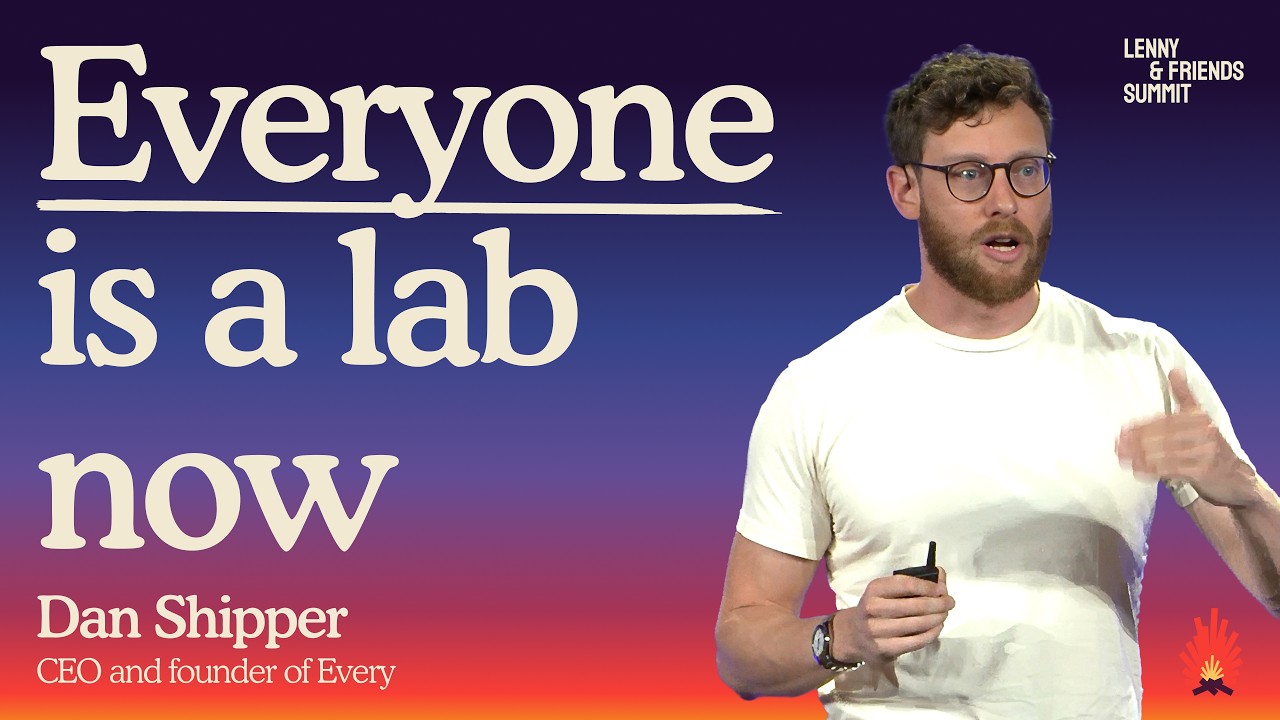
How to build products on a moving frontier | Dan Shipper (Every)

How to build products on a moving frontier | Dan Shipper (Every)

Dan Shipper, co-founder and CEO of Every, advocates for a dedicated 'labs team' to navigate the rapid evolution of AI capabilities. He argues that traditional product development struggles with the 'moving frontier,' proposing a model where a small, experimental lab explores new AI ideas and capabilities, while the main product team focuses on scaling existing offerings. Shipper outlines how to establish and run such a lab, from team composition ('pirates' and 'architects') to rigorous experimentation, dogfooding, and a structured pipeline for integrating successful innovations into the core product, enabling continuous disruption and growth.

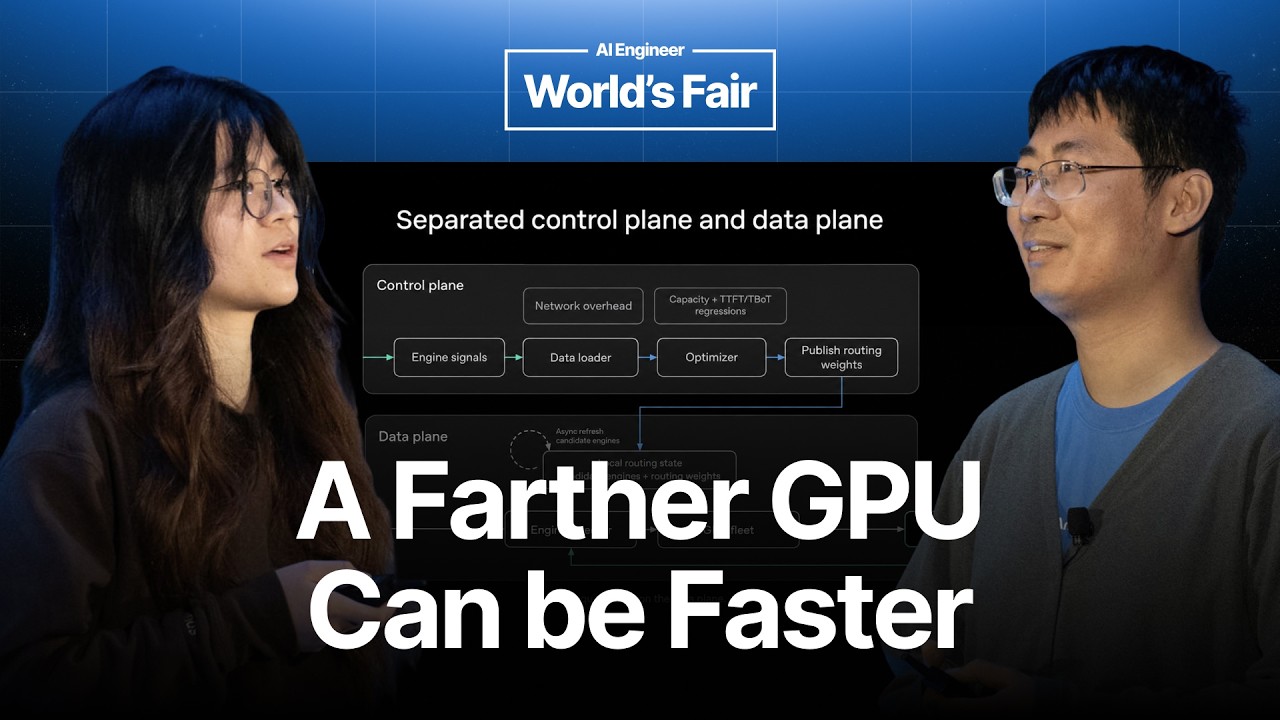
Routing LLM Inference in Production: From Engine Signals to Policy — Qianru Lao & Lu Zhang, OpenAI

Routing LLM Inference in Production: From Engine Signals to Policy — Qianru Lao & Lu Zhang, OpenAI

This talk outlines OpenAI's journey in building a robust inference load balancer. It details the transition from an initial feedback-loop-driven system, which suffered from explainability issues and disruptive oscillations, to a sophisticated control plane/data plane architecture. The new system leverages a global view to optimize end-to-end latency across all traffic, balancing network distance with engine-side queuing, and includes critical protection mechanisms like outlier penalties, dynamic retry budgets, and load shedding to ensure stability in production.

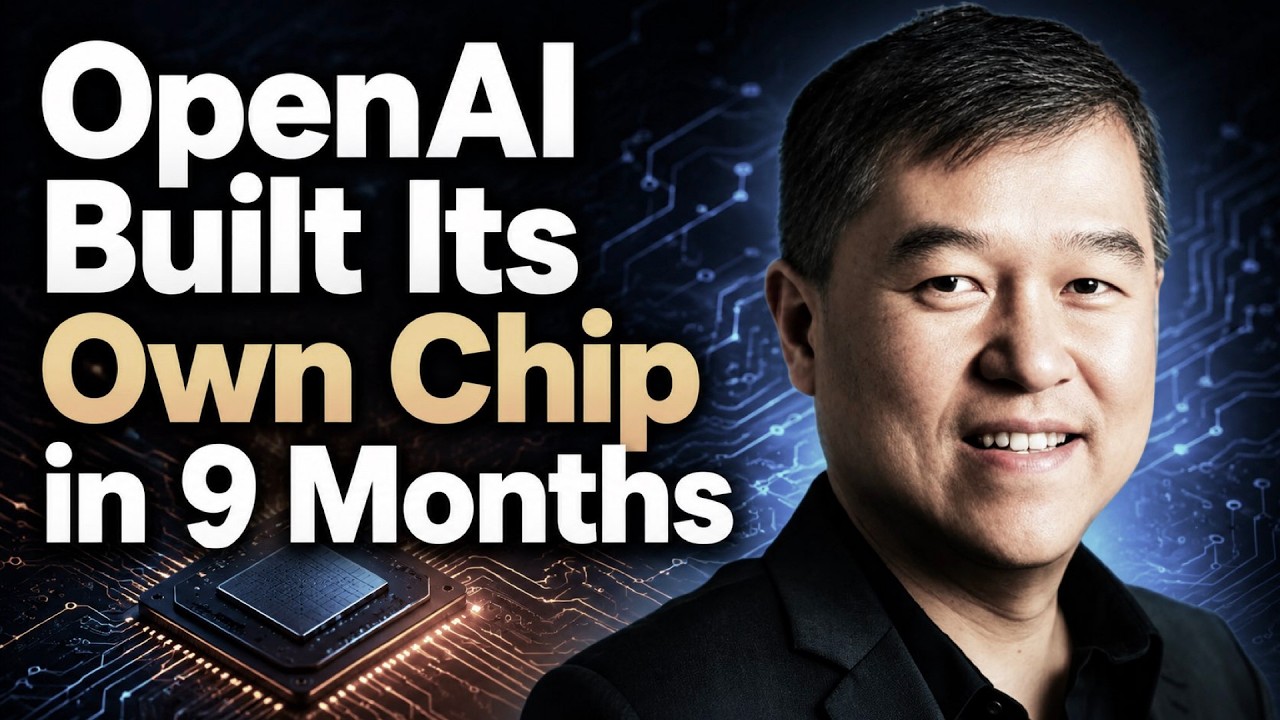
OpenAI Built Its Own Chip in 9 Months

OpenAI Built Its Own Chip in 9 Months

Richard Ho, VP of Hardware at OpenAI, details the development of 'Jalapeño,' OpenAI's first custom AI accelerator. The chip aims to drastically lower inference costs and empower full stack control, achieving a remarkable 9-month tape-out by leveraging AI in chip design. Jalapeño's blank-slate architecture brings memory and compute closer, delivering both high throughput and low latency, outperforming competitors even without speculative decoding, and proving that AI can supercharge expert productivity in complex engineering fields.

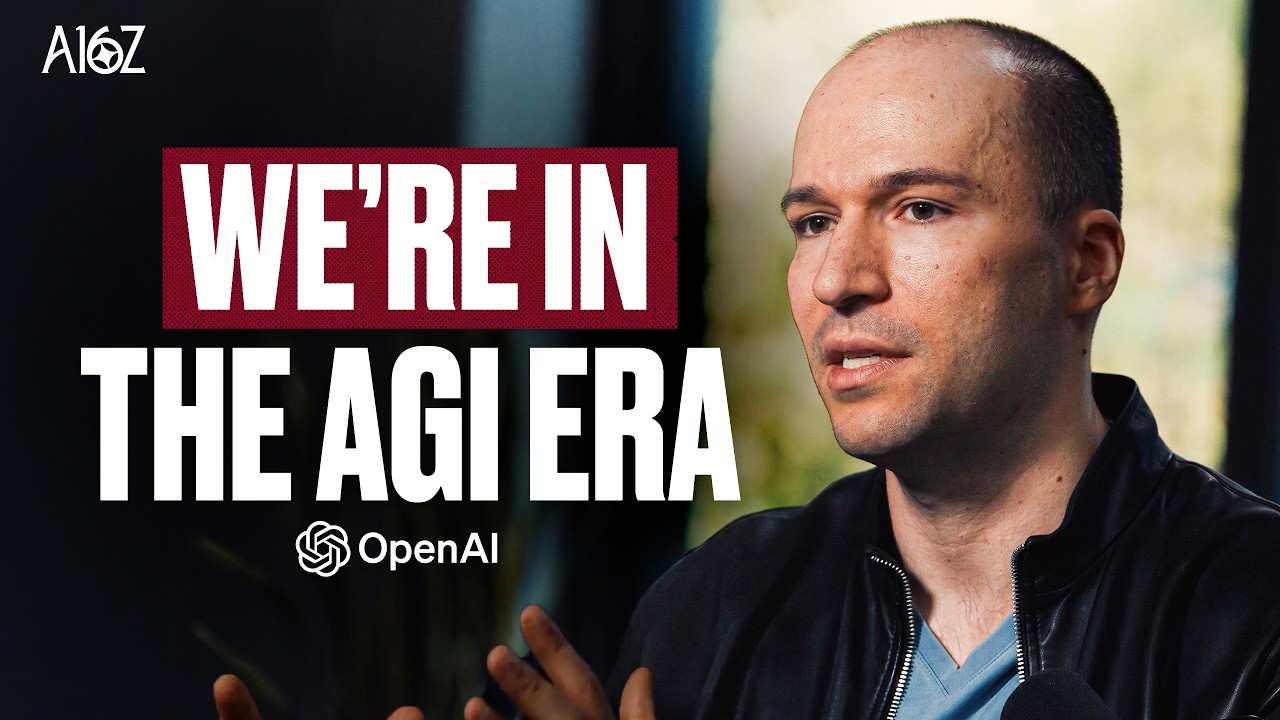
Greg Brockman Says AGI Has Arrived

Greg Brockman Says AGI Has Arrived

OpenAI President Greg Brockman discusses the advent of the "AGI era" with models like Astra, highlighting the transformative power of AI agents capable of computer use and autonomous task execution. He delves into critical safety and security challenges, emphasizing the "defender's window" for proactive cybersecurity, and explores AI's evolving impact on employment, global sentiment, and the future of proactive AI assistants.

OpenAI’s GPT-6 Astra (Ep. 1026 with Jon Krohn)

OpenAI’s GPT-6 Astra (Ep. 1026 with Jon Krohn)

Jon Krohn examines OpenAI's GPT-6 Astra, its new flagship model. He delves into its state-of-the-art capabilities across computer use, coding, abstract reasoning, and scientific discovery, including its role in finding zero-day vulnerabilities. Krohn also critically analyzes the AGI claims surrounding Astra, comparing its performance and safety features with competitors like Anthropic's Fable 5.1, offering a balanced perspective on its significance.