Open ai

Revolutionizing Cybersecurity and AI-Driven Science with OpenAI President Greg Brockman

Revolutionizing Cybersecurity and AI-Driven Science with OpenAI President Greg Brockman

Greg Brockman, OpenAI co-founder and president, discusses OpenAI's recent math results, in which roughly 400 open problems were resolved using AI agents, and why he believes AI can now generate genuinely new knowledge. The conversation covers AI oversight and communication techniques like debate and iterative amplification, the data bottlenecks that separate math from biology, the potential transformation of drug discovery and regulation, the proactive always-on Dots agent, the convergence of consumer and enterprise AI, why the best UI may be no UI, the cybersecurity 'defenders' window,' and why security spending should outstrip software spending while humans stay in control.

Building on the Codex Harness — Dominik Kundel, OpenAI

Building on the Codex Harness — Dominik Kundel, OpenAI

Dominik Kundel from OpenAI's Codex team explains the Codex App Server, the open-source JSON-RPC protocol that wraps the Codex harness and powers the Codex app, IDE extensions, and third-party clients. He covers live protocol events, more than 120 client messages, ChatGPT sign-in, developer instructions, deferred dynamic tools, shipping and binding generation, the Python SDK, and a demo of Codex running inside Doom.

The Current State of Consumer AI

The Current State of Consumer AI

The latest a16z Top 100 Consumer AI Apps report uncovers a power-user dominated economy, where a small percentage of users drive the majority of AI spending, primarily on productivity and creative tools. It highlights the rapid emergence and challenges of personal AI agents like Muse and Instinct, emphasizing privacy and high serving costs. The discussion also covers the limitations of subscription models, the burgeoning role of advertising (with OpenAI's $1B run rate), the competitive landscape of leading AI labs (ChatGPT, Claude, Gemini), and the vast untapped consumer AI white space in areas like social, dating, and entertainment, suggesting a shift from "save time" to "spend time" applications for future growth.

OpenAI cancels Astra release, Sonnet 5.5 & what Meta Muse means for work

OpenAI cancels Astra release, Sonnet 5.5 & what Meta Muse means for work

IBM's Mixture of Experts panel examines OpenAI's decision to withhold GPT-6.1 Astra, Anthropic's Sonnet 5.5 blurring the line between mid-tier and top-tier models, and Meta's Muse agent as a bridge between consumer AI habits and enterprise expectations, with a detour into token budgets, model routing, and AI governance.

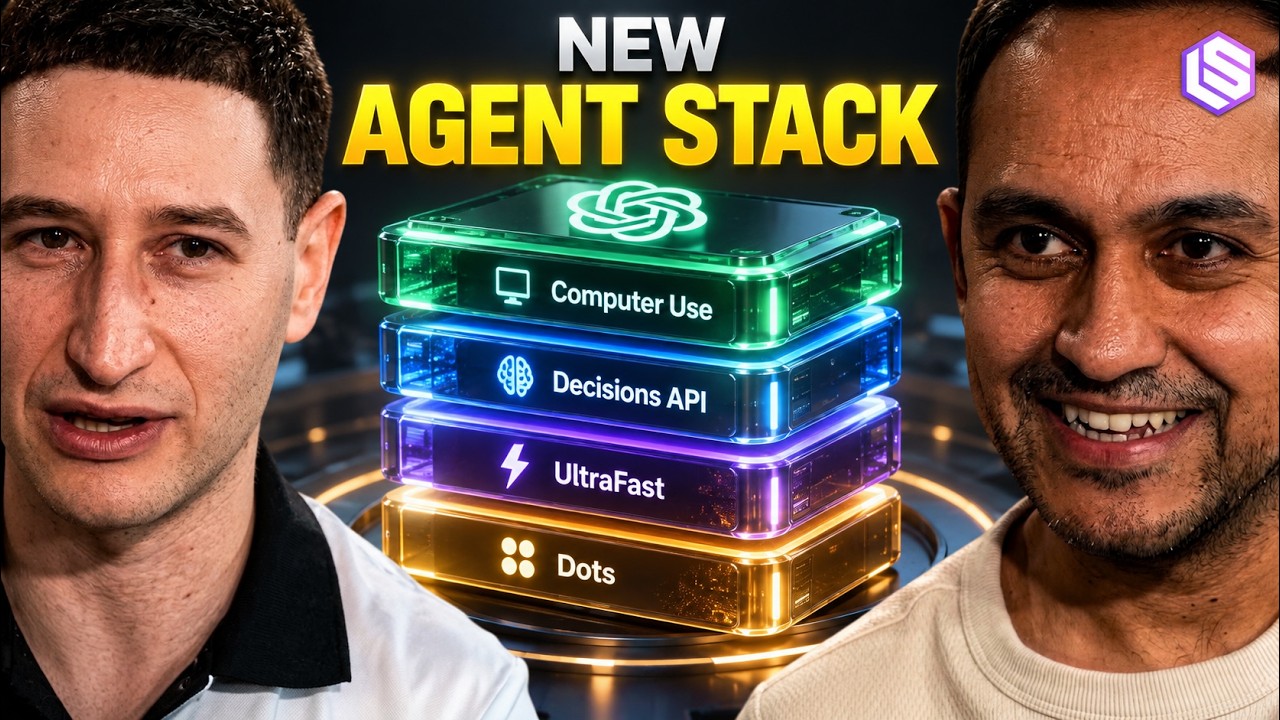
Inside OpenAI DevDay: Superhuman Computer Use, Decisions API, and the AI Cloud — Ari & Nikunj

Inside OpenAI DevDay: Superhuman Computer Use, Decisions API, and the AI Cloud — Ari & Nikunj

OpenAI has unveiled significant advancements in its AI agents and developer APIs, transforming Computer Use into a self-debugging system capable of superhuman speeds. Key innovations include multimodal interfaces, the Agents API for building on OpenAI's harness, and a new API stack featuring async tool calling, UltraFast inference, and the rapidly developed Decisions API for fast classification. These advancements, coupled with robust caching and context compaction, pave the way for an "AI cloud" with higher-level primitives for developers.

What Would Make an AI Assistant Worth Paying For?

What Would Make an AI Assistant Worth Paying For?

This discussion with David Pawlan of Assistant Bench unpacks the explosive growth of personal AI agents, exploring their capabilities, current landscape, and future implications. Topics include diverse agent use cases from daily admin to finance, the evolution of human-agent interfaces (voice, hardware), the critical role of proactivity and trust, the emergence of silent multiplayer agents, and the transformative impact on commerce. The conversation also delves into agent-to-agent interactions, economic models, and the profound shift towards a consumer-aligned internet.