Machine learning engineering

WTF Is the Context Layer? The Missing Infrastructure for Production Agents — Prukalpa Sankar

WTF Is the Context Layer? The Missing Infrastructure for Production Agents — Prukalpa Sankar

Prukalpa Sankar argues that while AI models are increasingly intelligent, their practical business utility is limited by a lack of contextual intelligence. She proposes a "context layer" as a crucial solution, akin to a "GitHub for context," to centralize and manage business knowledge, expertise, and norms. This system aims to provide AI agents with the shared, versioned, and continuously learning context necessary to overcome the challenges of isolated systems and context sprawl, ultimately differentiating companies in an AI-driven world.

Building an ACP-Compatible Agent Live — Bennet Fenner, Zed

Building an ACP-Compatible Agent Live — Bennet Fenner, Zed

This session explores building an AI coding agent that integrates with the Agent Client Protocol (ACP), Zed's open-source JSON RPC-based standard for agent-client communication. It covers essential architectural elements, including protocol design, session lifecycle management, real-time streaming of model output via session updates, and sophisticated handling of tool calls, such as proxied file system operations and self-modifying code for new capabilities like a terminal tool.

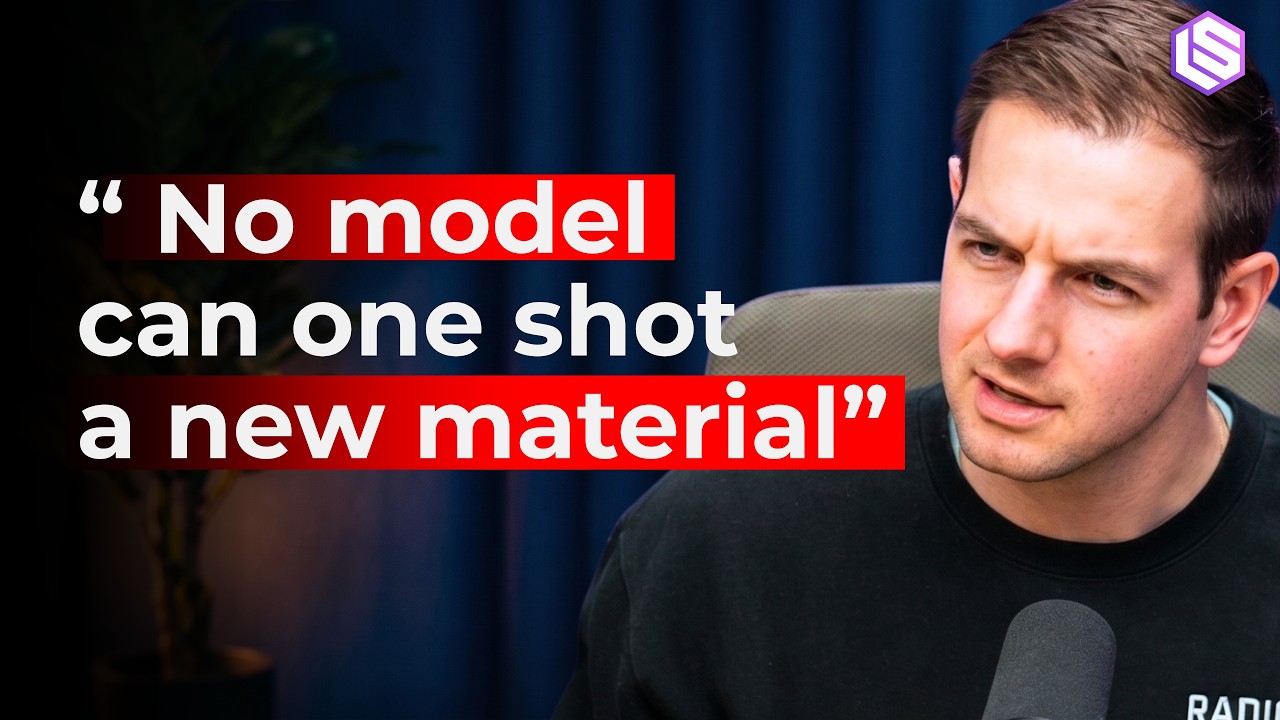
🔬 The Limits of AI in Science - Why We Need Self-Driving Labs — Joseph Krause, Radical AI

🔬 The Limits of AI in Science - Why We Need Self-Driving Labs — Joseph Krause, Radical AI

Joseph Krause, CEO of Radical AI, details how his company uses Self-Driving Labs (SDLs) and AI scientists to overcome the experimental bottleneck in materials science. By automating the full loop of hypothesis generation, synthesis, characterization, and testing, Radical AI is accelerating the discovery of novel alloys for aerospace, defense, and semiconductor applications, achieving 10x the pace of traditional methods. Krause explains why materials science is uniquely challenging for AI, how human intuition trains the AI, and why experimental data, not models, forms the core competitive advantage in this rapidly evolving, geopolitically significant field.