Machine learning engineering

When to Build Your Own Agent Harness | Harrison Chase, LangChain

When to Build Your Own Agent Harness | Harrison Chase, LangChain

Harrison Chase, co-founder of LangChain, delves into the critical role of the 'harness' in LLM agents, explaining how it orchestrates models and context. He covers customizing harnesses with middleware and sub-agents, the trade-offs between off-the-shelf and custom solutions for in- and out-of-distribution tasks, and the importance of evaluations and observability for continuous agent improvement. The discussion culminates in the 'data flywheel' concept and the `LangSmith Engine` for automating agent intelligence through iterative refinement.

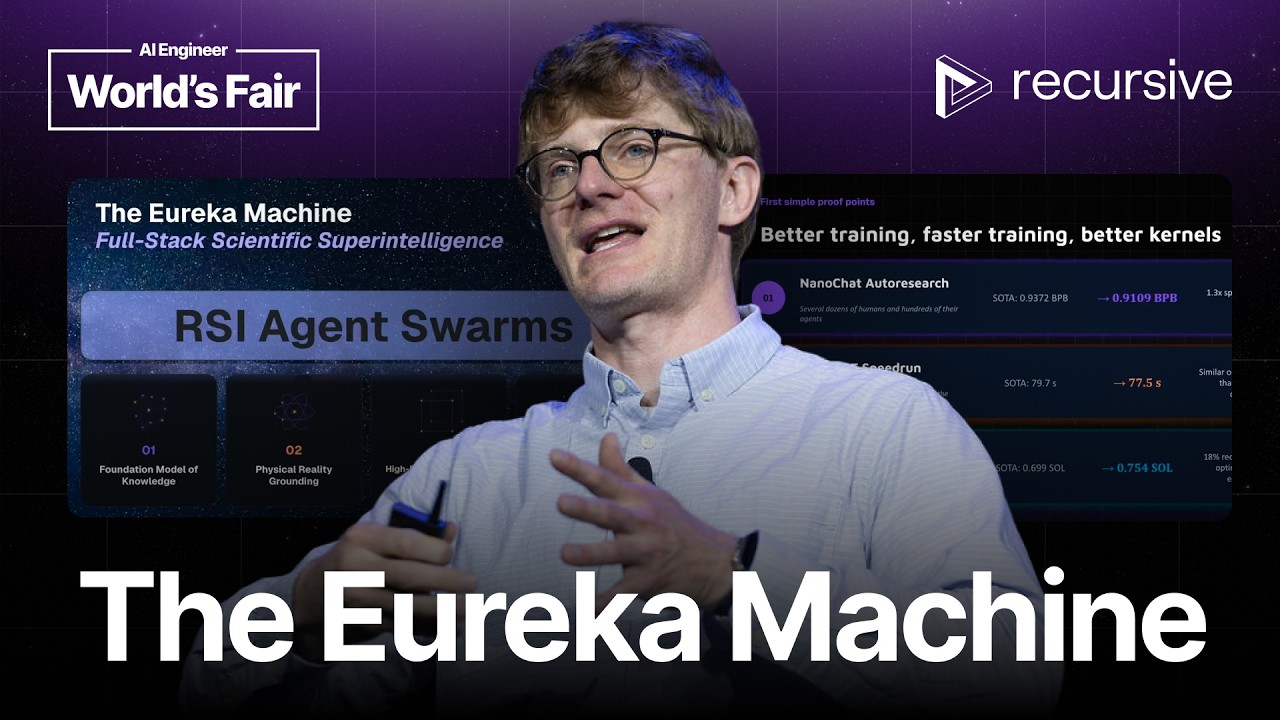
First Steps Toward Automated AI Research — Richard Socher, CEO Recursive AI

First Steps Toward Automated AI Research — Richard Socher, CEO Recursive AI

Richard Socher introduces the "Eureka machine," a concept for automating scientific research and invention through AI. Inspired by open-ended evolution and Karl Popper's philosophy of science, he argues that AI can compress the timeline of scientific discovery, overcoming human-centric bottlenecks. The machine relies on four pillars (knowledge, data, simulations, physical labs) orchestrated by an agent swarm, requiring a rethinking of existing infrastructure. Recursive Self-Improvement (RSI), where AI improves its own code and addresses its shortcomings, is presented as the path forward, with early proof points in model optimization, training speed, and GPU kernel efficiency.

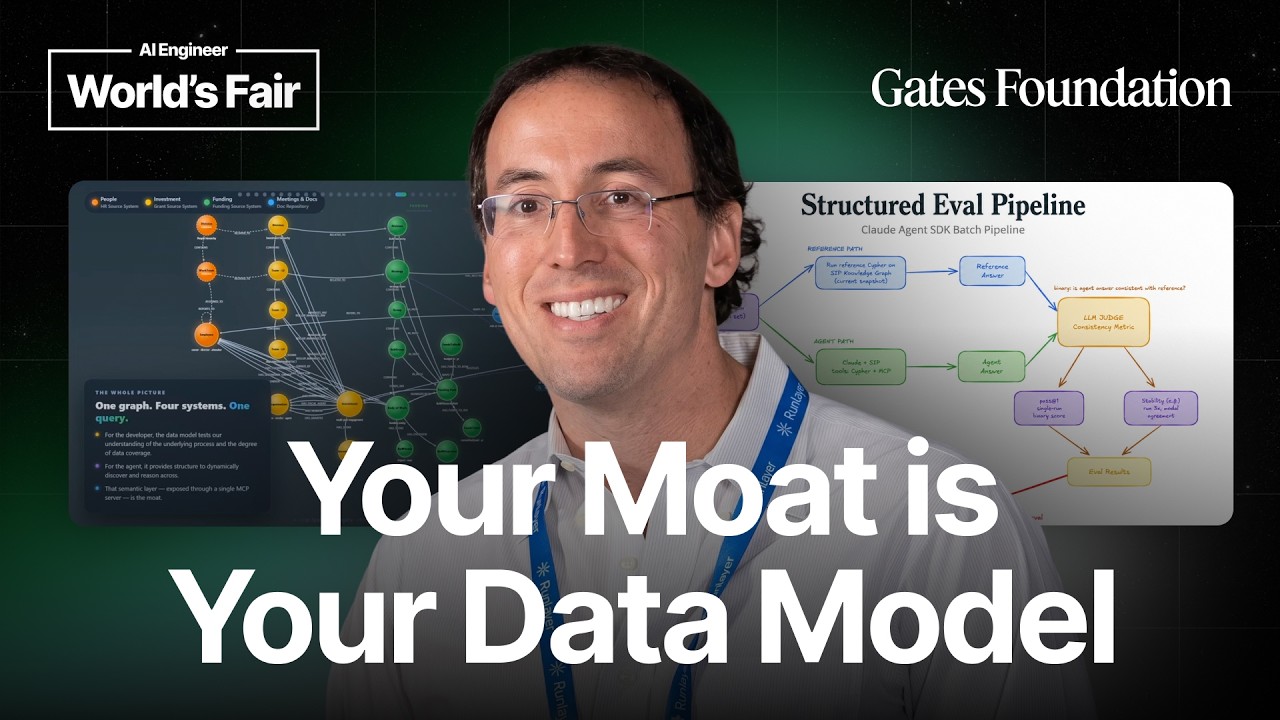
Your Moat Is Your Data Model — Mike Phipps, Gates Foundation

Your Moat Is Your Data Model — Mike Phipps, Gates Foundation

Mike Phipps from the Gates Foundation details how they built a Strategic Intelligence Platform (SIP) using a Neo4j knowledge graph to serve AI agents. He argues that the true "moat" in an AI-commoditized world lies in an organization's unique data model and tacit knowledge, not in generic AI tools. The platform unifies 25 years of siloed grantmaking data, integrating structured and unstructured information through a rigorous curation pipeline, and is refined via continuous retrieval evaluations to ensure alignment with organizational reporting standards.

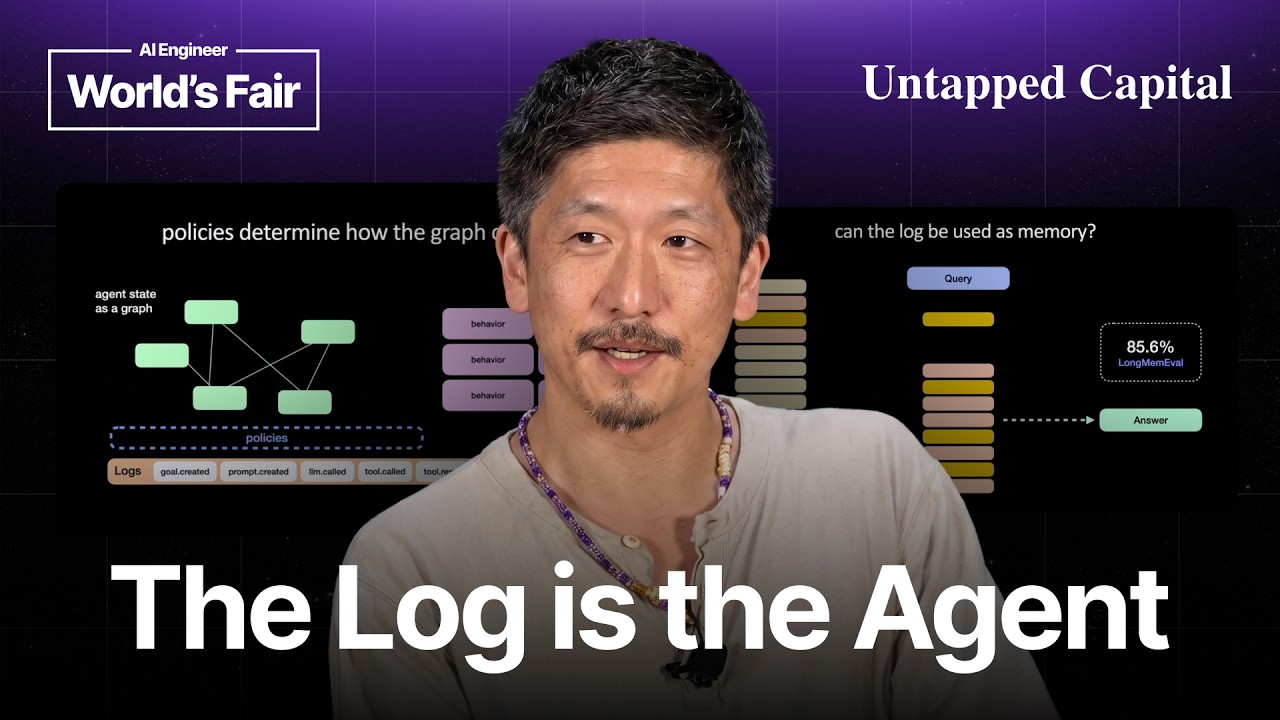
Active Graph Agent Runtime (BabyAGI 4) — Yohei Nakajima, Untapped Capital

Active Graph Agent Runtime (BabyAGI 4) — Yohei Nakajima, Untapped Capital

Yohei Nakajima, creator of BabyAGI, introduces ActiveGraph, a novel agent architecture that builds around an immutable event log rather than the LLM. This log-centric approach enables auditable agents with native replay, rollback, and self-improvement capabilities, drawing inspiration from blackboard systems and Kafka.

Enterprise Agents Have a Structure Problem - Ishita Daga, Tesla

Enterprise Agents Have a Structure Problem - Ishita Daga, Tesla

Ishita Daga, a Senior ML Engineer at Tesla, explains why enterprise AI agents fail, highlighting that current fixes like larger models or more RAG are insufficient. She identifies ambiguity, staleness, and user preference as key structural problems. Daga proposes a solution built on semantic retrieval infrastructure: a hierarchical approach to knowledge sources, including a curated semantic layer and metadata graphs. She also details a robust context life cycle with live data sources and continuous feedback loops to combat staleness. The challenge of integrating individual preferences, requiring agents to reason over business concepts rather than raw schemas, is also discussed.

Recursive Model Improvement — Lee Robinson, Cursor, SpaceXAI

Recursive Model Improvement — Lee Robinson, Cursor, SpaceXAI

Lee Robinson of Cursor outlines a comprehensive strategy for recursive AI model improvement, centered on a two-loop training framework. He details how Cursor enhances both user-feedback-driven outer loops and high-quality evaluation inner loops, introducing novel methods like textual feedback and addressing reward hacking. The discussion extends to scaling compute infrastructure through partnerships with SpaceX, Colossus, and Terafab, and leveraging agent-based automation to streamline research and foster a future where models continuously train and improve themselves.