Llm evals

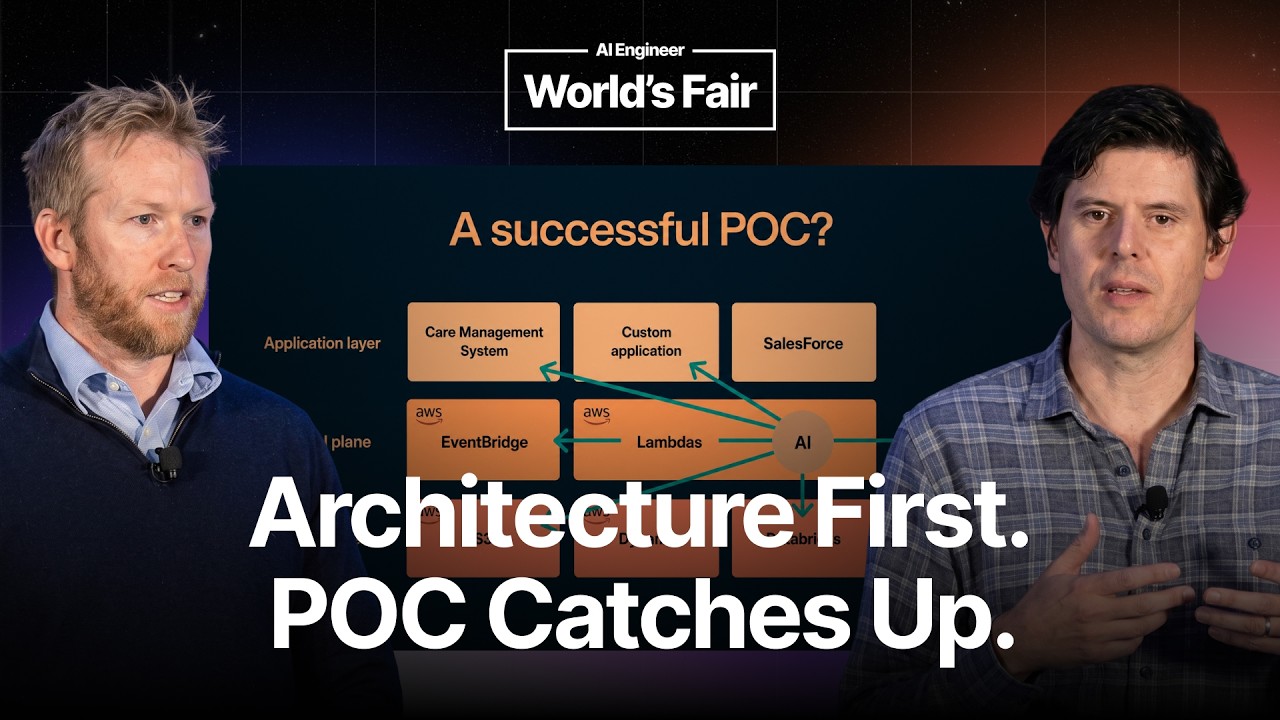
Why Your Enterprise Tech Stack Isn’t Ready for AI Agents — Christopher Lovejoy & Saul Howard

Why Your Enterprise Tech Stack Isn’t Ready for AI Agents — Christopher Lovejoy & Saul Howard

Chris Lovejoy and Saul Howard discuss the critical challenges of deploying AI agents in highly regulated enterprise environments, particularly healthcare. They advocate for a "constraints-first" architectural approach, proposing three core primitives – an immutable event log for auditability, schema-driven object storage for sensitive data, and human-agent equivalency for seamless escalation – which collectively enable privacy-preserving evaluations as a fundamental byproduct of the system design, rather than being an afterthought.

How Companies Are Building Their Own Intelligence | Sonya Huang, Sequoia Capital

How Companies Are Building Their Own Intelligence | Sonya Huang, Sequoia Capital

Sonya Huang of Sequoia Capital discusses the strategic imperative for companies to embrace "sovereign AI" by owning their AI models and weights. She identifies cost, speed, performance, and controlling destiny as the four driving forces behind this shift. Huang argues that the competitive landscape is moving towards owning the intelligence layer, positioning application companies as the new innovation labs. She provides a practical, opinionated framework covering strategy (what to own vs. rent), team building, ensuring external legibility of research, and a technical roadmap for implementation, emphasizing how open-weight models now enable frontier-level performance through ownership and customization.

Combine Skills and MCP to Close the Context Gap — Pedro Rodrigues, Supabase

Combine Skills and MCP to Close the Context Gap — Pedro Rodrigues, Supabase

Pedro Rodrigues from Supabase shares key lessons from building an agent skill to work with Postgres and Supabase. He explains why critical security rules must go in the main skill file, the importance of pointing to living documentation, and how providing opinionated workflow guidance closes the reliability gap for agents in production systems.

Playground in Prod - Optimising Agents in Production Environments — Samuel Colvin, Pydantic

Playground in Prod - Optimising Agents in Production Environments — Samuel Colvin, Pydantic

Samuel Colvin, creator of Pydantic, demonstrates a hands-on workflow for continuously optimizing AI agents in production. The session covers using Logfire for running evaluations, GEPA (Genetic Pareto) for autonomously evolving better prompts, and managed variables to deploy these improvements to live services without redeployment.