Large language models

Fable 5: The Full Story from Capabilities to Drama (Ep. 1002 with Jon Krohn)

Fable 5: The Full Story from Capabilities to Drama (Ep. 1002 with Jon Krohn)

Anthropic's highly anticipated Claude Fable 5 model, a public version of its advanced "Mythos class" AI with state-of-the-art capabilities in software, vision, and long-context tasks, was released and then swiftly pulled offline by the U.S. government after just three days. The removal, initiated as an export control action over national security concerns stemming from a disputed "jailbreak" claim, highlights the growing tension between frontier AI development, AI safety, and regulatory oversight.

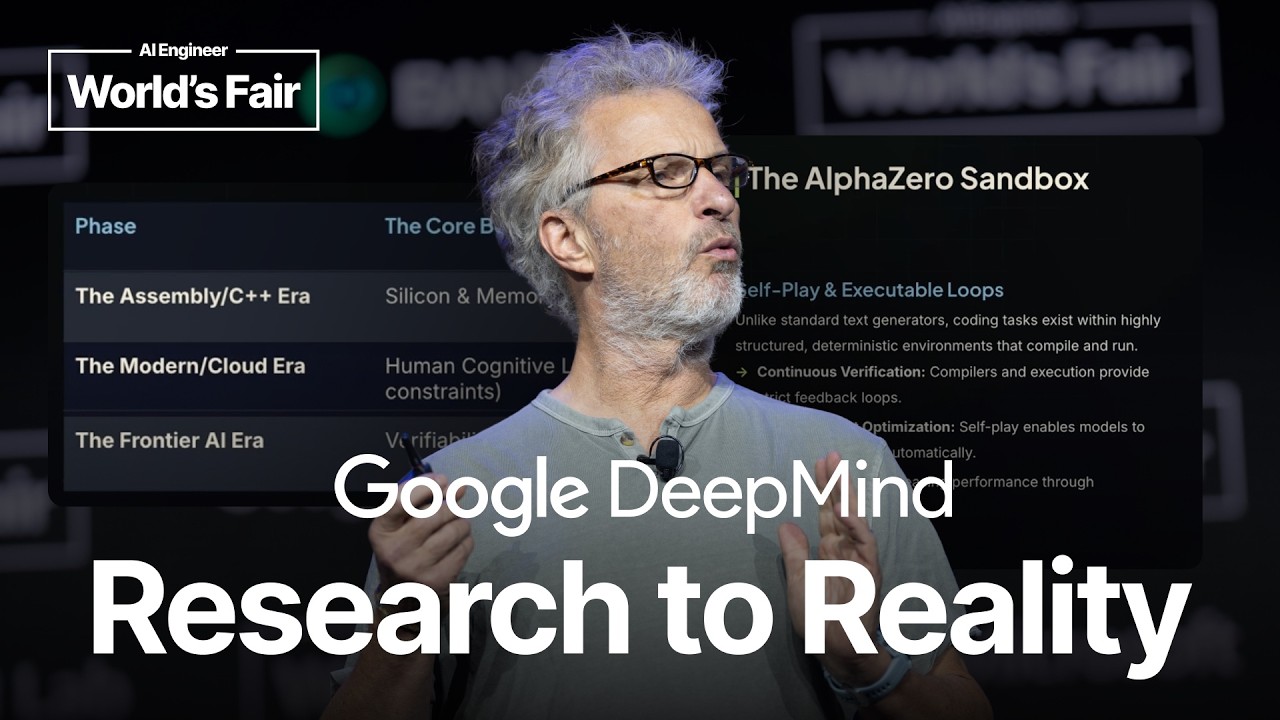
Sovereign Escape Velocity: Ownership w Open Models — Gus Martins, & Ian Ballantyne, Google DeepMind

Sovereign Escape Velocity: Ownership w Open Models — Gus Martins, & Ian Ballantyne, Google DeepMind

Google DeepMind's Ian Ballantyne and Gus Martins introduce Gemma 4, a family of open models delivering state-of-the-art performance with remarkable size efficiency. They discuss how models like the 31B variant outperform competitors 2-20x its size while running on a single GPU, the shift to an Apache 2.0 license to foster sovereignty and adoption, and the new economics of running powerful agentic workloads on hardware ranging from a Pixel phone to a single enterprise GPU.

Your Agent Is an Infinite Canvas — RL Nabors, Dressed for Space

Your Agent Is an Infinite Canvas — RL Nabors, Dressed for Space

RL Nabors makes a case against chat as the permanent UI for agents, arguing it's the "terminal" to the future "iPhone" of rich, interactive experiences. She demonstrates how to build these experiences using web technologies, introducing MCP Apps for in-agent UIs and WebMCP for making existing websites agent-callable, positioning the web platform as the ultimate "infinite canvas".

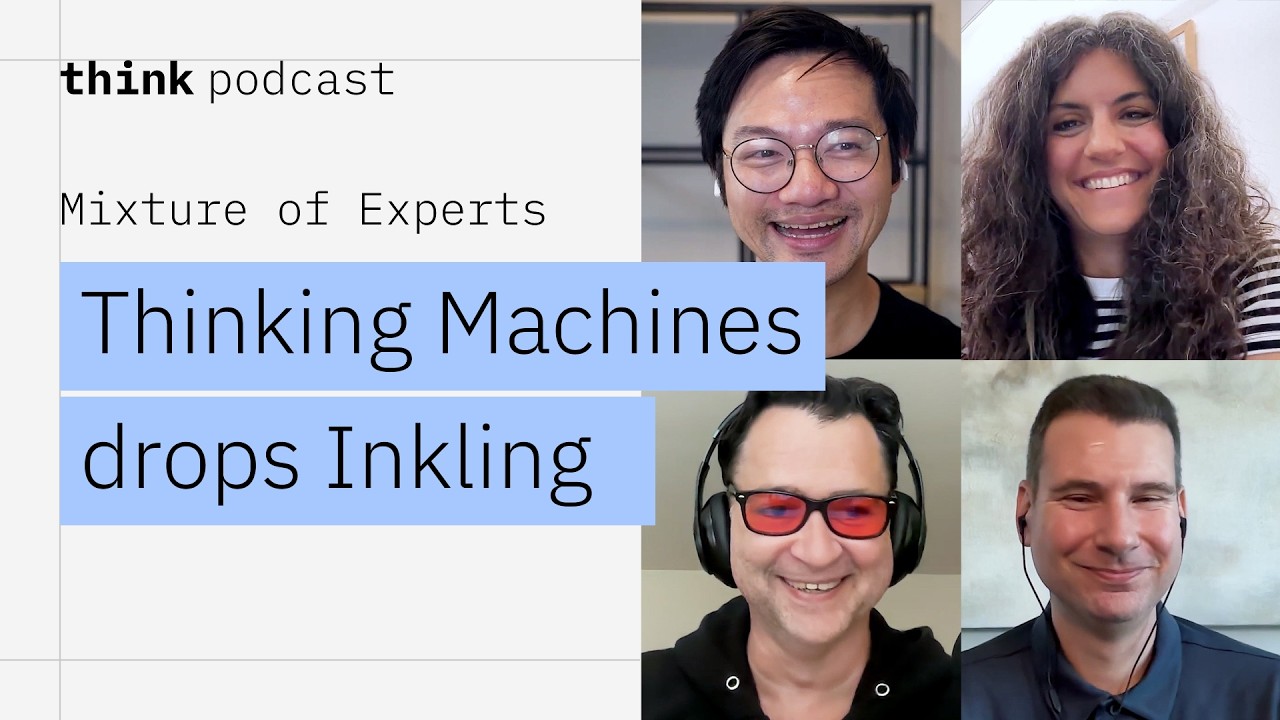
AI at college graduations and why Claude blackmails

AI at college graduations and why Claude blackmails

The Mixture of Experts team discusses the growing skepticism towards AI among younger generations, a Microsoft study revealing how LLMs can corrupt data in complex workflows, Anthropic's data-centric fix for Claude's "blackmailing" issue, and the cultural debate over an AI-generated story potentially winning a literary prize, all circling the central themes of human ownership, trust, and the need for better processes in the age of AI.

How to Build a Self-Improving Company with AI

How to Build a Self-Improving Company with AI

YC General Partner Tom Blomfield explains how to move beyond the 'copilot' mindset and restructure companies as series of recursive, self-improving AI loops. He details how to make company knowledge legible to AI, creating systems that improve overnight with minimal human intervention, ultimately rendering traditional middle management obsolete.

Give Your Agent a Computer — Nico Albanese, Vercel

Give Your Agent a Computer — Nico Albanese, Vercel

Nico Albanese from Vercel demonstrates how to build a stateful, learning AI agent from scratch using AI SDK v6. The workshop covers the core components: a tool loop, provider-executed tools like web search, end-to-end type safety, and Vercel's new persistent named sandboxes, which give the agent a file system to persist state, memory, and even self-generated tools across sessions.