Kv cache

What's New in Inference Engineering — Philip Kiely, Baseten

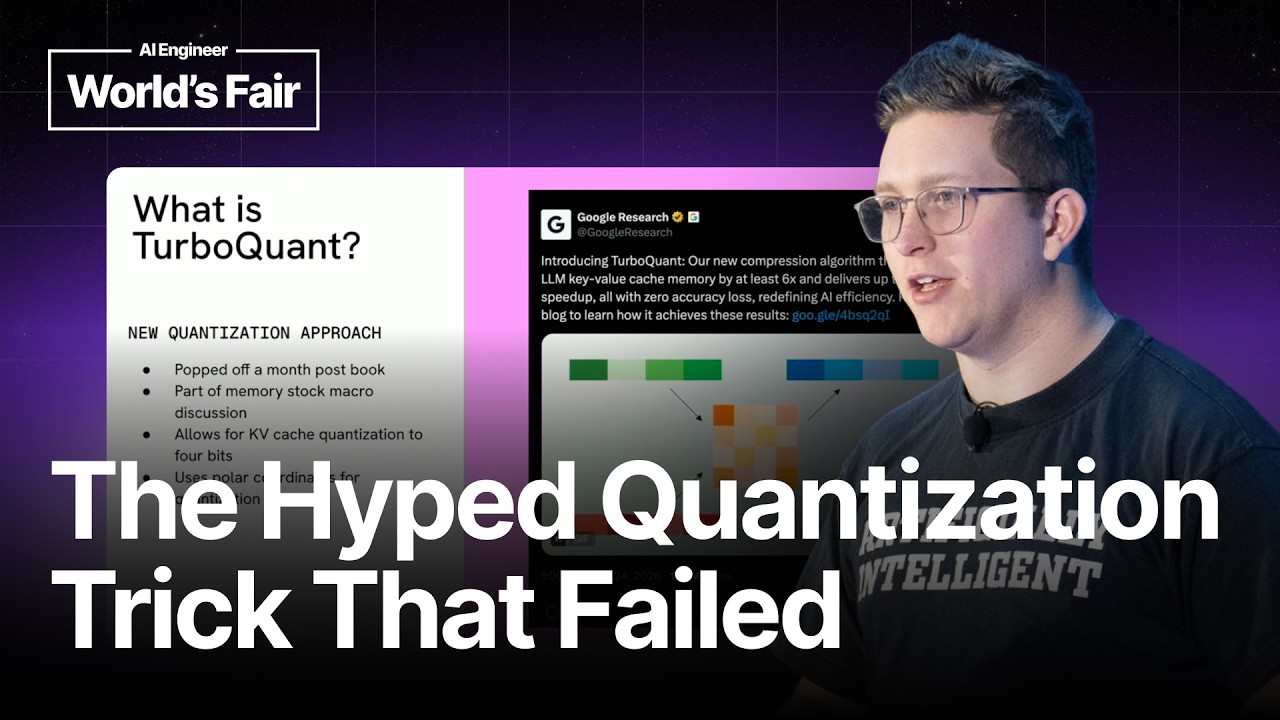
What's New in Inference Engineering — Philip Kiely, Baseten

Philip Kiely provides an update on recent advancements in inference engineering, covering new techniques in quantization (TurboQuant's specific application), KV cache compaction (introducing 'Still' for learned, compressed memory), and speculative decoding (from Eagle 3 to Dlash and DSpark, including continuous retraining). He emphasizes the blurring lines between training and inference and differentiates between local and data center optimization strategies.
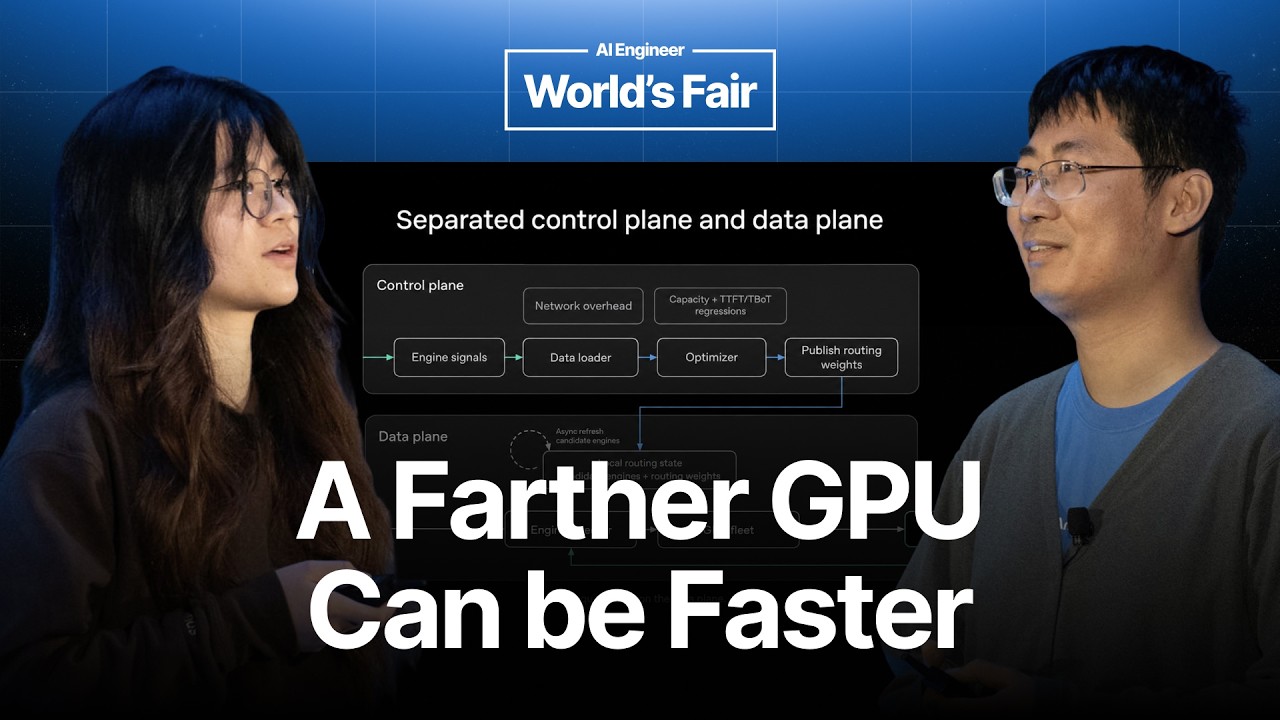
Routing LLM Inference in Production: From Engine Signals to Policy — Qianru Lao & Lu Zhang, OpenAI

Routing LLM Inference in Production: From Engine Signals to Policy — Qianru Lao & Lu Zhang, OpenAI

This talk outlines OpenAI's journey in building a robust inference load balancer. It details the transition from an initial feedback-loop-driven system, which suffered from explainability issues and disruptive oscillations, to a sophisticated control plane/data plane architecture. The new system leverages a global view to optimize end-to-end latency across all traffic, balancing network distance with engine-side queuing, and includes critical protection mechanisms like outlier penalties, dynamic retry budgets, and load shedding to ensure stability in production.

Operating Distributed Inference Systems at Scale — Nishant Gupta & Naman Ahuja, Meta

Operating Distributed Inference Systems at Scale — Nishant Gupta & Naman Ahuja, Meta

Meta's Nishant Gupta and Naman Ahuja explain how AI inference, the company's fastest-growing workload, requires a dedicated orchestration layer akin to Kubernetes for virtual machines. They detail the unique challenges of LLM serving compared to traditional microservices, emphasizing the intricate coupling of infrastructure layers, the distributed transaction nature of requests, and a seven-axis framework for scheduling. The talk concludes with the imperative to optimize for "cost per successful task" and the necessity of an inference-specific control plane to manage the complex interplay of latency, cost, and throughput.

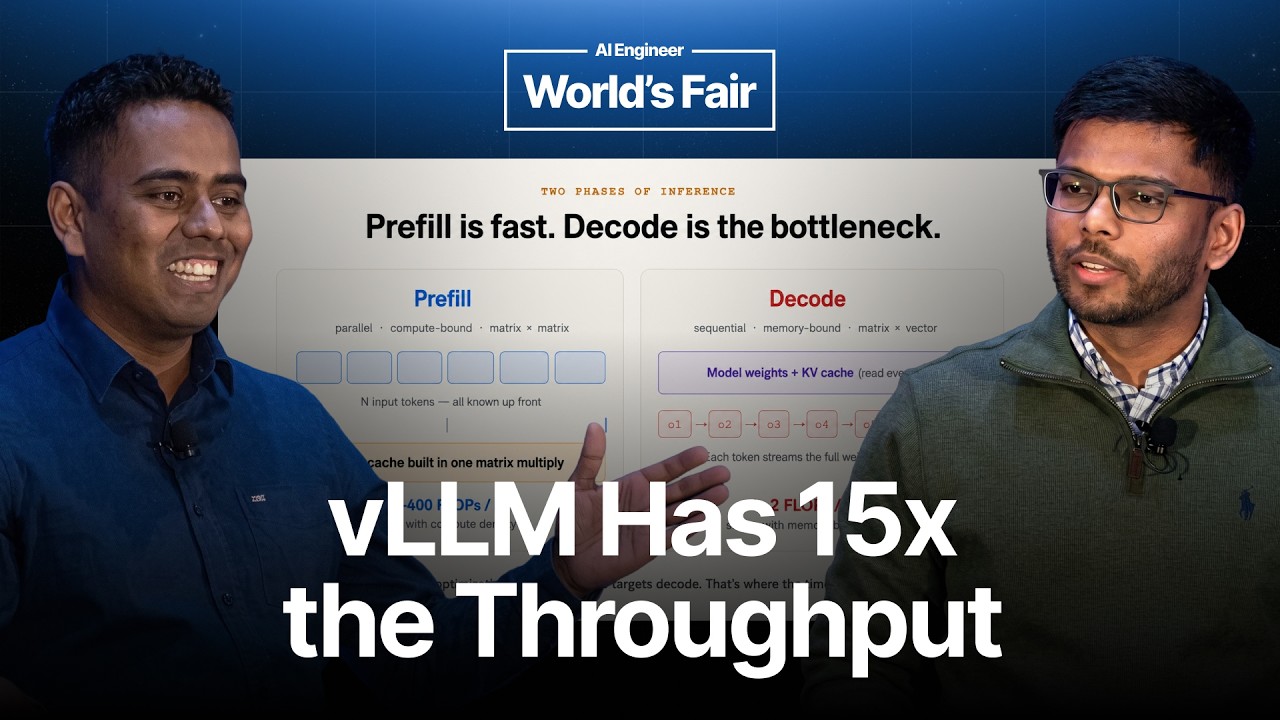
Deep dive on LLM Inference at Scale — Harshul Jain, Audible & Tanmay Sah, Independent AI Researcher

Deep dive on LLM Inference at Scale — Harshul Jain, Audible & Tanmay Sah, Independent AI Researcher

A workshop by Harshul Jain and Tanmay Sah breaks down LLM inference optimization from first principles, addressing memory, TTFT, and throughput issues. It covers foundational concepts like KV cache mathematics and the prefill/decode phases, then dives into model-side optimizations (quantization, attention variants like GQA, FlashAttention) and serving-side techniques (Paged Attention, continuous batching, prefix caching, KV quantization). The session concludes with benchmarks of popular inference engines like vLLM and SGLang, highlighting their strengths for different workloads, and outlines future research directions.

The State of Model Routing — NVIDIA, Cognition, OpenRouter

The State of Model Routing — NVIDIA, Cognition, OpenRouter

A deep dive into model routing strategies for AI/ML production, featuring experts from Cognition, OpenRouter, and NVIDIA. Key topics include optimizing costs with multi-model systems, delegating tasks between frontier and smaller models, managing context efficiently (sidekicks, compaction), and adapting to dynamic task complexities. The panel discusses the fragility of naive routing, the cost implications of in-distribution vs. out-of-distribution tasks, and the evolution of auto-routers driven by real-world usage patterns like OpenClaw's heartbeats. Insights also cover NVIDIA's Flex Run for dynamic model sizing, hallucination probes for detecting model limitations, and the future of hybrid local/cloud routing and model collaboration.

Agents at Scale: Inside MiniMax's Model and the Infrastructure Behind It — Olive Song

Agents at Scale: Inside MiniMax's Model and the Infrastructure Behind It — Olive Song

Olive Song, RL lead at MiniMax, details the engineering behind MiniMax's open-weight models, focusing on M3's multimodal and agentic capabilities, the necessity of day-zero inference stack readiness, and continuous GPU kernel optimization. She discusses multimodal training challenges, long-horizon task evaluation, and expresses optimism for open models rapidly closing the gap with frontier labs.