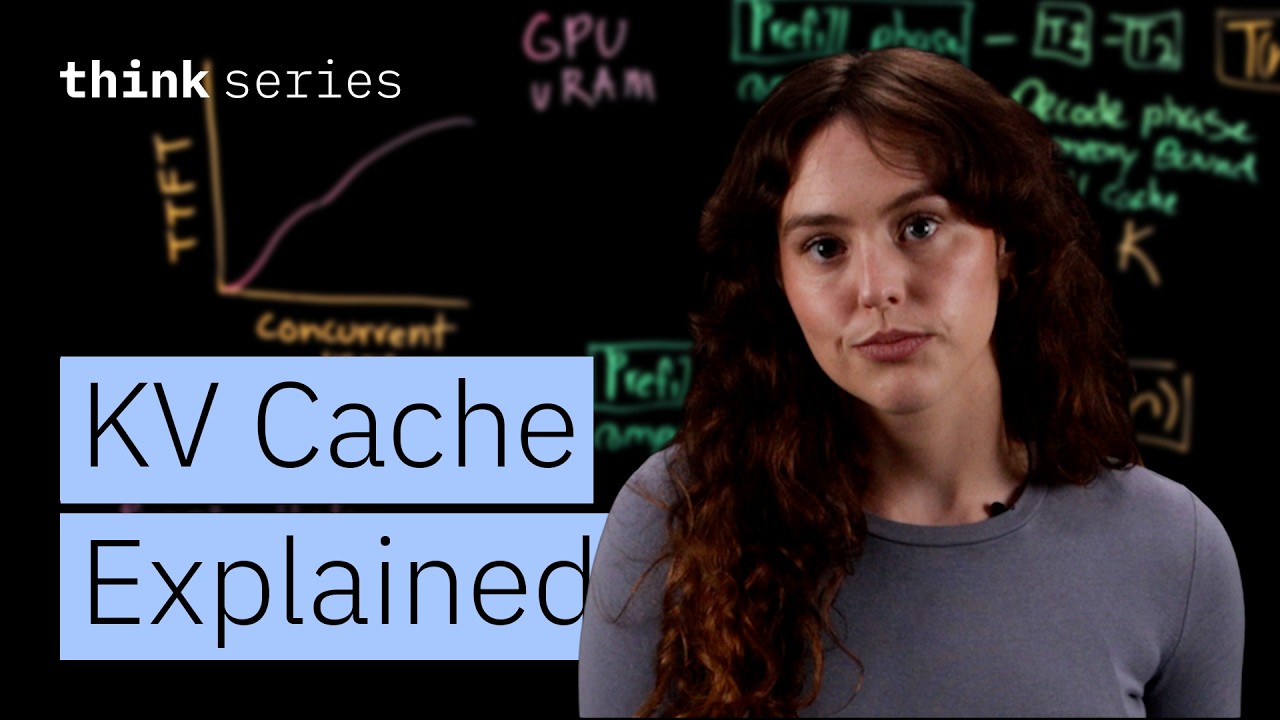
Kv cache

How KV Cache Speeds Up LLMs for Faster AI Models on GPUs

How KV Cache Speeds Up LLMs for Faster AI Models on GPUs

LLMs often slow down under heavy traffic due to inefficient GPU memory management during inference. This overview explains how KV cache and Paged Attention, implemented in VLLM, optimize memory usage across prefill and decode phases, significantly boosting LLM throughput, reducing latency, and improving GPU utilization through advanced context handling and specific tuning techniques like prefix caching and speculative decoding.

Turbocharge Your Agent's Retrieval with TurboQuant - Shashi Jagtap, Superagentic AI

Turbocharge Your Agent's Retrieval with TurboQuant - Shashi Jagtap, Superagentic AI

This talk introduces TurboQuant, a training-free compression method from Google Research that reduces embedding memory footprint by 5x (from 32-bit to 3-4 bits) without losing search quality. It details how TurboQuant works through scalar quantization and a crucial one-bit error correction step, QJL, enabling agents to remember more on existing hardware by optimizing both KV cache and RAG vector stores. A live demo showcases its effectiveness, making it a vendor-neutral solution for efficient AI agent retrieval.

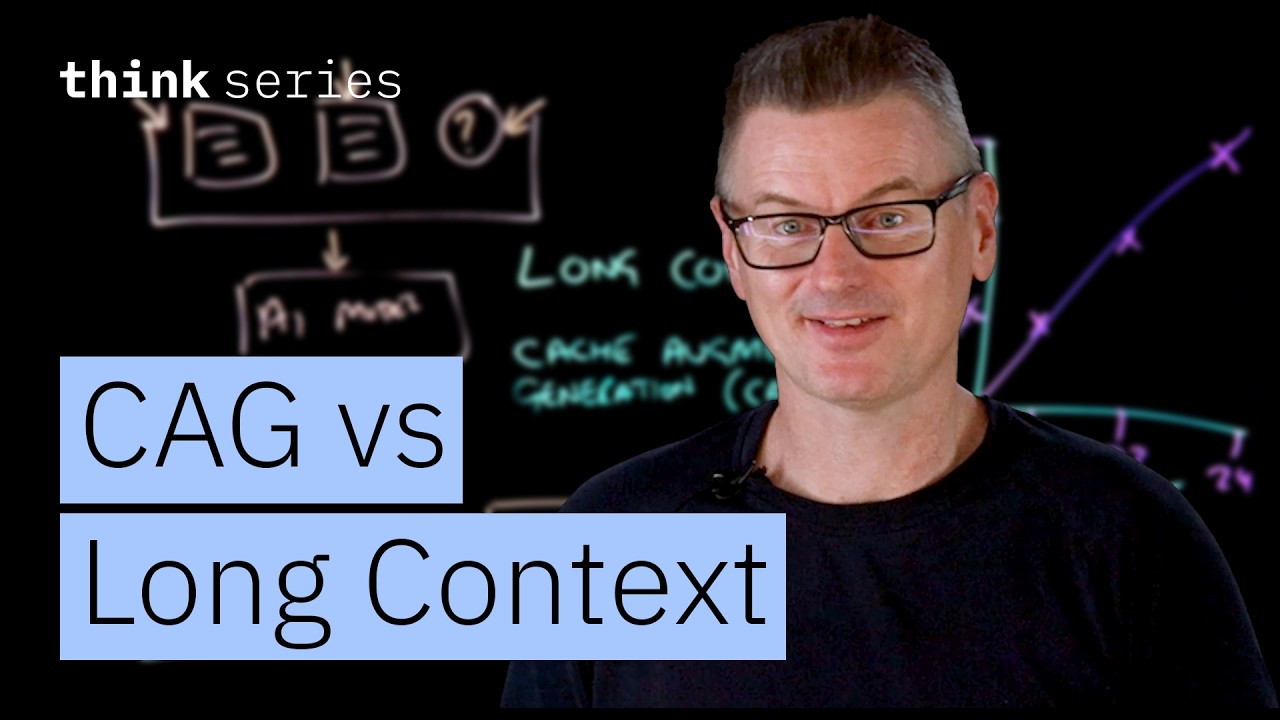
CAG vs Long Context: How AI Models Use and Remember Information

CAG vs Long Context: How AI Models Use and Remember Information

Martin Keen explains how Long Context and Cache Augmented Generation (CAG) serve as powerful alternatives to RAG for providing external knowledge to LLMs. This summary details the mechanics of each approach, the role of the KV cache, the practical application through prompt caching, and the trade-offs in performance, cost, and latency for real-world AI workloads.