Genomics

🔬Bio-security is an AI Arms Race - Eric Nguyen (CEO, Radical Numerics)

🔬Bio-security is an AI Arms Race - Eric Nguyen (CEO, Radical Numerics)

Eric Nguyen, CEO of Radical Numerics, details the journey from early genome language models to Omni, a system that excels in DNA reading, writing, and reasoning. Omni outperforms specialized models in disease-variant prediction, particularly in previously challenging non-coding regions. The discussion also covers the critical need for AI-native biosecurity defenses, addressing how models can design biological sequences that evade current detection systems, and the broader vision for General Biological Intelligence.
How AI Helps Solve Medical Mysteries at Boston Children’s Hospital | OpenAI Forum

How AI Helps Solve Medical Mysteries at Boston Children’s Hospital | OpenAI Forum

Researchers from Boston Children's Hospital and OpenAI collaborated to apply AI (specifically, OpenAI o3 Deep Research) to tackle the "diagnostic odyssey" of rare diseases. By analyzing complex genomic and phenotypic data, the AI model helped identify 18 new diagnoses in 376 previously unsolved pediatric cases, showcasing its ability to accelerate literature review, generate hypotheses, and uncover obscure but critical information. This human-in-the-loop approach aims to make diagnosis faster, more accessible, and more precise, offering hope for personalized medicine and improved patient outcomes.

Causal Models Need Causal Data - Xaira’s X-Cell model (Bo Wang & Ci Chu)

Causal Models Need Causal Data - Xaira’s X-Cell model (Bo Wang & Ci Chu)

Bo Wang and Ci Chu of Xaira Therapeutics introduce X-Cell, a 4.9-billion-parameter diffusion language model designed to predict cellular responses to genetic perturbations. Trained on PISCES, the largest genome-wide CRISPRi Perturb-seq dataset (25.6 million single cells across 16 contexts), X-Cell overcomes limitations of previous observational models. The discussion highlights the critical role of high-quality, causal data, X-Cell's architecture advantages, and its demonstrated ability to generalize to unseen cell types and primary cells, marking a significant step towards truly predictive virtual cell models in drug discovery.

AlphaGenome author roundtable

AlphaGenome author roundtable

A summary of the Google DeepMind team's discussion on AlphaGenome, their unified DNA sequence-to-function model. It covers the scientific motivation, the engineering breakthroughs in processing long DNA sequences at high resolution, the addition of complex biological modalities like splicing and contact maps, and the future direction of the research.

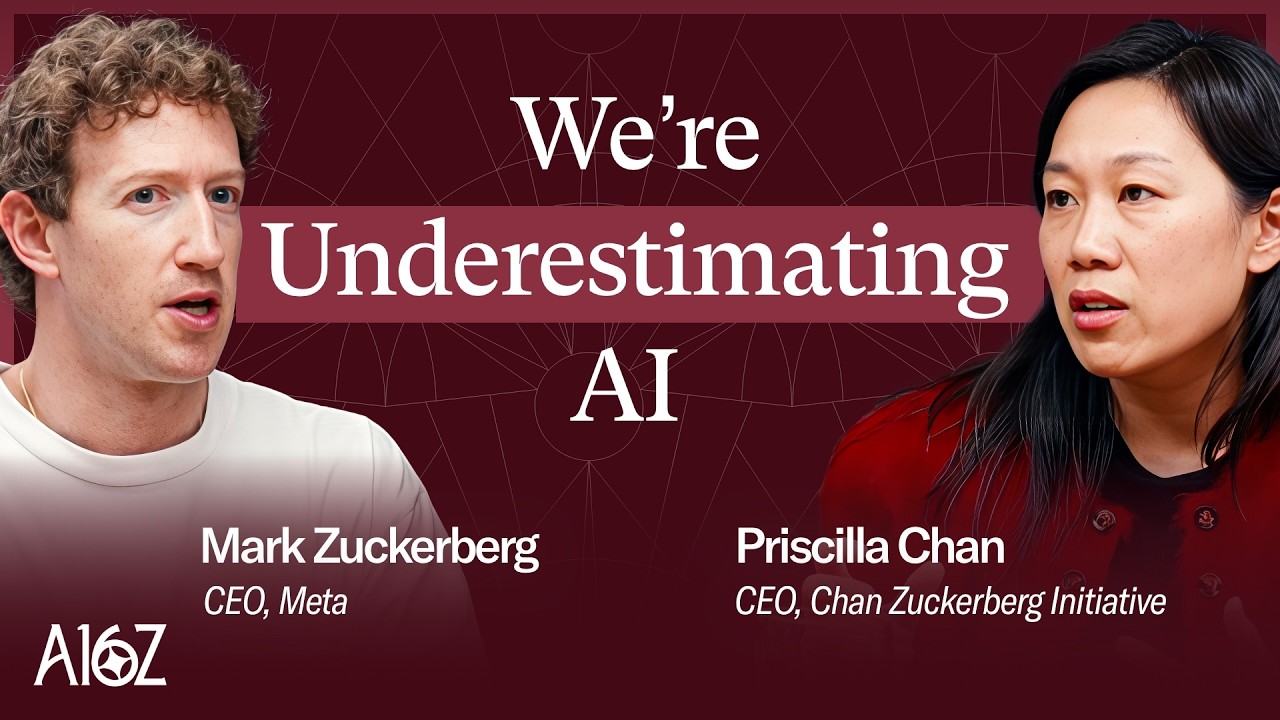
Mark Zuckerberg & Priscilla Chan: How AI Will Cure All Disease

Mark Zuckerberg & Priscilla Chan: How AI Will Cure All Disease

Priscilla Chan and Mark Zuckerberg of the Chan Zuckerberg Initiative (CZI) discuss their strategy to accelerate scientific discovery through the Biohub, an operating philanthropy at the intersection of frontier AI and biology. They detail the development of foundational tools like the Cell Atlas, a 'periodic table for biology,' and their new focus on building virtual cell models to allow scientists to test high-risk hypotheses in silico, ultimately aiming to cure, prevent, and manage all diseases.

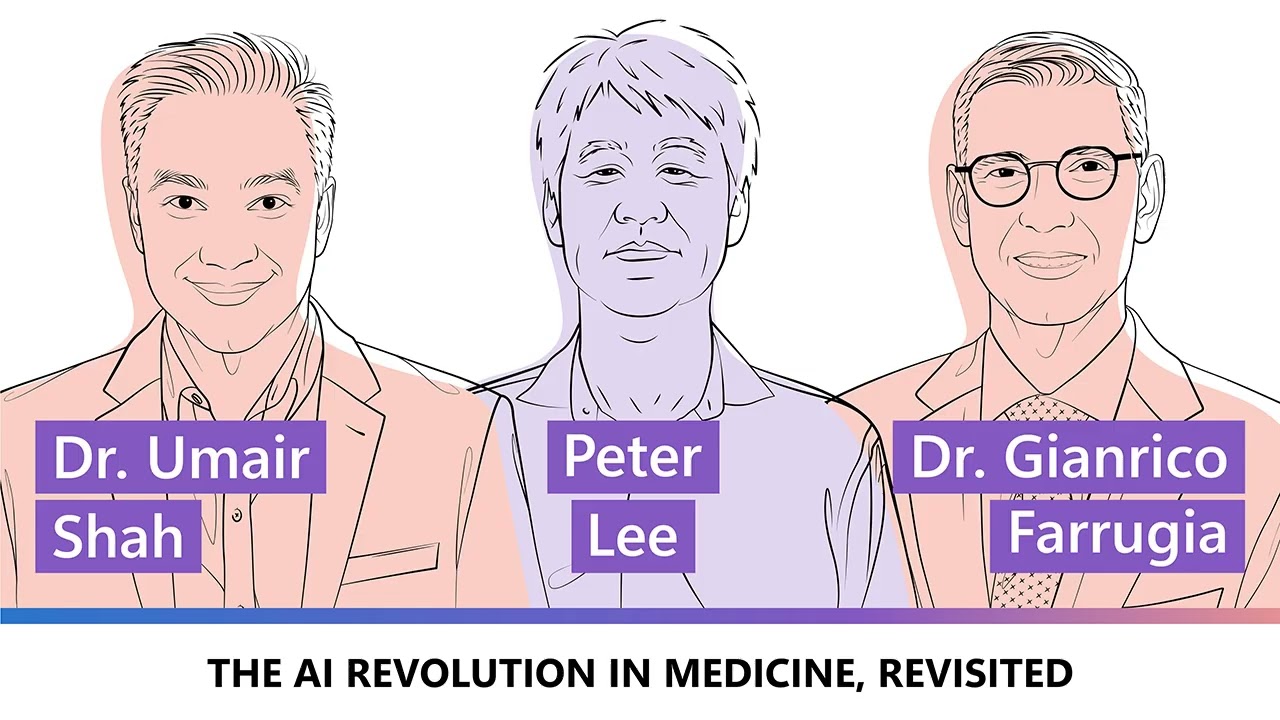
Reimagining healthcare delivery and public health with AI

Reimagining healthcare delivery and public health with AI

Dr. Umair Shah, former Washington State Secretary of Health, and Dr. Gianrico Farrugia, CEO of Mayo Clinic, discuss the practical applications and strategic imperatives of AI in public health and clinical care. They explore how AI can shift public health from a reactive to a proactive model, the necessity for a new data-centric architecture in healthcare systems, and the transformative potential of generative AI beyond mere optimization of current workflows.