Feature

AI That Designs Its Own Chips: Ricursive's Anna Goldie and Azalia Mirhoseini

AI That Designs Its Own Chips: Ricursive's Anna Goldie and Azalia Mirhoseini

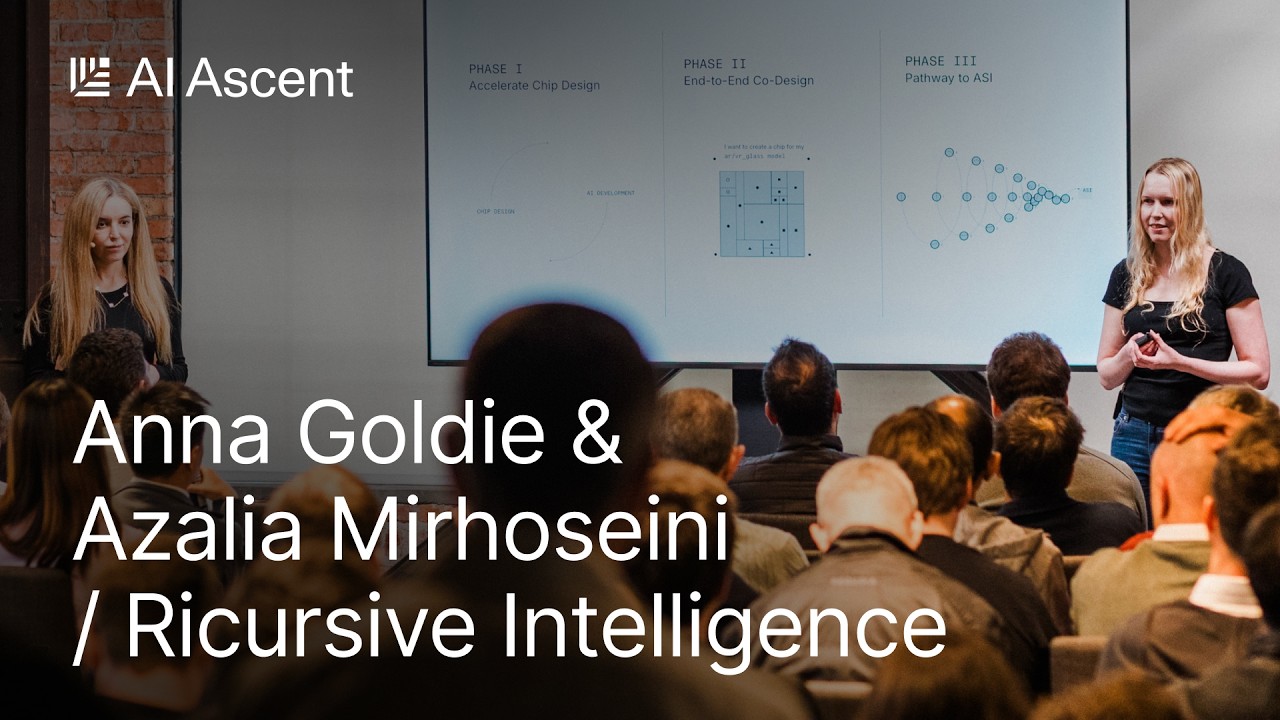
Co-founders of Ricursive Intelligence, Anna Goldie and Azalia Mirhoseini, outline their thesis that AI should design the chips that train AI. They detail their three-phase plan to first accelerate chip design with AI tools 100,000x faster than current software, then become a 'design-less' platform for custom silicon, and finally achieve vertical integration by building their own chips and models.
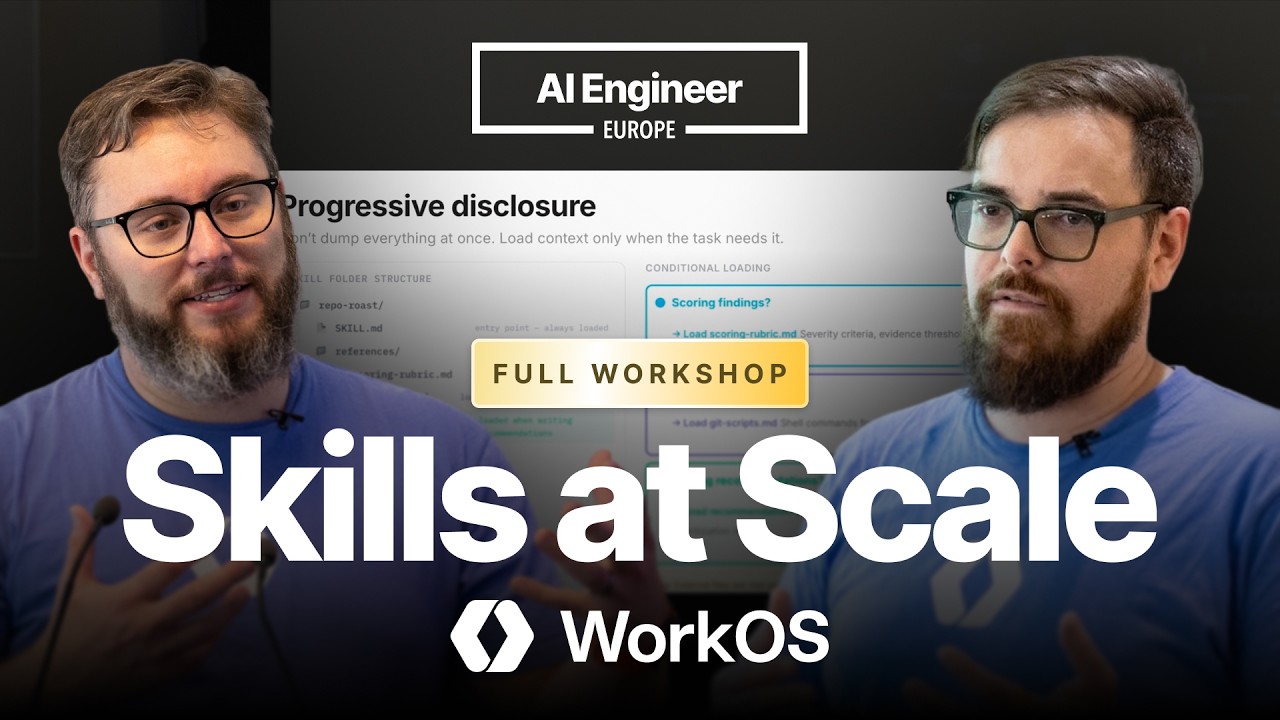
Skills at Scale — Nick Nisi and Zack Proser, WorkOS

Skills at Scale — Nick Nisi and Zack Proser, WorkOS

Nick Nisi and Zach Proser from WorkOS explain how to build, manage, and scale AI 'skills'—reusable, portable instructions that make AI agents like Claude more powerful and consistent. They cover the core anatomy of a skill, best practices for writing them, advanced techniques like progressive disclosure, and their application beyond coding, from video generation to automating business workflows.

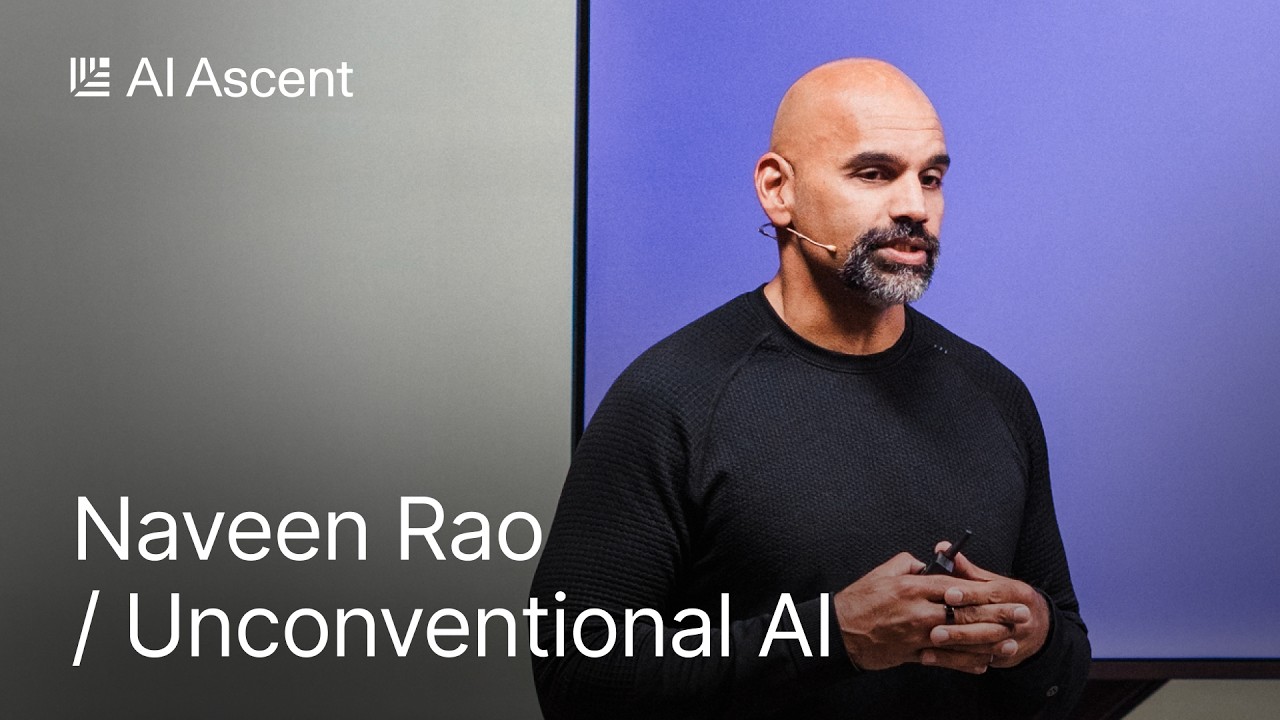
Rebuilding the Computer for the AI Age: Unconventional AI's Naveen Rao

Rebuilding the Computer for the AI Age: Unconventional AI's Naveen Rao

Naveen Rao, CEO of Unconventional AI, argues that the 80-year-old digital computing paradigm is hitting a fundamental energy wall. He proposes a new approach to AI hardware, inspired by neuroscience, that replaces matrix math with nonlinear dynamics, leveraging the time domain for computation to approach the thermodynamic limits of efficiency.

Claude Security’s public beta, OpenAI’s five-point plan and cybersecurity’s Y2K moment

Claude Security’s public beta, OpenAI’s five-point plan and cybersecurity’s Y2K moment

Explore the AI industry's "Y2K moment" in cybersecurity, as major players like OpenAI, Anthropic, and CrowdStrike form coalitions to tackle threats. This summary also delves into a new framework for AI agent identity based on Zero Trust principles and analyzes the "Copy Fail" Linux vulnerability, a decade-old flaw uncovered by AI, highlighting the escalating need for proactive vulnerability research.

Top Black Holes Physicist: GPT5 can do Vibe Physics, here's what I found

Top Black Holes Physicist: GPT5 can do Vibe Physics, here's what I found

Theoretical physicist Alex Lupsaska shares his journey from AI skeptic to collaborator, detailing how advanced GPT models solved a year-long problem in quantum field theory concerning gluon scattering amplitudes, and then generalized the solution to gravitons, signaling a new era of AI-accelerated scientific discovery.

The Small Model Infrastructure Nobody Built (So We Did) — Filip Makraduli, Superlinked

The Small Model Infrastructure Nobody Built (So We Did) — Filip Makraduli, Superlinked

Filip Makraduli from Superlinked discusses the common infrastructure gaps and profiling mistakes encountered when deploying small embedding and transformer models. He introduces the Superlinked Inference Engine (SIE), an open-source solution designed for dynamic model loading, hot-swapping, and memory-aware eviction to maximize GPU utilization and streamline the path from development to production.