Feature

Build & deploy AI-powered apps — Paige Bailey, Google DeepMind

Build & deploy AI-powered apps — Paige Bailey, Google DeepMind

A developer-focused, demo-heavy session on rapid AI prototyping using the Google DeepMind stack. It covers how to leverage the full capabilities of AI Studio, from video analysis and code execution with Gemini 3.1 Flash, to building full-stack applications with databases, and exploring the frontiers of generative media with Genie 3, Veo 3.1 Lite, and Lyria 3.
Building your own software factory — Eric Zakariasson, Cursor

Building your own software factory — Eric Zakariasson, Cursor

Eric Zakariasson from Cursor explains the shift from single-agent pair programming to managing a multi-agent "software factory". He outlines the practical steps required, from establishing a well-structured codebase with guardrails to adopting a managerial mindset that focuses on automation, asynchronous work, and scaling agent fleets to increase software development throughput and consistency.

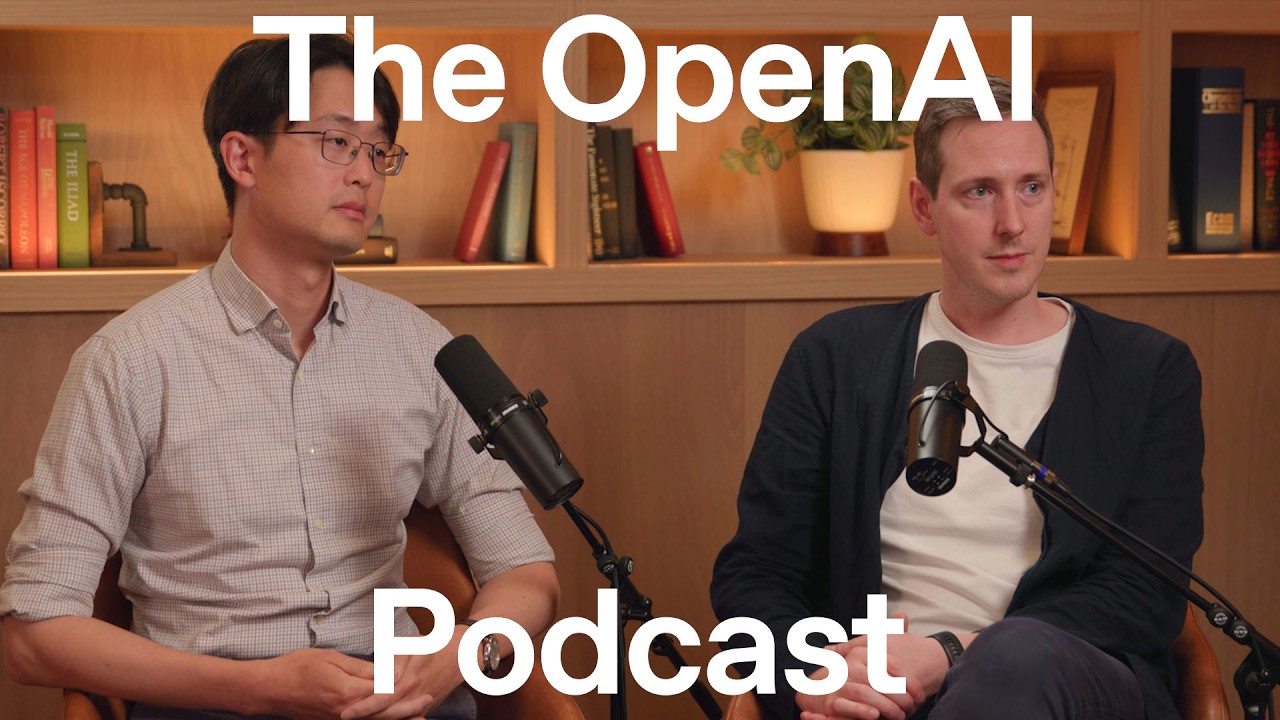
What happens now that AI is good at math? — the OpenAI Podcast Ep. 17

What happens now that AI is good at math? — the OpenAI Podcast Ep. 17

OpenAI researchers Sébastien Bubeck and Ernest Ryu discuss the dramatic and surprising progress of AI in mathematics. They cover how models went from basic arithmetic to solving Olympiad-level and even 40-year-old open research problems, what this progress means for the future of science and AGI, and the evolving role of human researchers in an era of AI-accelerated discovery.

Box CEO: Why Big Companies Are Falling Behind on AI | a16z

Box CEO: Why Big Companies Are Falling Behind on AI | a16z

Steven Sinofsky, Aaron Levie, and Martin Casado of a16z dissect the reality of AI adoption within large enterprises. They explore the significant gap between Silicon Valley's developer-centric culture and the complex, legacy-driven world of established organizations, explaining why many top-down AI initiatives fail. The discussion introduces a key architectural shift—treating AI agents as users rather than integrated software—and analyzes the immense integration, security, and data challenges that agents face. Ultimately, they argue that AI, rather than eliminating jobs, will create new ones by increasing system complexity and enabling professionals to operate at a higher level of abstraction.

AI Infrastructure, Ray, and Why Nonlinear Careers Win — with Linda Haviv

AI Infrastructure, Ray, and Why Nonlinear Careers Win — with Linda Haviv

Linda Haviv discusses the modern AI landscape, emphasizing that non-linear career paths and systems thinking are now more valuable than pure coding skills. She explores how open-source technology, like the Ray framework, is democratizing AI development and closing the gap with proprietary models, and why building a personal brand through content creation is essential for career growth and community building in a rapidly evolving industry.

Open Models at Google DeepMind — Cassidy Hardin, Google DeepMind

Open Models at Google DeepMind — Cassidy Hardin, Google DeepMind

Cassidy Hardin from Google DeepMind introduces Gemma 4, a new family of open-weight models with significant architectural and performance improvements. This summary covers the four new models (31B Dense, 26B MoE, and two "Effective" on-device models), deep dives into architectural changes like mixed global/local attention and Per-Layer Embeddings (PLE), and details the new native multimodal capabilities for vision and audio.