Feature

Real-Time Voice Agents in Production

Real-Time Voice Agents in Production

Panos Stravopodis, CTO of Elyos AI, shares the infrastructure and orchestration challenges of building production-ready voice AI agents. He details the four pillars for success—latency, consistency, context, and recovery—and provides engineering patterns for error handling, context management, and achieving conversational coherence in real-time systems.

Collaborative AI Agents At OpenAI

Collaborative AI Agents At OpenAI

Robert from OpenAI discusses the critical role of structured evaluations (evals) and graders for developing advanced collaborative agents. He explores the limitations of 'vibe-based' assessments, introduces a maturity model for evals, and presents a comprehensive rubric for measuring agent performance beyond simple accuracy, connecting these concepts to the power of Reinforcement Fine-Tuning (RFT).

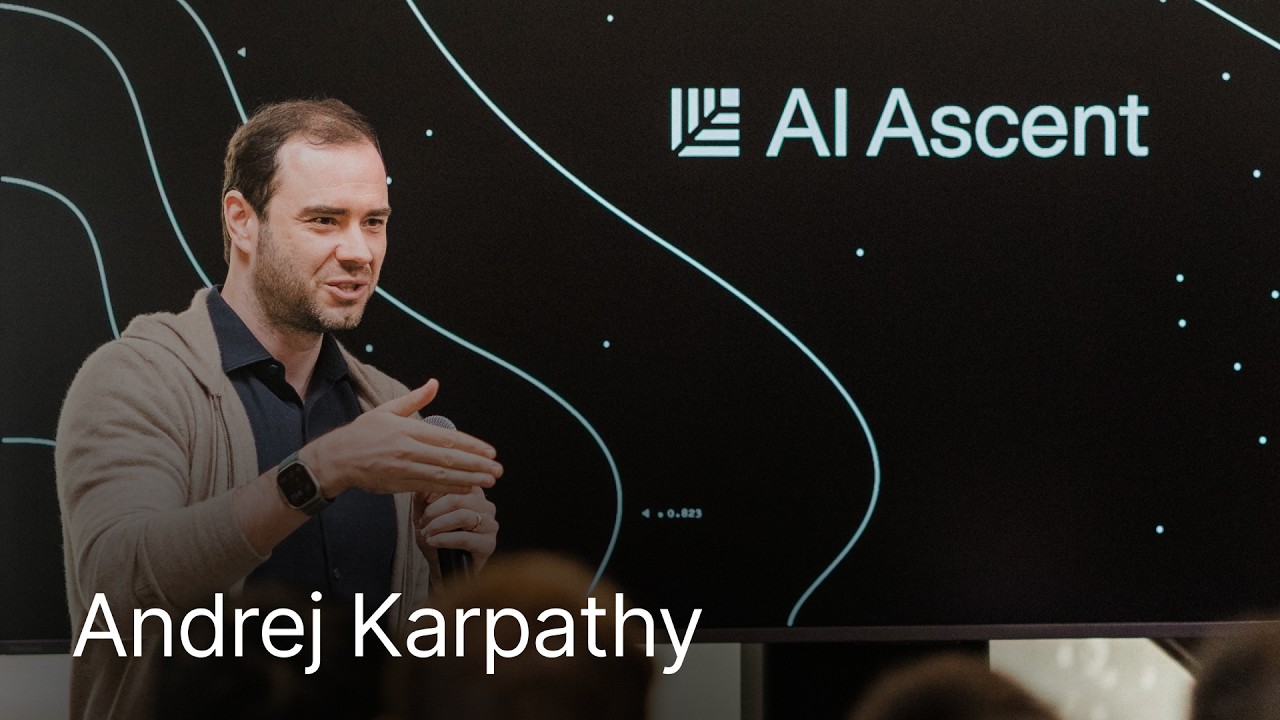
The Limits of Today’s AI Models

The Limits of Today’s AI Models

Karan Goel, CEO of Cartesia, discusses the fundamental limitations of Transformer architectures, arguing they behave more like retrieval systems than learning systems. He explains how State Space Models (SSMs) enable compression and abstraction, and why Cartesia is tackling multimodal intelligence by first solving for voice AI, aiming to develop a transferable 'recipe' for end-to-end representation learning.

Spec-Driven Development: Sharpening your AI toolbox - Al Harris, Amazon Kiro

Spec-Driven Development: Sharpening your AI toolbox - Al Harris, Amazon Kiro

Spec-Driven Development offers a structured, reproducible, and reliable alternative to 'vibe coding' in the AI era. Al Harris from the Kiro team explains how to leverage specs as living documentation, integrate external tools via MCPs, and use property-based testing to create a tight feedback loop from natural language requirements to verified code.

CES 2026 AI highlights: NVIDIA Rubin & wild gadgets

CES 2026 AI highlights: NVIDIA Rubin & wild gadgets

This episode explores the strategic implications of the Disney-OpenAI licensing deal, critiques Time Magazine's "Architects of AI" focus on business over research, analyzes NVIDIA's full-stack ambitions with the Neotron 3 model release, and delves into Anthropic's unique approach to AI safety with the "Claude Soul Document".

Enterprise AI Operations: The Missing Piece

Enterprise AI Operations: The Missing Piece

Rani Radhakrishnan, Principal at PwC, discusses the convergence of MLOps and IT operations, the practicalities of deploying AI agents, and the strategic considerations for scaling and sustaining AI initiatives in the enterprise. The conversation covers the shift from experimentation to ROI, the importance of human-in-the-loop processes, and the evolving skillsets required for future-ready IT.