Feature

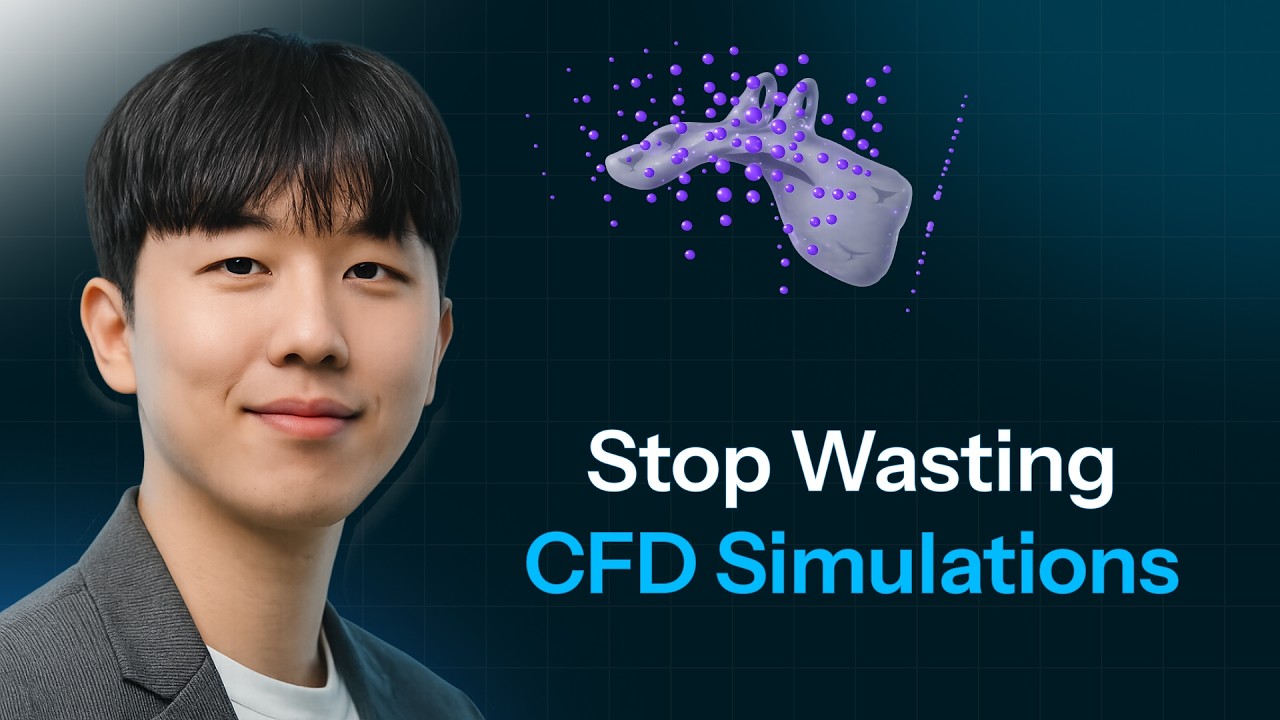
Uncertainty-Guided Data Augmentation for Engineers | Deep Dive - Yongmin Kwon

Uncertainty-Guided Data Augmentation for Engineers | Deep Dive - Yongmin Kwon

This session details a data-efficient method for training engineering surrogate models by using uncertainty quantification (UQ) to guide geometric data augmentation. Instead of random deformations, the approach lets the deep ensemble model identify its own knowledge gaps (epistemic uncertainty), then uses Free-Form Deformation (FFD) to generate new shapes specifically in those uncertain regions. This ensures every expensive simulation run yields maximally informative data, significantly improving model accuracy for a fixed computational budget across domains like structural mechanics and aerodynamics.
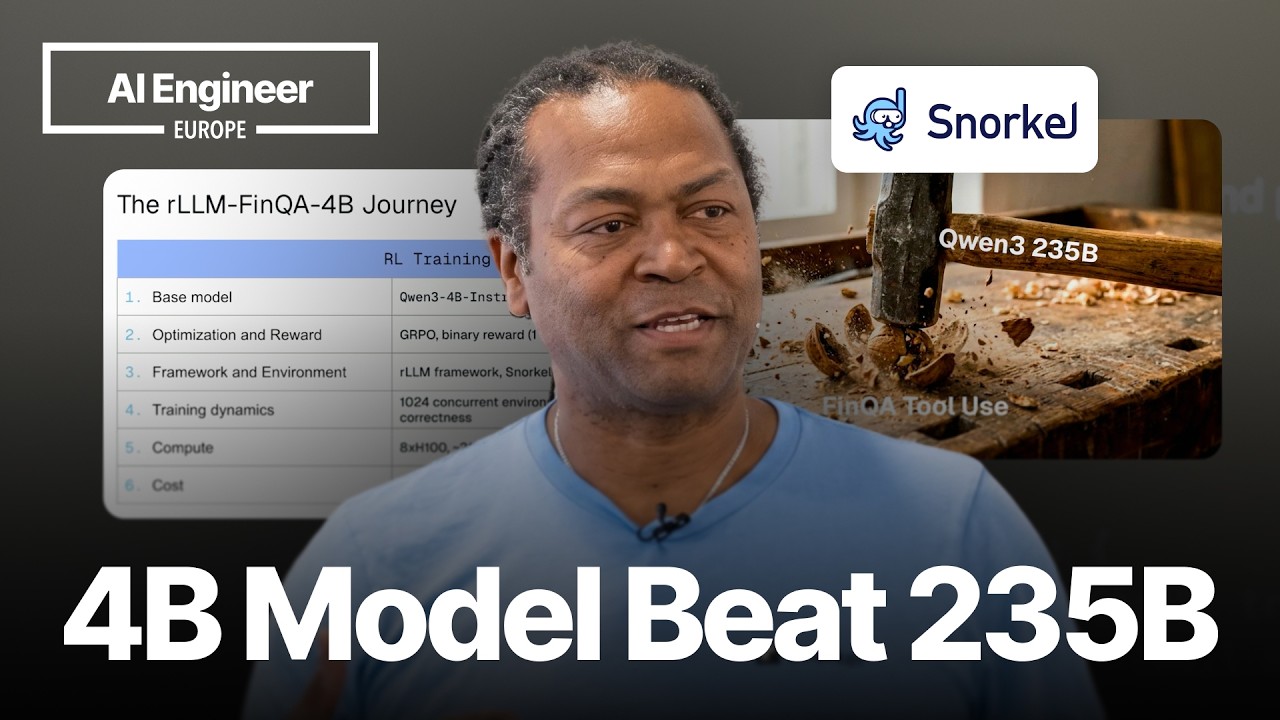
Stop Making Models Bigger, Make Them Behave — Kobie Crawdord, Snorkel

Stop Making Models Bigger, Make Them Behave — Kobie Crawdord, Snorkel

Snorkel.ai's research demonstrates how a 4-billion-parameter model, fine-tuned with Reinforcement Learning for under $500, significantly outperformed a 235-billion-parameter model on financial analysis tool-use tasks. The key was cultivating 'tool discipline' and error correction capabilities, rather than relying on sheer model size or deeper reasoning. Single-table training generalized effectively to harder multi-table problems, emphasizing the importance of targeted behavioral fixes identified through detailed evaluation rubrics.

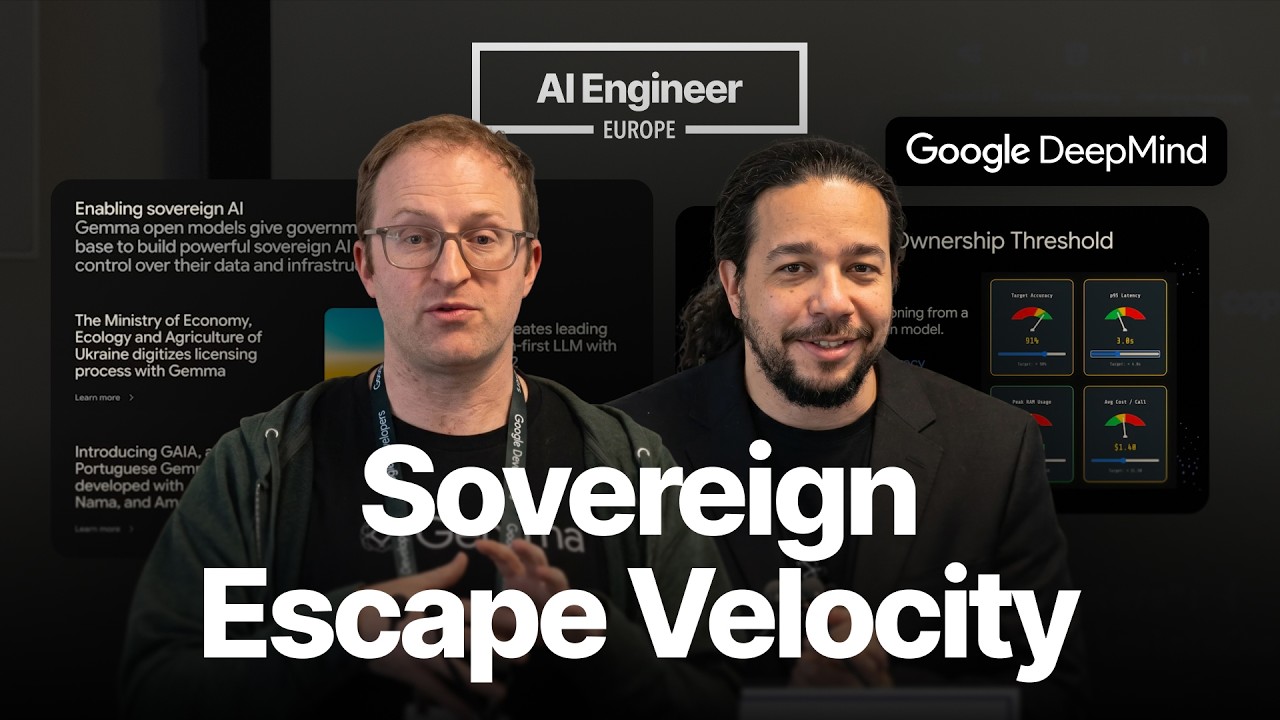
Sovereign Escape Velocity: Ownership w Open Models — Gus Martins, & Ian Ballantyne, Google DeepMind

Sovereign Escape Velocity: Ownership w Open Models — Gus Martins, & Ian Ballantyne, Google DeepMind

Google DeepMind's Ian Ballantyne and Gus Martins introduce Gemma 4, a family of open models delivering state-of-the-art performance with remarkable size efficiency. They discuss how models like the 31B variant outperform competitors 2-20x its size while running on a single GPU, the shift to an Apache 2.0 license to foster sovereignty and adoption, and the new economics of running powerful agentic workloads on hardware ranging from a Pixel phone to a single enterprise GPU.

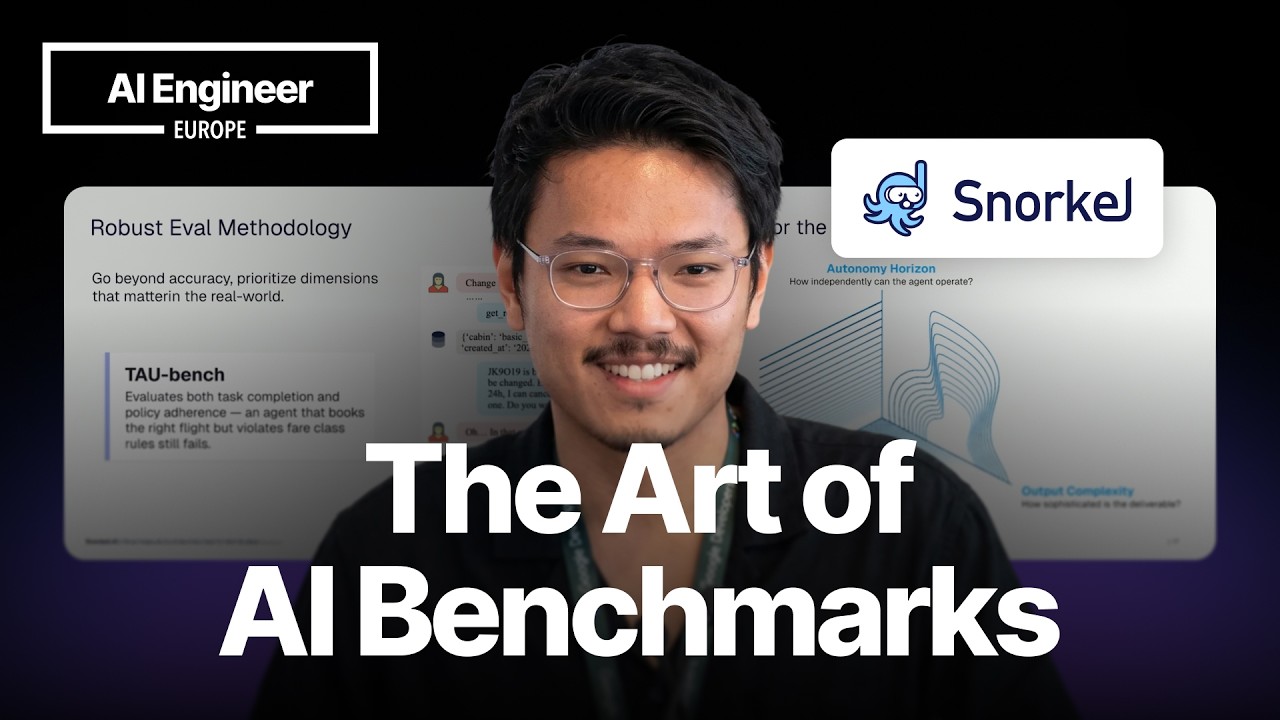
The Art & Science of Benchmarking Agents — Vincent Chen, Snorkel AI

The Art & Science of Benchmarking Agents — Vincent Chen, Snorkel AI

Vincent Chen of Snorkel AI discusses the crucial gap between rapidly advancing AI capabilities and our ability to measure them. He presents a framework for building effective benchmarks, encompassing task quality, distributional diversity, model headroom, and robust evaluation methodologies, alongside the "art" of having a clear thesis, inspiring research roadmaps, and prioritizing researcher UX. He concludes by outlining three critical axes for future benchmarks: environment complexity, autonomy horizon, and output complexity, to better reflect real-world AI applications.

The Rise of the Full-Stack Builder and Hyper-Leveraged Generalist with Microsoft CEO Satya Nadella

The Rise of the Full-Stack Builder and Hyper-Leveraged Generalist with Microsoft CEO Satya Nadella

Microsoft CEO Satya Nadella discusses the future of AI at Microsoft Build, emphasizing an ecosystem approach where every company can create its own "frontier intelligence." He highlights the critical role of private evaluations as a new form of intellectual property, the strategic use of multi-modal harnesses for enterprise, and how autonomous AI agents are reshaping software development and business models. Nadella also shares insights on the societal impact of AI, from data center investments to the potential for AI-driven transformation in education.

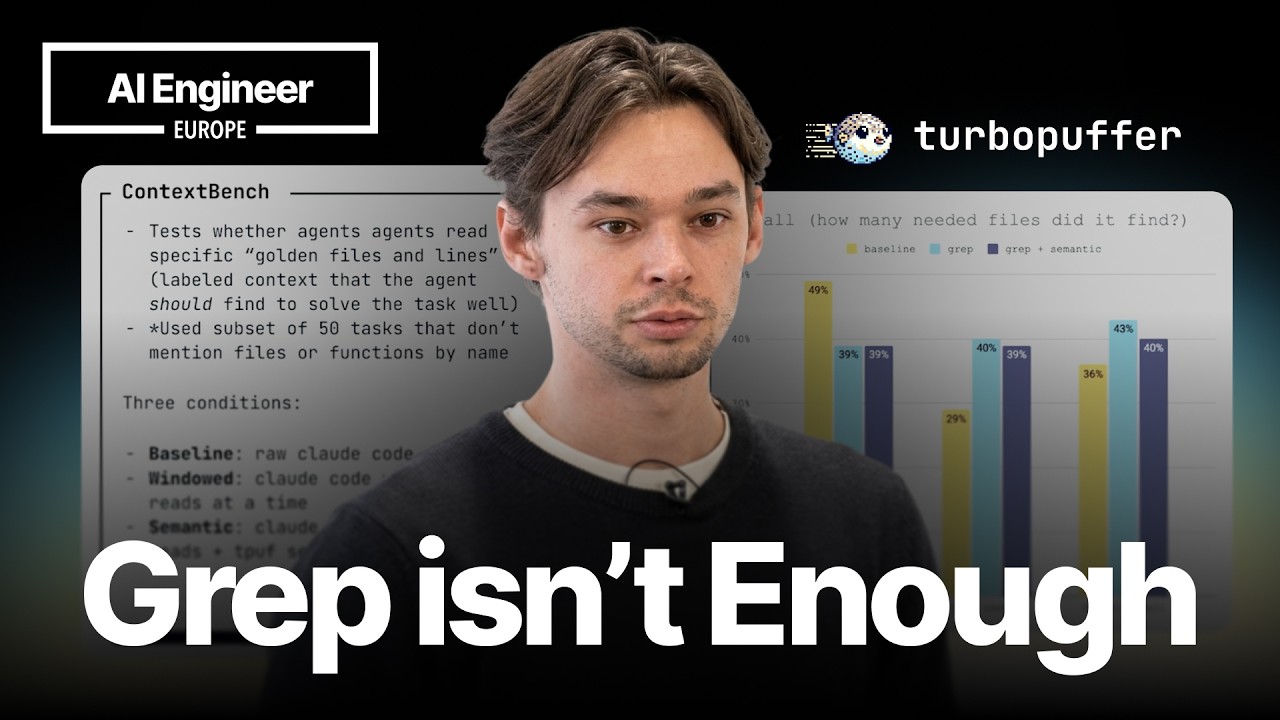
Benchmarking semantic code retrieval on Claude Code — Kuba Rogut, Turbopuffer

Benchmarking semantic code retrieval on Claude Code — Kuba Rogut, Turbopuffer

A detailed benchmark analysis comparing raw Claude Code's performance with windowed grep and Turbopuffer's semantic search for code retrieval in LLM agents. The study reveals significant improvements in file precision (65% to 87%) and reduced wasted reads (1 in 3 to 1 in 8) with semantic search, while highlighting the importance of the agent's understanding of when to use retrieval tools.