Inside Cursor: The Anatomy of a Generational Startup
A deep dive into Cursor's journey, highlighting their contrarian bets on the human-AI interface over foundation models, their decision to fork VS Code, and their unwavering resilience against tech giants. The discussion covers their rapid product evolution, innovative hiring strategies, and a unique culture of craftsmanship and disciplined focus that enabled them to thrive in the competitive AI coding market.
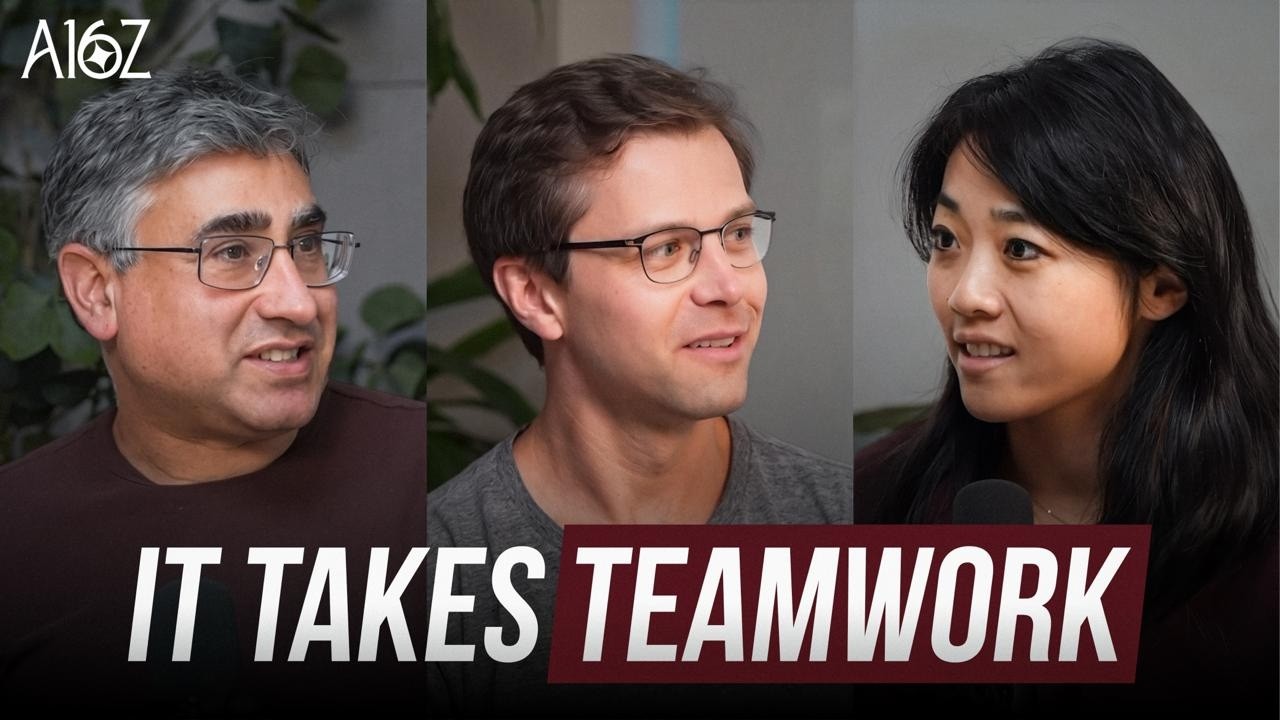
Martin Casado, Sarah Wang, and Matt Bornstein discuss the remarkable journey of Cursor, a company that challenged conventional startup wisdom in the highly competitive AI coding market.
Early Vision and Contrarian Bets
In late 2023/early 2024, Cursor’s founders made a prescient bet that the interface between humans and AI models was paramount, rather than building a coding-specific foundation model from scratch. They believed future code would resemble pseudo-code, where natural language specifications would allow models to implement algorithms directly. This vision led them to fork VS Code instead of building a plugin, a contrarian decision driven by the desire to own the entire product experience and avoid being “part of somebody else’s product.” Their deep product obsession, akin to Elon Musk’s philosophy, meant that if the product was exceptional, it would drive adoption.
Navigating an “Impossible” Competitive Landscape
Cursor entered a market dominated by giants like Microsoft Copilot, with its vast distribution and access to OpenAI’s models. They also faced emerging threats from companies like Windsurf, Cognition, and Claude Code. Despite this, the Cursor team remained “100% unfazed” by competition, driven by the conviction that the biggest markets always attract formidable competitors. Michael, Cursor’s founder, famously stated, “we are going after the biggest market in the world… That does not scare us.” This resilience was matched by an extraordinary willingness to cannibalize their own products, rapidly evolving from an IDE to an agent platform, and then to a model platform within two years, adapting as AI capabilities accelerated (e.g., with Opus 4.5 and Mythos).
Evolving Business Model and Elite Hiring
Initially focused on a self-serve product, Cursor defied conventional growth models by delaying the recruitment of a dedicated sales leader. However, as they gained market understanding, they realized the “margins were in the enterprise.” This led to an incredibly rapid and successful transition to enterprise sales, establishing what was described as “the fastest grad of a sales team in the history of the planet.” Their “how you do anything is how you do everything” ethos extended to hiring, with founders dedicating 40% of their time to recruitment. They meticulously identified and onboarded “founding AEs” by conducting intense research into top performers across leading companies. This approach also involved strategically integrating ex-founders, demonstrating an ability to manage operational complexity that many companies struggle with, ultimately leveraging talent via acquisition.
Culture of Craftsmanship and Relentless Focus
Cursor fostered a culture defined by craftsmanship, taste, and an obsessive focus on product. Founders were driven by a genuine love for coding, often building for fun, which directly translated into the products they created. This meticulous attention to detail permeated every aspect of the company, from the design of their office space (e.g., twinkle lights, no-shoes policy) to their marketing approach. Crucially, the team demonstrated an uncommon discipline in saying “no” to distractions and making hard personnel decisions quickly. While profoundly product-centric, the founders also showed an acute awareness of the broader business “game,” understanding that an enduring company requires more than just product excellence. This blend of product obsession and business acumen, coupled with a “cultural perseverance to the naysayers,” drew parallels to Elon Musk’s SpaceX, highlighting Cursor’s ambitious, fast-moving, and strategically adaptable approach.