Developer productivity

How to Kill the Code Review — Ankit Jain, Aviator

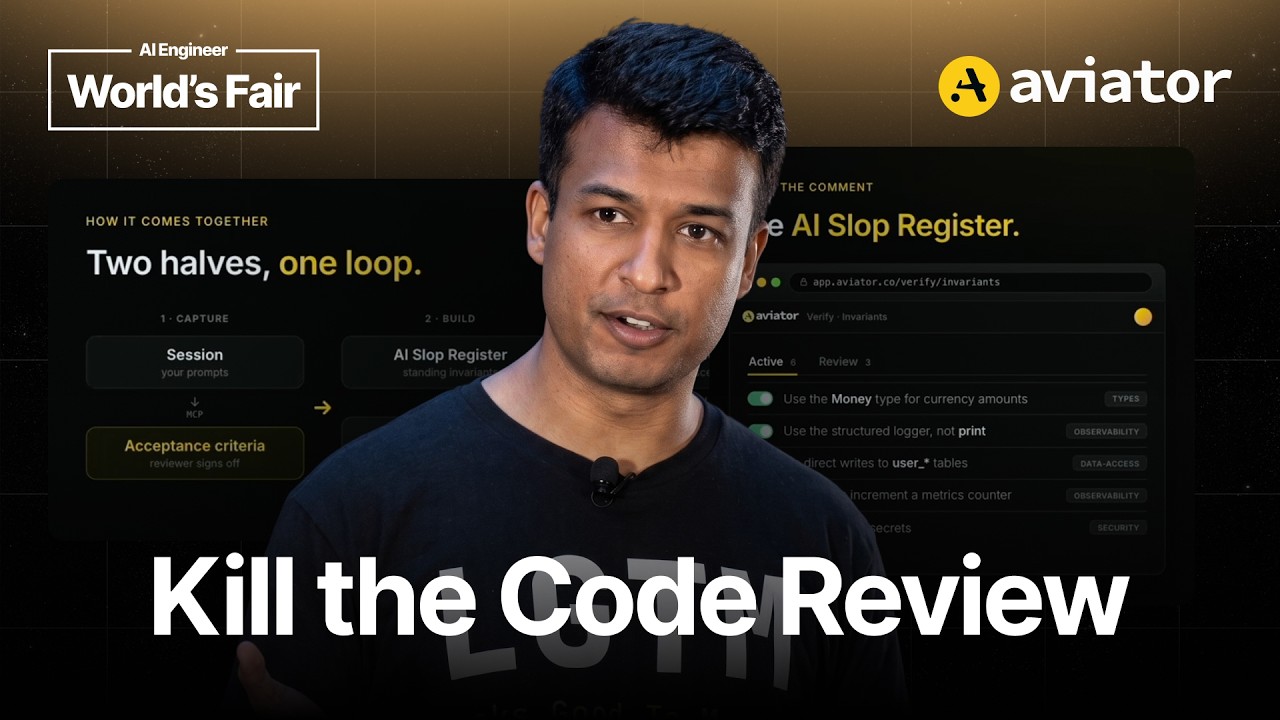
How to Kill the Code Review — Ankit Jain, Aviator

Ankit Jain argues that traditional line-by-line code review is defunct, with AI reviewing code that humans no longer read. He asserts that code review's vital, often overlooked, purpose is 'alignment'—knowledge sharing, mentorship, and architectural feedback—which current AI-driven workflows fail to capture. His proposal involves capturing user-AI interaction prompts as acceptance criteria, generating test plans with an 'AI Slop Registry' (codified recurring review comments), and verifying changes against live previews. The new review surface becomes the 'intent and evidence' rather than the code diff, preserving collaboration and ensuring semantic accuracy.
Agents, codebases, and teams — Aditya Khandelwal, Amazon AGI Lab

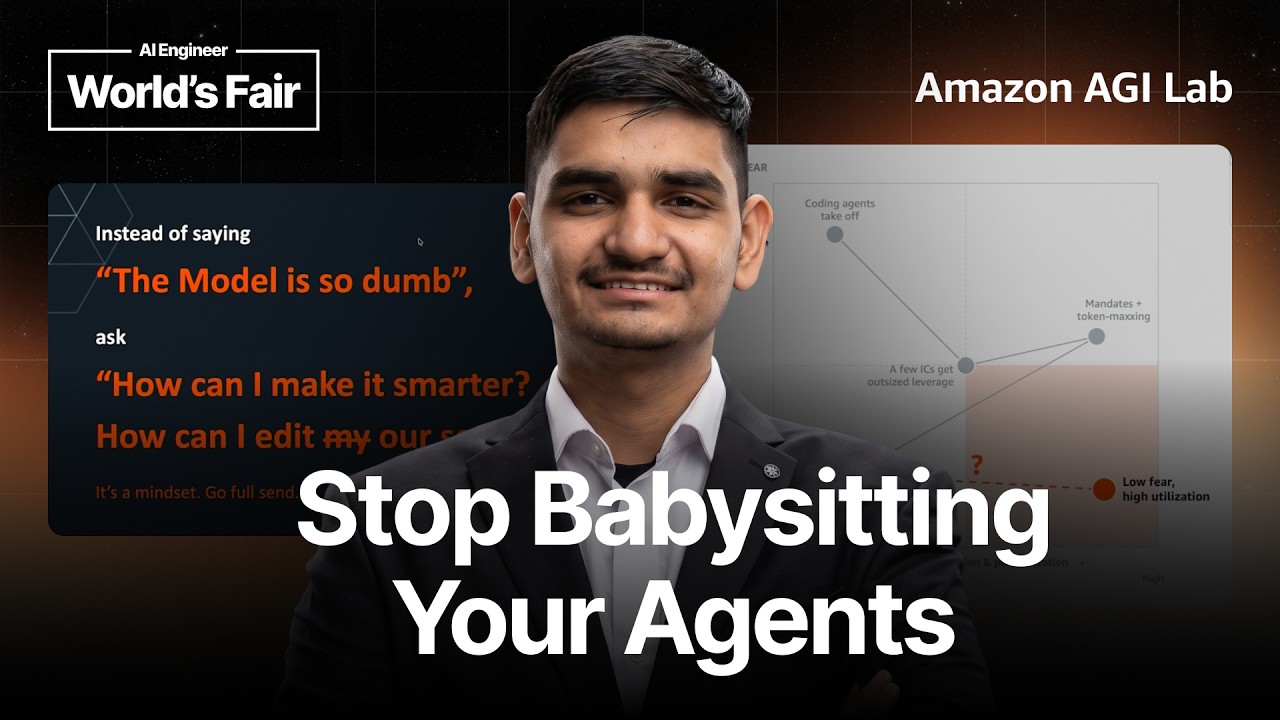
Agents, codebases, and teams — Aditya Khandelwal, Amazon AGI Lab

Aditya Khandelwal argues that scaling AI agent adoption within engineering teams is a leadership challenge, not an individual contributor problem. He highlights common pitfalls like agent "babysitting" and "slop," and provides a playbook emphasizing progressive disclosure, high-value automation, robust feedback loops, and a critical mindset shift to successfully integrate agents into team workflows.

Multiplayer agentic engineering — Arjun Singh, Superconductor

Multiplayer agentic engineering — Arjun Singh, Superconductor

Arjun Singh, co-founder of Superconductor, discusses the six crucial lessons learned from integrating AI agents into their software development workflow. He emphasizes the importance of building "multiplayer agentic engineering" systems where human teams and AI agents collaborate seamlessly, focusing on model agnosticism, pervasive agent interfaces, transparent work visibility, automated signal-to-code conversion (like their "meeting bot"), secure isolated cloud environments, and internal code-base benchmarking to optimize cost, quality, and speed.

Guide, Verify, Solve — Anirban Chatterjee, Sonar

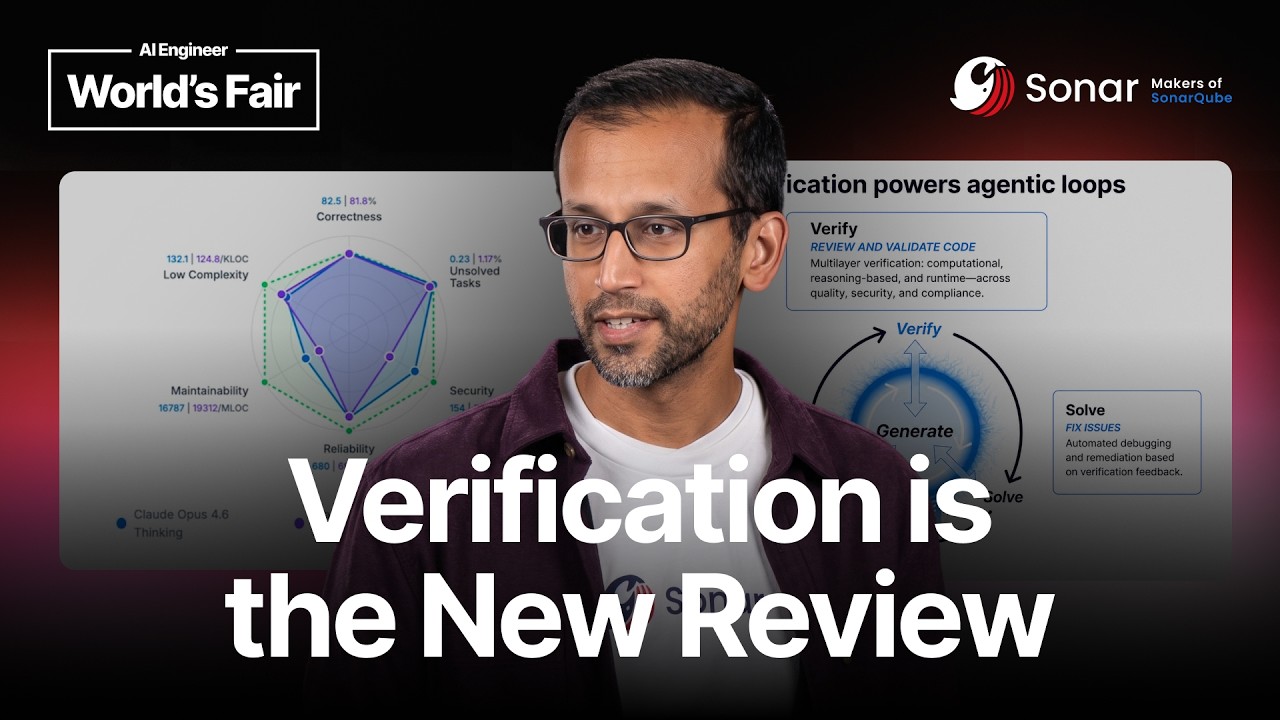
Guide, Verify, Solve — Anirban Chatterjee, Sonar

Anirban Chatterjee discusses the emergence of "verification debt" in AI-driven software development, where AI-generated code introduces persistent quality issues despite initial productivity gains. He proposes a **zero-trust, multi-layered verification** approach, integrating it into an "Agent-Centric Development Cycle" (ACDC) to ensure code quality, security, and compliance by empowering AI agents with real-time feedback and remediation capabilities through tools like SonarQube, Gitarr, and Sonar Vortex.

Developer Productivity at a Developer Productivity Startup • Robert-Jan "RJ" Huijsman • GOTO 2025

Developer Productivity at a Developer Productivity Startup • Robert-Jan "RJ" Huijsman • GOTO 2025

Robert-Jan Huijsman, Founding Engineer at Reboot.dev, outlines a pragmatic approach to developer productivity by tackling friction and non-determinism in both human collaboration and software development. He shares Reboot.dev's strategies, including async workstreams, full-stack typing, unit testing with AI, and foundational engineering principles like retries, durable execution, and strong consistency, to build reliable and efficient systems.

Loop Engineering from First Principles — Kyle Mistele, HumanLayer

Loop Engineering from First Principles — Kyle Mistele, HumanLayer

Kyle Mistele, in this presentation, argues that fixing the problem of unreviewable 40,000-line pull requests generated by coding agents doesn't lie in better prompts but in better, control theory-inspired loops. He details how to build agentic control loops with distinct sensors, controllers, and actuators, ensuring incremental, verifiable code changes. Using a practical example of RPC API migration, he demonstrates how to implement these loops with tools like ASGrep, integrate them into CI/CD, enable human feedback, and manage workflow to prevent overwhelming reviewers, ultimately leading to more robust and readable agent-generated code.