Developer productivity

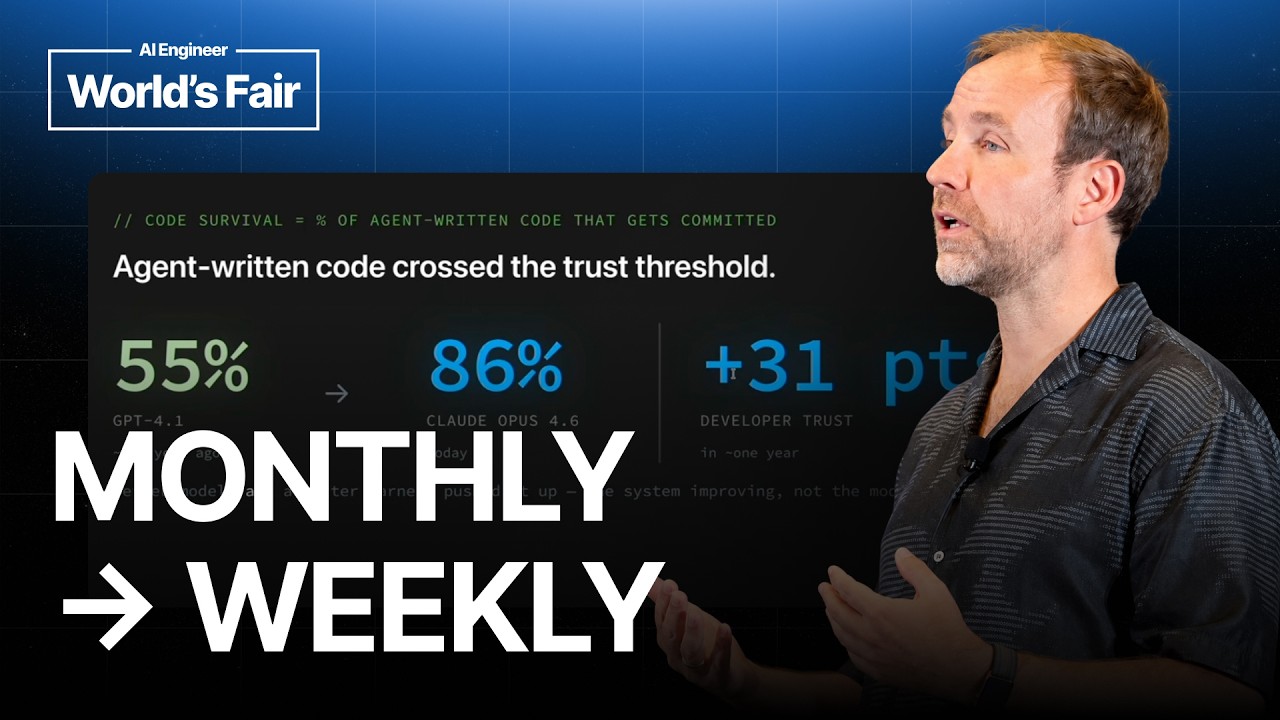
How VS Code Went from Monthly to Weekly Releases with AI — Harald Kirschner

How VS Code Went from Monthly to Weekly Releases with AI — Harald Kirschner

Harald Kirschner, principal product manager on VS Code at Microsoft, explains how a small team serving more than 50 million users moved from monthly to weekly releases by rebuilding its whole delivery system around AI agents. He covers faster shipping through agent-ready codebases, skills, and a 10x faster TypeScript Go build, quality practices like mandatory AI code review, AI triage, auto-fix PRs and staged rollouts, and faster learning through VSC-Bench evals and daily prototyping.
The State of AI in Software Development: Data from 400+ Orgs — Justin Reock, DX

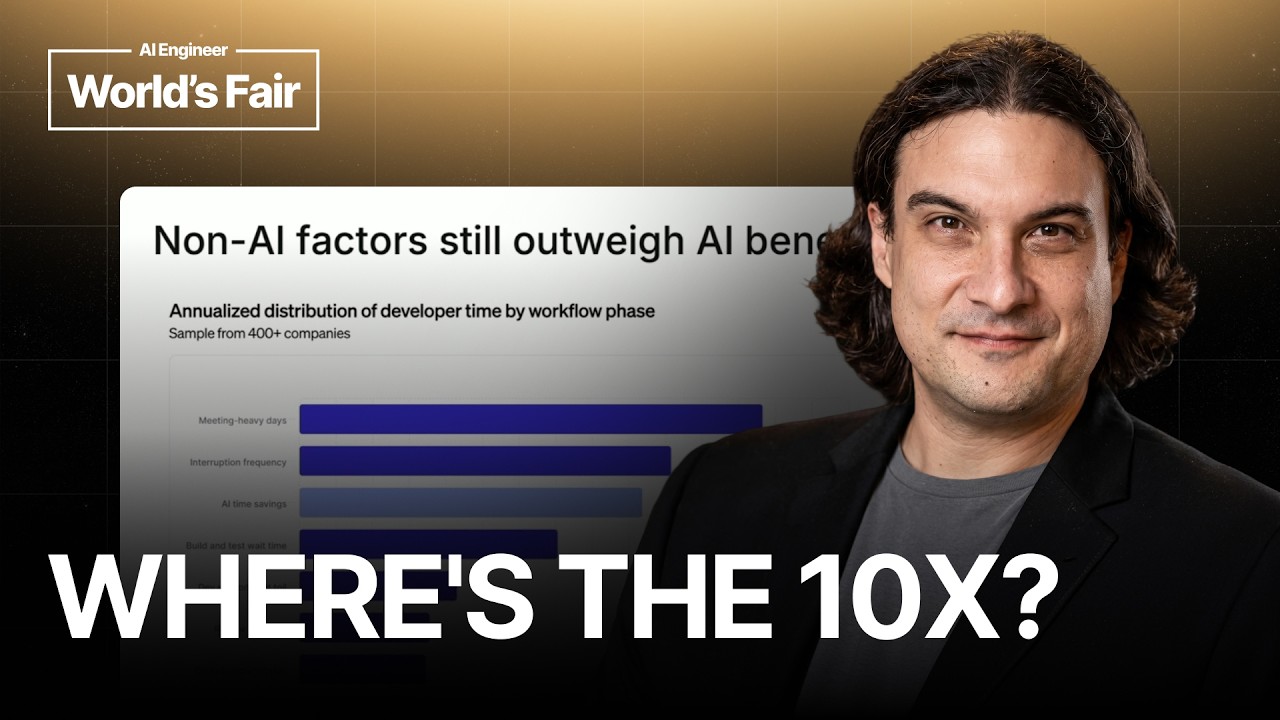
The State of AI in Software Development: Data from 400+ Orgs — Justin Reock, DX

Justin Reock of DX presents five trends from research on about 200,000 engineers, covering deployment frequency, change failure rate volatility, the maintainability and change confidence gap, growing PR sizes, differences across junior and senior engineers, the DX AI Measurement Framework, platform AI readiness, agent experience, and why code generation was never the bottleneck. Case studies from Morgan Stanley, Zapier, and Spotify illustrate AI applied across the SDLC.

No, That's Not a Software Factory — Ryan Cooke, WorkOS

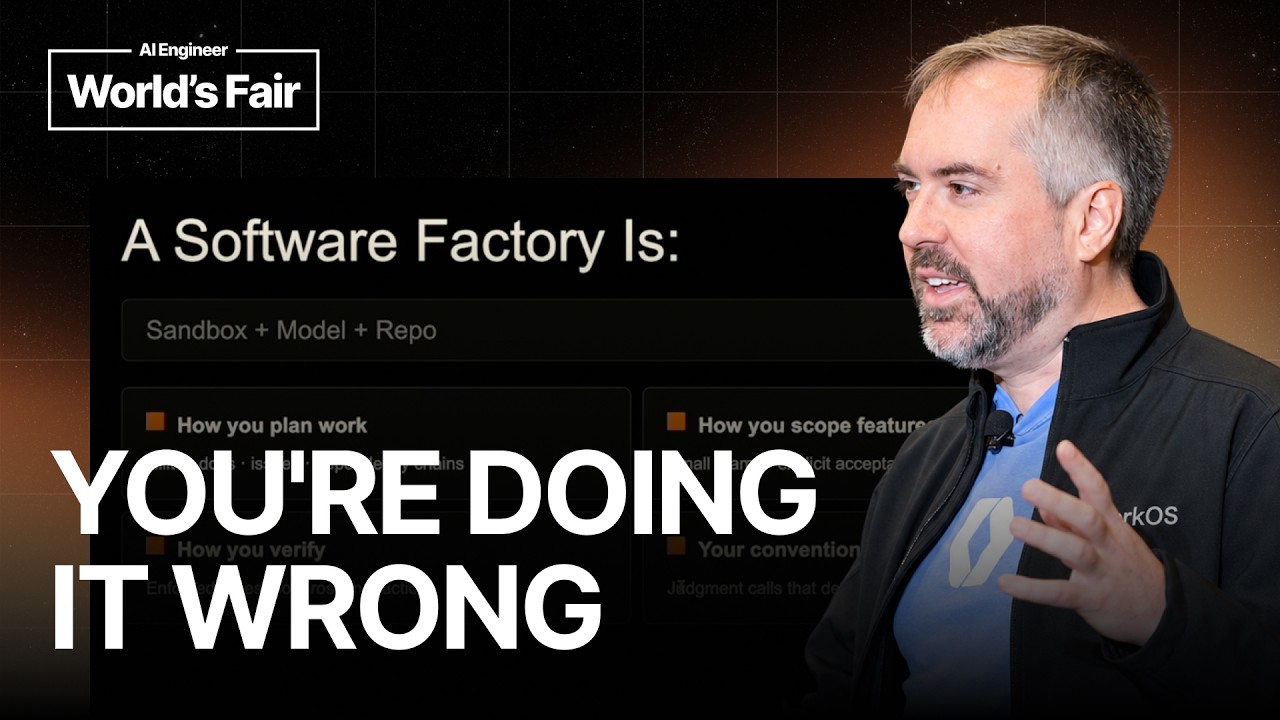
No, That's Not a Software Factory — Ryan Cooke, WorkOS

Ryan Cooke of WorkOS argues that software factories should be judged by customer outcomes rather than PR counts or AI-generated code volume. He describes how WorkOS embedded its product engineering process into its factory through TARS, Horizon, a PM agent that drafts Hilltop docs, and an internal MCP gateway connected to Snowflake, along with bug triage, owned sandboxes, a memory layer and outcome-focused metrics.

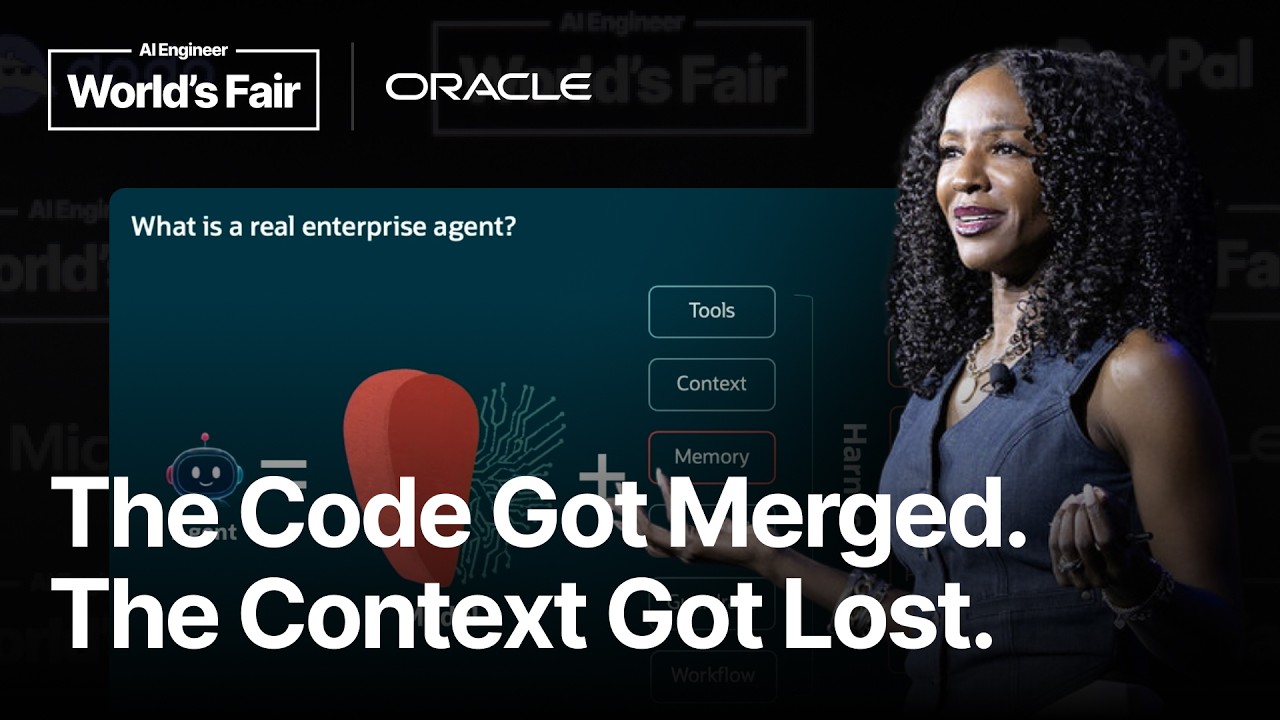
No Memory, No Harness: Why the Database Is the Last Line of Defense — Kay Malcolm, Oracle

No Memory, No Harness: Why the Database Is the Last Line of Defense — Kay Malcolm, Oracle

Kay Malcolm discusses how AI, while boosting individual performance, often hinders overall team productivity due to fragmented context. She introduces the concept of an "agent harness" with "memory" as its central nervous system, vital for sharing context. Drawing on personal experiences with database sprawl, she highlights the inefficiencies of storing diverse memory types across multiple data stores. Malcolm then presents Oracle's AI database (26AI) as a unified solution, capable of natively managing all memory types in a single platform, thereby enhancing team collaboration and solving the context problem for enterprise AI agents.

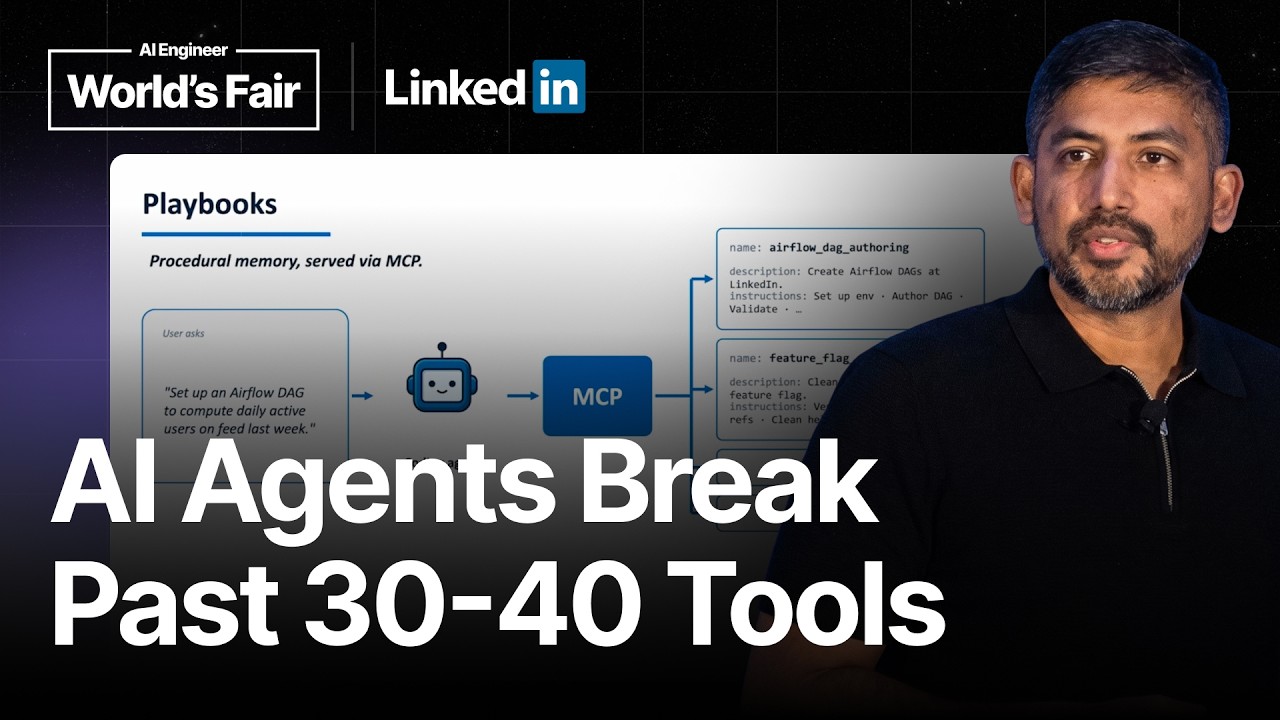
500 Skills, Zero Fine-Tuning: LinkedIn's Playbook for AI Agents — Ajay Prakash, LinkedIn

500 Skills, Zero Fine-Tuning: LinkedIn's Playbook for AI Agents — Ajay Prakash, LinkedIn

LinkedIn revolutionized its approach to AI agents by addressing the inherent limitations of LLMs in complex enterprise environments. Facing issues like hallucinations due to a lack of internal context, they developed a system of "playbooks" — structured, self-contained instructions published as tools. To scale beyond typical MCP limitations, they introduced three meta-tools (search, get schema, execute), enabling agents to dynamically discover and utilize thousands of internal tools and playbooks. This self-improving, context-aware infrastructure empowers agents to handle tasks from incident response to code generation, significantly boosting developer productivity and ensuring reliability.

Agentic SDLC at Uber — Uday Kiran Medisetty & Adam Huda, Uber

Agentic SDLC at Uber — Uday Kiran Medisetty & Adam Huda, Uber

Uber has transformed its software development with an agentic AI-powered factory, leading to a dramatic increase in engineer productivity. The presentation details six key infrastructure components: a unified model gateway with strict PII and safety guardrails, an MCP gateway for streamlined agent tool access and token optimization, agentified dev pods for rapid execution, a managed skills marketplace, a comprehensive context graph, and the Cortana AI assistant. Adam Huda then demonstrates an end-to-end feature development workflow, highlighting a critical shift to inner-loop validation (stopping short of CI) and automated, managed maintenance loops. The ultimate takeaway is that the bottleneck has moved from technical execution to strategic decision-making: "should we build it?" rather than "can we build it?"