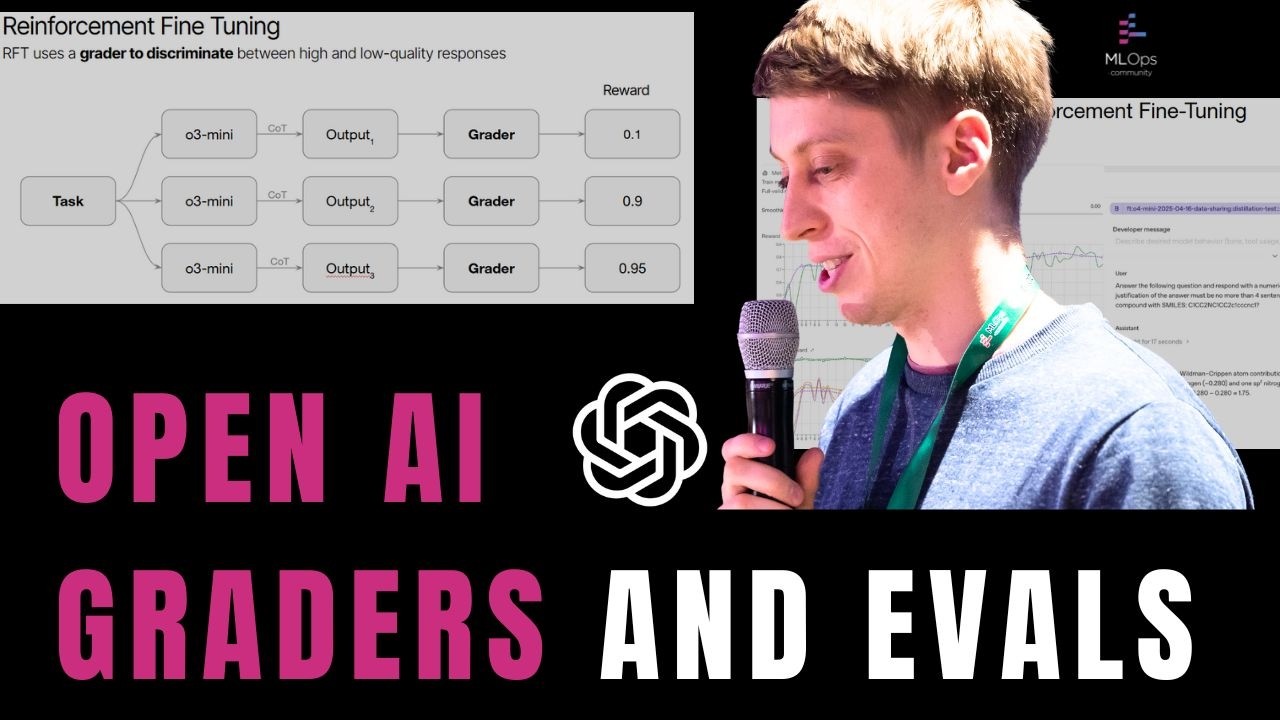
An overview of the new GPT-realtime speech-to-speech model and the general availability of the Real-Time API, detailing its architecture, advanced capabilities like image input and multilingualism, training methodology, and new enterprise-ready features.
The $10 Trillion AI Revolution: Why It’s Bigger Than the Industrial Revolution
Sequoia Capital's Konstantine Buhler presents an investment thesis on the AI-driven "Cognitive Revolution," framing it as a transformation larger and faster than the Industrial Revolution. The core of the thesis is the $10 trillion opportunity in automating the US services market and the shift in work from certainty to high leverage. Buhler outlines five current investment trends, including real-world validation over academic benchmarks and compute as the new production function, and five future themes Sequoia is betting on, such as persistent memory, AI-to-AI communication, and AI security.
AI traces are worth a thousand logs
An exploration of how a single, structured trace, based on OpenTelemetry standards, offers a superior method for debugging, testing, and understanding AI agent behavior compared to traditional logging. Learn how programmatic access to traces enables robust evaluation and the creation of golden datasets for building more reliable autonomous systems.
AI Agents & LLMs: Real-Time IT Issue Prediction & Prevention
Amanda Downie explains the shift from reactive IT firefighting to proactive optimization, detailing how AI agents and LLMs use predictive analytics, topology mapping, and continuous learning loops to anticipate and prevent system issues before they occur.
Building the Universal AI Automation Layer ft n8n CEO Jan Oberhauser
Jan Oberhauser, founder of n8n, discusses the company's strategic pivot from a workflow tool to an AI automation platform. He explains how focusing on community, adopting a "connect everything to anything" philosophy, and enabling the creation of complex AI agents led to a 4x revenue increase in just eight months.
Using LongMemEval to Improve Agent Memory
Sam Bhagwat of Mastra details their process for optimizing AI agent memory using the Long Mem Eval benchmark. He breaks down memory into subtasks like temporal reasoning and knowledge updates, and shares how targeted improvements—such as tailored templates, targeted data updates, and structured message formatting—led to state-of-the-art performance, emphasizing the importance of iterative evaluation.