Ai agents

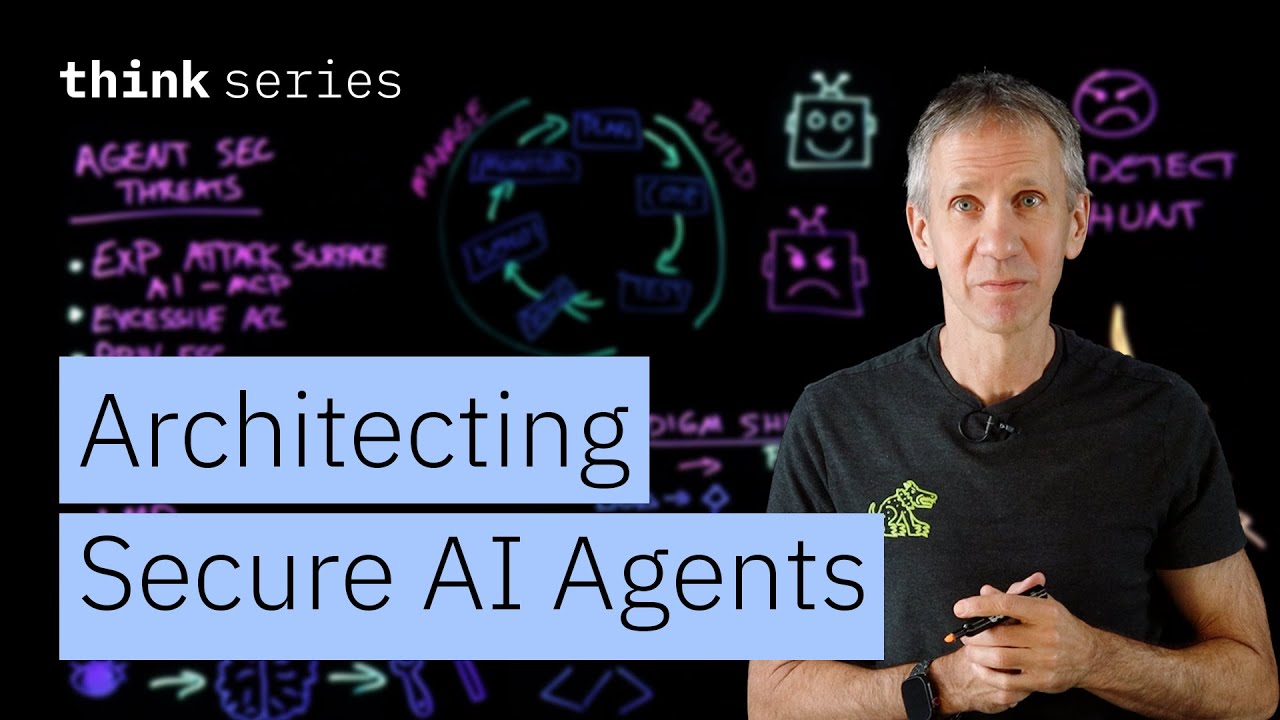
Zero-Click Attacks: AI Agents and the Next Cybersecurity Challenge

Zero-Click Attacks: AI Agents and the Next Cybersecurity Challenge

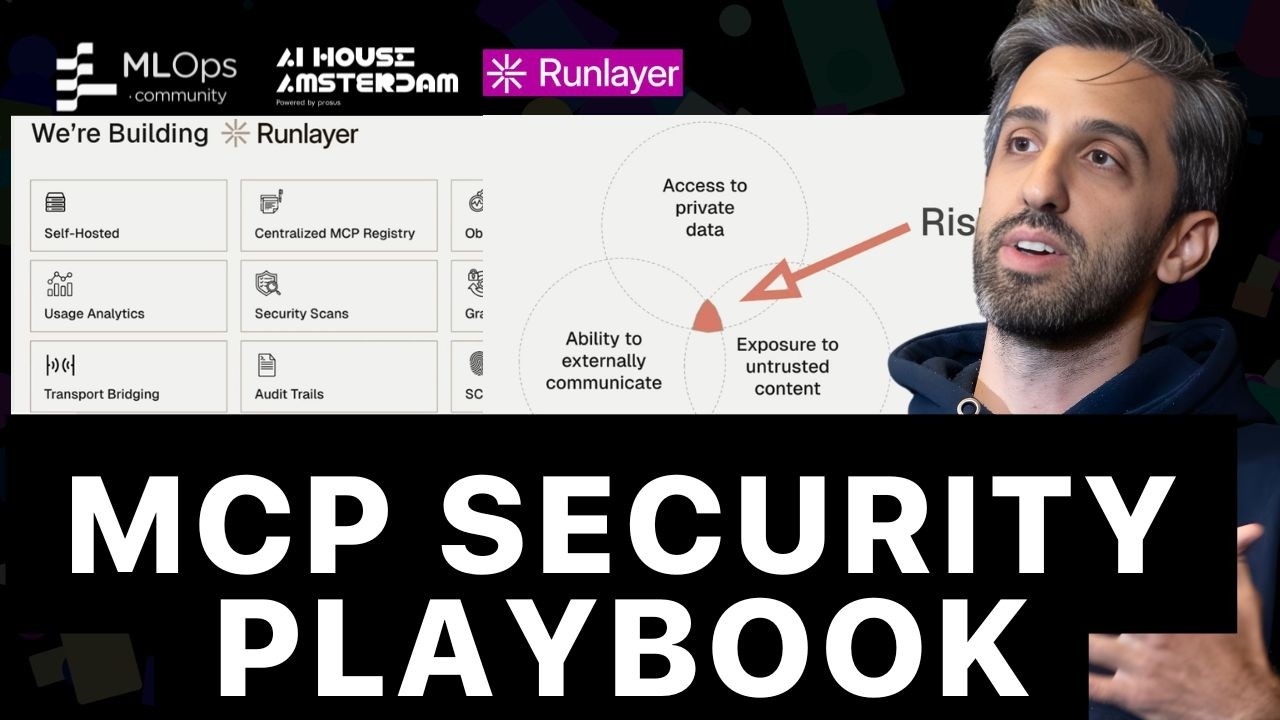
Explores the mechanics of zero-click attacks, which require no user interaction, and details how the integration of autonomous AI agents can amplify these threats. The summary covers historical examples like Pegasus and proposes a multi-layered defense strategy, including AI firewalls, the principle of least privilege, and a zero-trust architecture.

Alex: Your AI Recruiting Partner

Alex: Your AI Recruiting Partner

Co-founders Aaron Wang and John Rytel discuss Alex, their AI recruiting partner that automates interviews and administrative tasks. They cover how AI is fixing the broken hiring market, the technical challenges of building conversational agents, and their vision for a future where AI supercharges, rather than replaces, human recruiters.

Beyond Chatbots: How to build Agentic AI systems with Google Gemini // Philipp Schmid

Beyond Chatbots: How to build Agentic AI systems with Google Gemini // Philipp Schmid

A deep dive into the evolution from static chatbots to dynamic, agentic AI systems. Philipp Schmid of Google DeepMind explores how to design, build, and evaluate AI agents that leverage structured outputs, function calling, and workflow orchestration with Google Gemini, covering key agentic patterns and the future of AI development.

How to Optimize AI Agents in Production

How to Optimize AI Agents in Production

Engineers building AI agents face a combinatorial explosion of configuration choices (prompts, models, parameters), leading to guesswork and suboptimal results. This talk introduces a structured, data-driven approach using multi-objective optimization to systematically explore this vast design space. Learn how the Traigent SDK helps engineers efficiently identify optimal tradeoffs between cost, latency, and accuracy, yielding significant quality improvements and cost reductions without manual trial-and-error.

Evaluating AI Agents: Why It Matters and How We Do It

Evaluating AI Agents: Why It Matters and How We Do It

Annie Condon and Jeff Groom from Acre Security detail their practical approach to robustly evaluating non-deterministic AI agents. They share their philosophy that evaluations are critical for quality, introduce their "X-ray machine" analogy for observability, and walk through their evaluation stack, including versioning strategies and the use of tools like Logfire for tracing and Confident AI (Deep Evals) for systematic metric tracking.

Designing Claude Code

Designing Claude Code

Anthropic’s Meaghan Choi and Alex Albert explore the design philosophy behind Claude Code, discussing its terminal-first approach, the evolution of developer workflows in the age of LLMs, and how agentic coding empowers both engineers and designers.