Ai agents

Microsoft’s new AI models & bots dominate the internet

Microsoft’s new AI models & bots dominate the internet

This episode explores how AI agents now dominate web traffic, the implications for content and advertising, Microsoft's new foundation models (MAI-Thinking-1 and MAI-Image-1) focusing on safety and cost efficiency, and the emergence of AI-generated films at the Tribeca Film Festival, debating AI's role as a creative tool and its impact on the future of art.
AI agents can manage your passwords. Should we let them? Plus: The biggest Patch Tuesday ever.

AI agents can manage your passwords. Should we let them? Plus: The biggest Patch Tuesday ever.

This episode of Security Intelligence delves into three critical cybersecurity topics: the implications of AI agents managing passwords, the impact of AI on vulnerability discovery and "Patch Tuesday" volumes, and the C-suite's evolving appetite for cyber risk in pursuit of innovation. Experts discuss the promises, pitfalls, and necessary strategic shifts in an AI-driven security landscape.

[404] – Developer Not Found: The Continuing Developer Evolution • Derek Bingham • YOW! 2025

[404] – Developer Not Found: The Continuing Developer Evolution • Derek Bingham • YOW! 2025

Derek Bingham explores the rapid evolution of developer tools with AI, from coding assistants to autonomous agents. He emphasizes the shift from prompt engineering to context engineering, introduces Spec-Driven Development (SDD) as a framework for quality AI-generated code, and dispels fears about AI replacing developers, arguing instead for increased demand and the necessity of new skills like ethical and systems thinking.

Building AI Agent Systems and Scaling Challenges in Agentic AI

Building AI Agent Systems and Scaling Challenges in Agentic AI

Scaling agentic AI systems presents unique challenges beyond traditional software scaling. This summary explains why expanding a single agent's capabilities leads to non-linear increases in cost, latency, and failure propagation. The talk frames this as a systems design problem solved by moving from a monolithic agent to a multi-agent architecture with distributed responsibilities, and it explores the critical architectural trade-offs between horizontal and vertical scaling of agent capabilities.

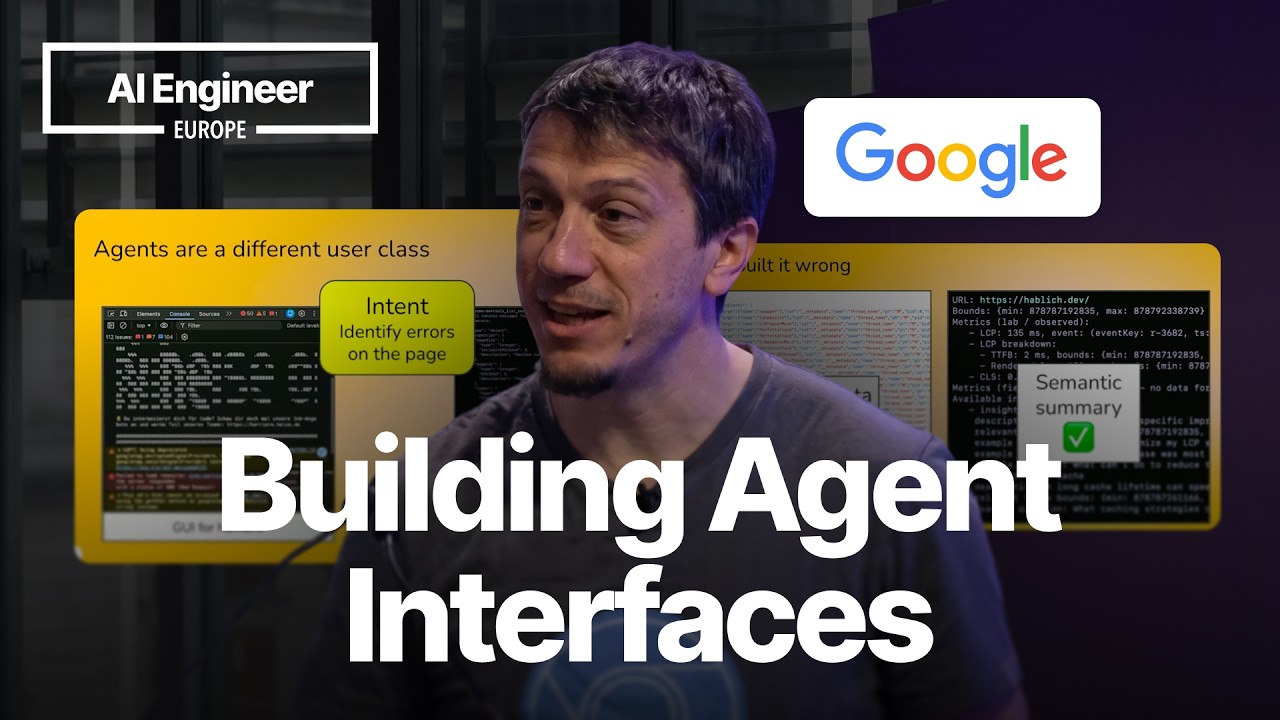
Building Agent Interfaces: Lessons from Chrome DevTools (MCP) for Agents — Michael Hablich, Google

Building Agent Interfaces: Lessons from Chrome DevTools (MCP) for Agents — Michael Hablich, Google

Michael Hablich from the Chrome DevTools team shares hard-won engineering lessons on building effective and secure interfaces for AI agents. The talk covers moving from raw data to semantic summaries, measuring interface efficiency with 'tokens per successful outcome', designing for error recovery, and the critical importance of trust boundaries and deliberate friction in UI design for agents.

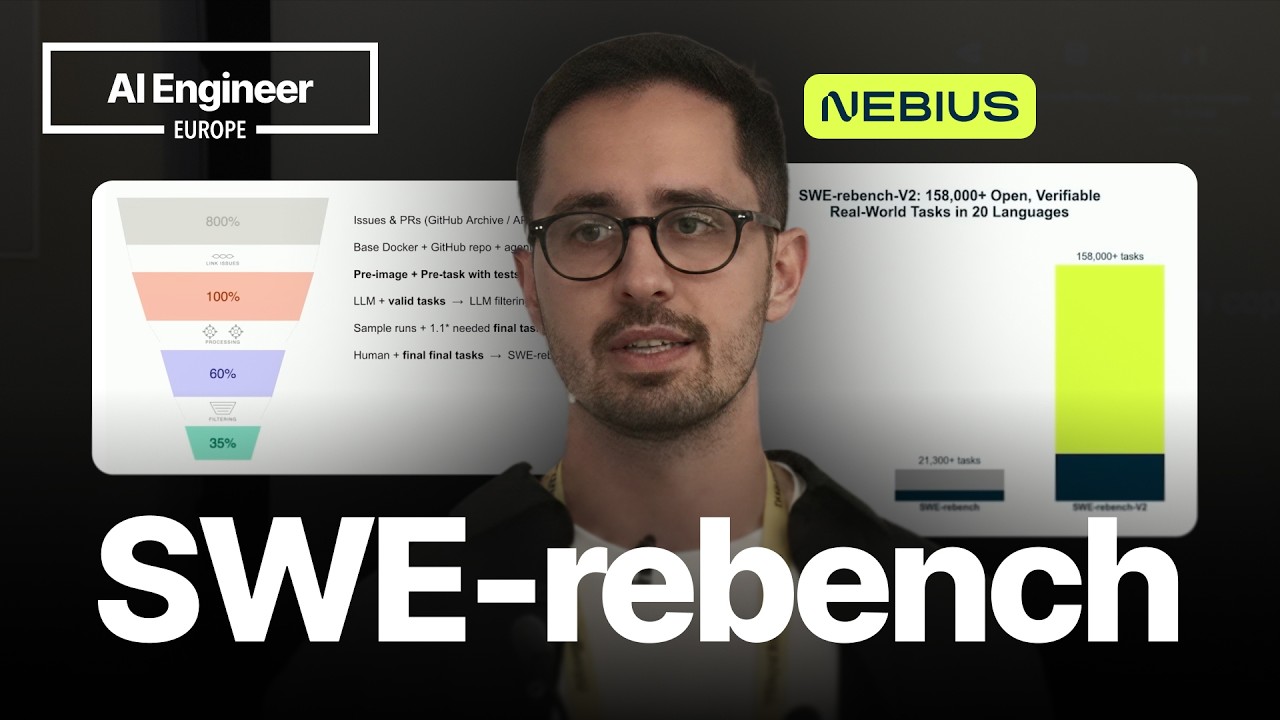
SWE-rebench: Lessons from Evaluating Coding Agents — Ibragim Badertdinov, Nebius

SWE-rebench: Lessons from Evaluating Coding Agents — Ibragim Badertdinov, Nebius

Ibragim Badertdinov from Nebius AI shares lessons from building and maintaining SWE-ReBench, a monthly leaderboard that evaluates coding agents on fresh, real-world software engineering tasks. The talk covers the anatomy of a good benchmark task, the challenges of filtering out noisy or flawed problems, and fascinating examples of how advanced models like Claude Code "cheat" by exploiting the environment. Finally, it explains how the same pipeline used for evaluation has produced large-scale, high-quality training datasets like SWE-bench, used by frontier AI labs.