Ai agents

Llama.cpp vs vLLM: Which Local LLM Engine Actually Scales?

Llama.cpp vs vLLM: Which Local LLM Engine Actually Scales?

Explore the strengths and optimal use cases of `llama.cpp` and `vLLM` for local LLM inference. `llama.cpp` excels on consumer hardware with optimizations like quantization and CPU support, while `vLLM` is designed for production-scale efficiency with features like continuous batching and speculative decoding on high-performance accelerators.
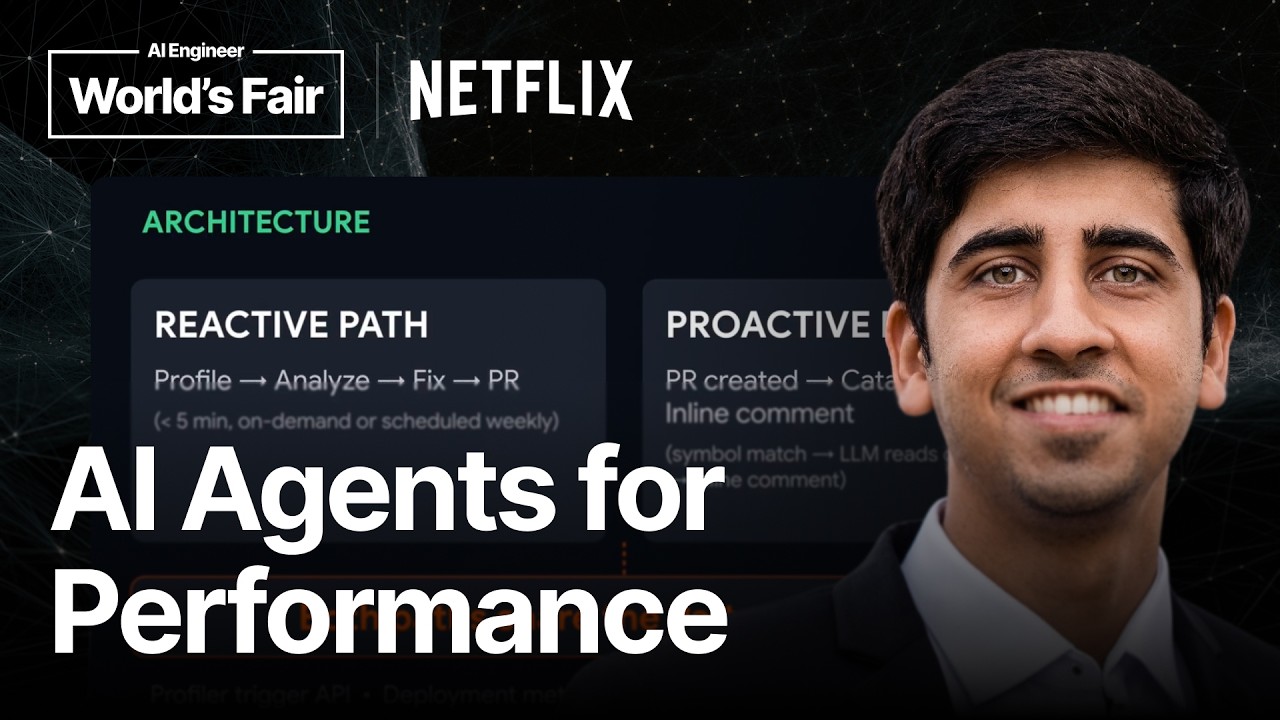
AI Agents for Performance: Ship Faster, Pay Less — Rajat Shah, Netflix

AI Agents for Performance: Ship Faster, Pay Less — Rajat Shah, Netflix

Rajat Shah details Netflix's approach to automating performance engineering using AI agents. He describes how an agent can read production profiling data, identify quadratic inefficiencies, propose code fixes, and validate them via canary deployments. The talk highlights the importance of a shared anti-pattern catalog and shifting from reactive bug fixing to proactive prevention by integrating AI early in the development cycle, emphasizing foundational automation and structured autonomy levels.

Boris Cherny: Building Claude Code

Boris Cherny: Building Claude Code

Boris Cherny, creator of Claude Code, discusses the transformative capabilities of Opus 5, highlighting its prompt injection resistance and long-task execution. He delves into Claude Code's empirical development philosophy of "unhobbling" AI by constantly adapting to new model generations, and shares insights on how to build advanced AI products using higher-level tasks, self-verification, and dynamic workflows to orchestrate thousands of agents.

Jensen Huang: The Mindset That Built NVIDIA

Jensen Huang: The Mindset That Built NVIDIA

Jensen Huang, CEO of NVIDIA, shares critical lessons from NVIDIA's journey, emphasizing how early failures and a commitment to learning new technologies, like purchasing textbooks from Fry's to pivot the company, laid the groundwork for their success. He discusses NVIDIA's strategic vision, driven by accelerating algorithm domains and seeing AlexNet as a universal function approximator, which led to a reinvention of the computing stack. Huang also explores the future of AI with agents, the importance of fine-grained control, and the "Linux moment" of open-source AI, while also forecasting the rise of physical AI and job creation. He concludes with profound advice on resilience, systems thinking, and the "how hard can it be?" mindset for aspiring entrepreneurs in this unprecedented era of technological reset.

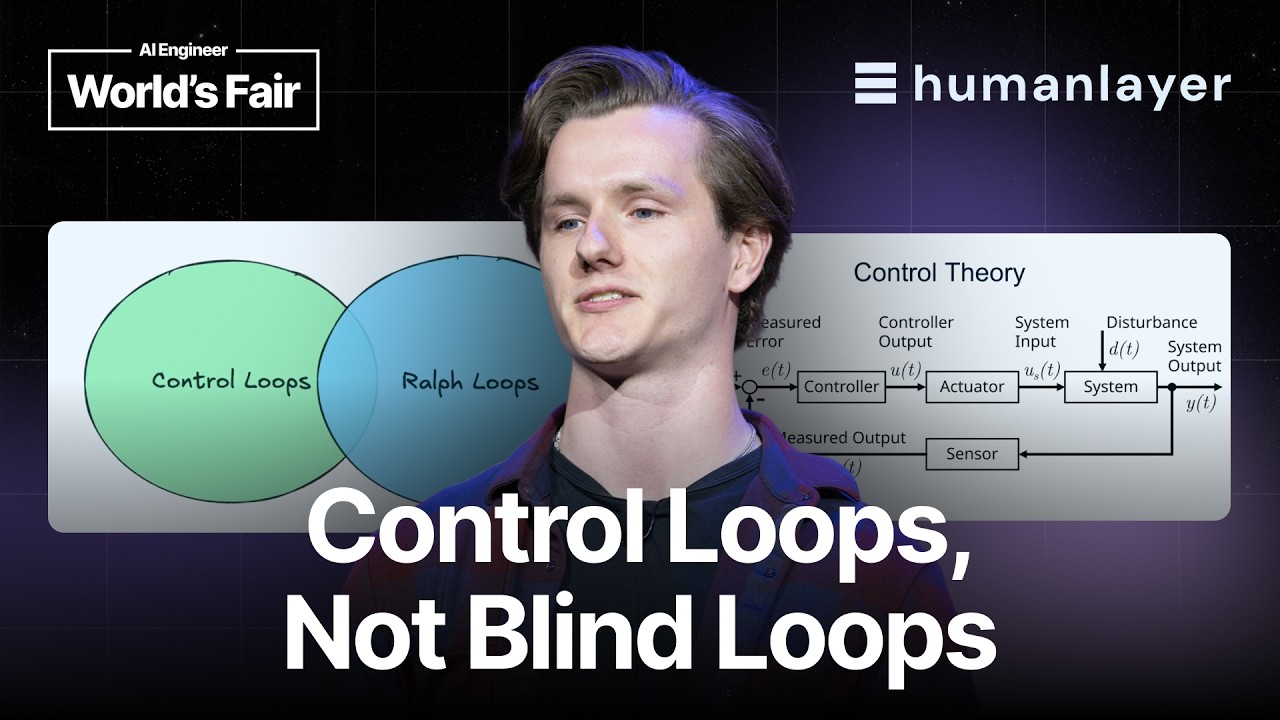
Loop Engineering from First Principles — Kyle Mistele, HumanLayer

Loop Engineering from First Principles — Kyle Mistele, HumanLayer

Kyle Mistele, in this presentation, argues that fixing the problem of unreviewable 40,000-line pull requests generated by coding agents doesn't lie in better prompts but in better, control theory-inspired loops. He details how to build agentic control loops with distinct sensors, controllers, and actuators, ensuring incremental, verifiable code changes. Using a practical example of RPC API migration, he demonstrates how to implement these loops with tools like ASGrep, integrate them into CI/CD, enable human feedback, and manage workflow to prevent overwhelming reviewers, ultimately leading to more robust and readable agent-generated code.

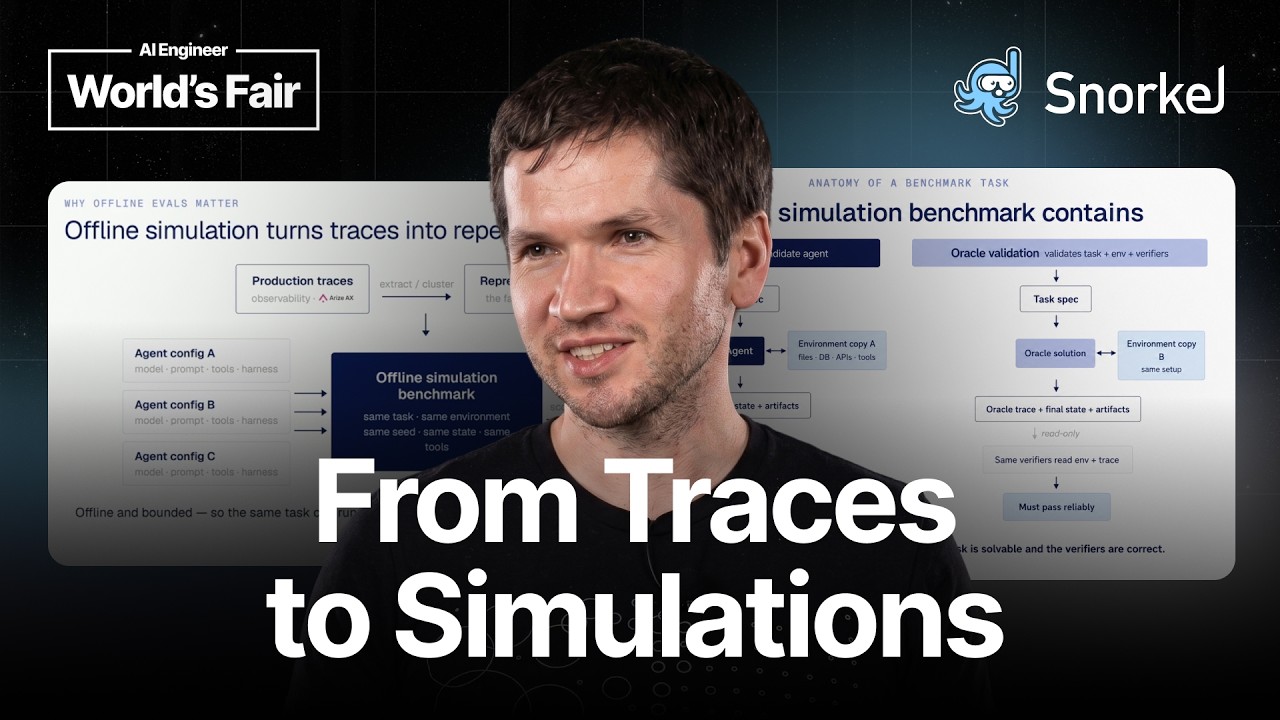
From Agent Traces to Agent Simulations — Rustem Feyzkhanov, Snorkel AI

From Agent Traces to Agent Simulations — Rustem Feyzkhanov, Snorkel AI

Rustem Feyzkhanov discusses the critical need for companies to build private, production-aligned benchmarks for AI agents. He explains how to turn agent traces into repeatable simulations, why public benchmarks are insufficient, and how a CI pipeline for agents, integrating observability and experimentation, can ensure reliable evaluation, continuous improvement, and effective release management, moving beyond simple pass rates to measure cost, latency, and policy adherence.