Ai agents

Reading Group July 2026 - Loop Engineering

Reading Group July 2026 - Loop Engineering

This session provides an in-depth exploration of Loop Engineering, a paradigm shift from manual AI prompting to designing autonomous systems that orchestrate AI agents. Speakers share practical experiences, from building production-grade platforms with automated code generation and adversarial AI reviews to experimental loop structures and foundational infrastructure layers. Key discussions address challenges like managing token costs, preventing agent chaos, and implementing robust verification mechanisms for industrializing software development.
What Is RAD? Why It Matters in the Age of AI Coding

What Is RAD? Why It Matters in the Age of AI Coding

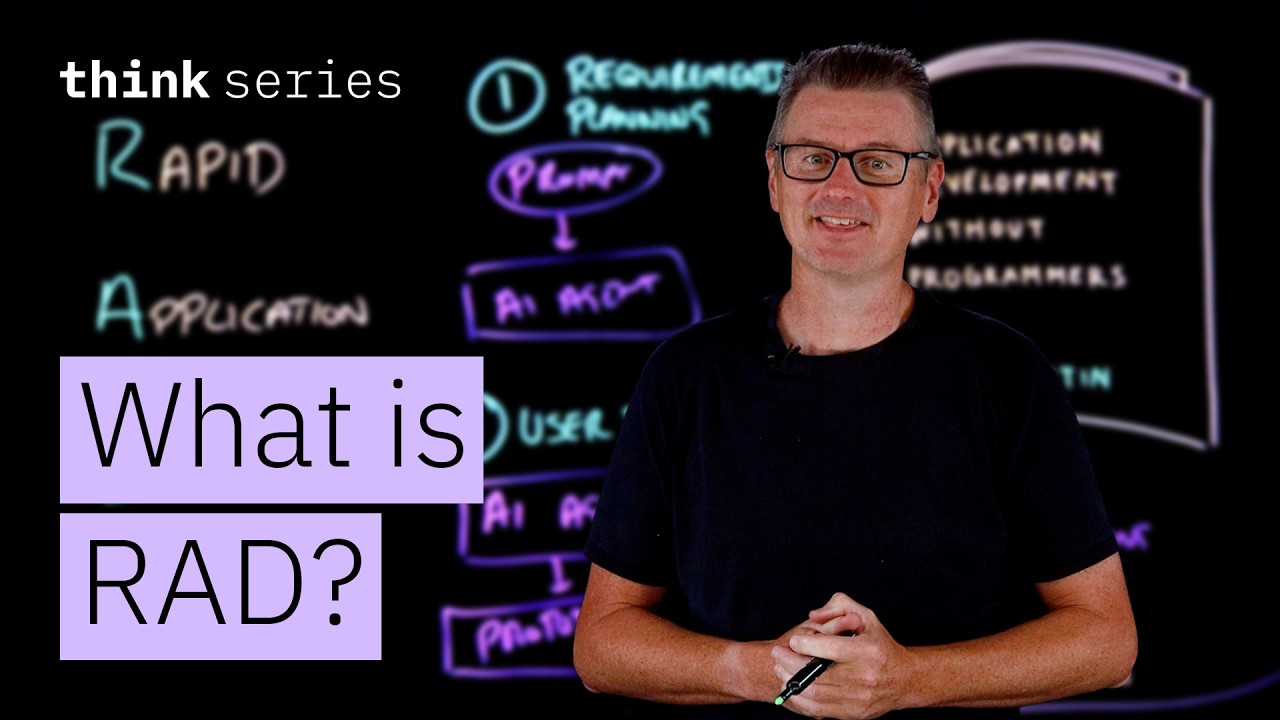
This video explores how James Martin's 1991 Rapid Application Development (RAD) methodology, with its emphasis on rapid prototyping, iterative development, and user feedback, offers a robust framework for contemporary AI coding and "vibe coding" workflows. It highlights how AI agents accelerate prototyping but introduces new challenges regarding production readiness and security. The solution proposed is spec-driven development, where human expertise formalizes requirements and verifies AI-generated code based on insights gained from early prototypes, ensuring quality and mitigating risks.

5 Ways to Connect AI Agents to Tools: From APIs to MCP

5 Ways to Connect AI Agents to Tools: From APIs to MCP

Grant Miller outlines five evolving patterns for integrating AI agents with tools, starting from simple direct API connections to complex, secure token-based architectures. The discussion highlights the progression of these methods, emphasizing how authentication, user delegation, abstraction layers like MCP, and secure credential management using vaults improve security, observability, and scalability in agentic systems.

Building And Structuring An AI Native Company

Building And Structuring An AI Native Company

Tom Blomfield of Y Combinator discusses the paradigm shift towards AI-native companies, moving beyond traditional human-centric hierarchies. He introduces the concept of self-improving AI loops—where systems continuously learn and evolve without human intervention—and illustrates this with examples like YC's self-healing data agents and living user manuals. Blomfield explores the vision of 'AI employees with VMs' leading to a 'company brain,' where humans transition to the 'edge' for intuition and real-world interaction. He concludes with practical advice for founders: prioritize token burn over headcount, ensure all data is AI-legible, and leverage AI for strategic simulations like investor calls.

Y Combinator CEO on Founder Psychology in the Age of AI

Y Combinator CEO on Founder Psychology in the Age of AI

Garry Tan, President and CEO of Y Combinator, discusses how AI is fundamentally reshaping the startup landscape. He covers the evolution of Silicon Valley culture, the lessons learned from two decades of tech cycles, and why earnestness and courage trump chasing trends. The conversation delves into the transformative power of AI agents in creating "400x" founders, the obsolescence of traditional SaaS, and how small, agent-powered teams can achieve unprecedented scale. Tan also explores the future of consumer AI, the impact of AI on organizational bureaucracy, and the "white pill" perspective on AI adoption, concluding with thoughts on local politics and community engagement.

LLM Knowledge Bases: a practical guide — Ben Holmes, Warp

LLM Knowledge Bases: a practical guide — Ben Holmes, Warp

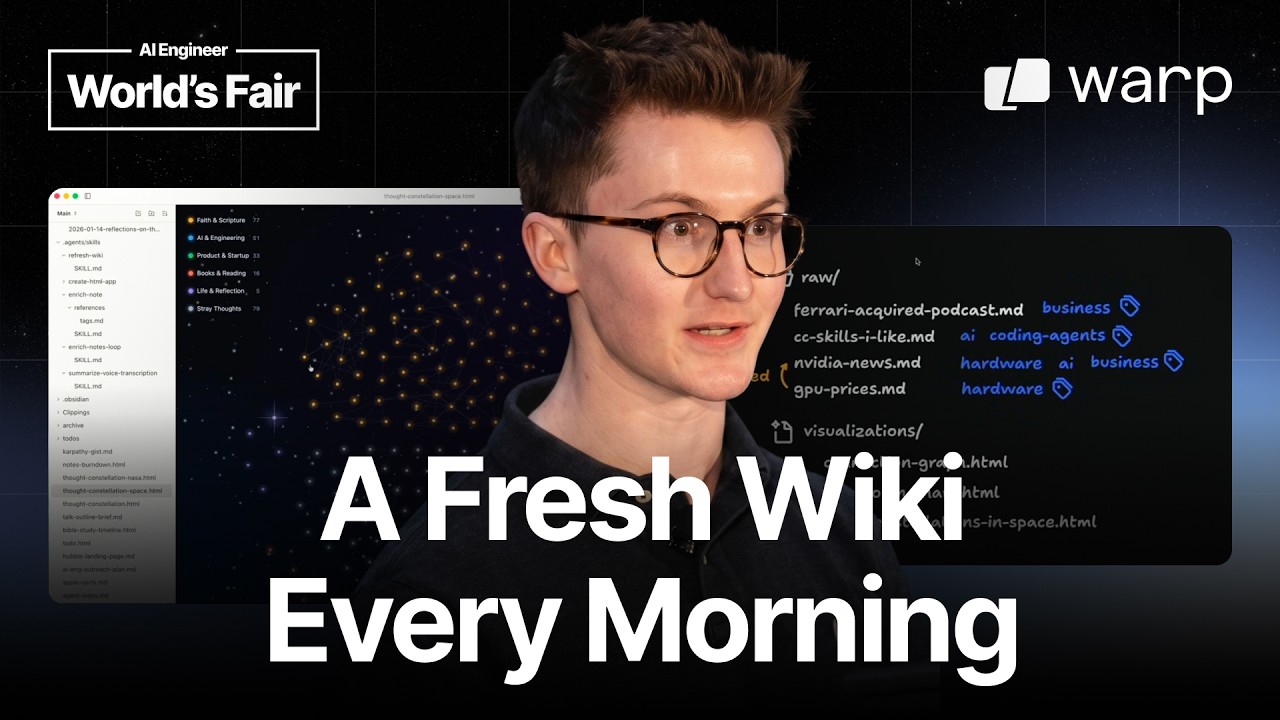
Ben Holmes outlines a personal knowledge management system leveraging LLMs and automation to transform raw voice-dictated notes into an organized, browsable wiki and visual graph. The process emphasizes rapid, "sloppy" capture, followed by AI agents enriching notes with tags, web research, and backlinks, then generating structured wikis based on Karpathy's methodology, all automated via cloud sandboxes and Obsidian's headless CLI.