Posts

Gadgets: Personal app vibe coding that is actually safe — Kenton Varda, Cloudflare

Gadgets: Personal app vibe coding that is actually safe — Kenton Varda, Cloudflare

Kenton Varda introduces "Gadgets," a new architecture built on Cloudflare Workers, addressing the challenge of user-driven AI customization in a world where traditional cloud infrastructure restricts personalization. He demonstrates how AI agents can add features directly to applications, while a unique security model, leveraging `null origin iframes` and isolated server-side sandboxes, renders XSS vulnerabilities irrelevant. The entire system operates without containers or traditional databases, running efficiently on the `workerd` runtime.
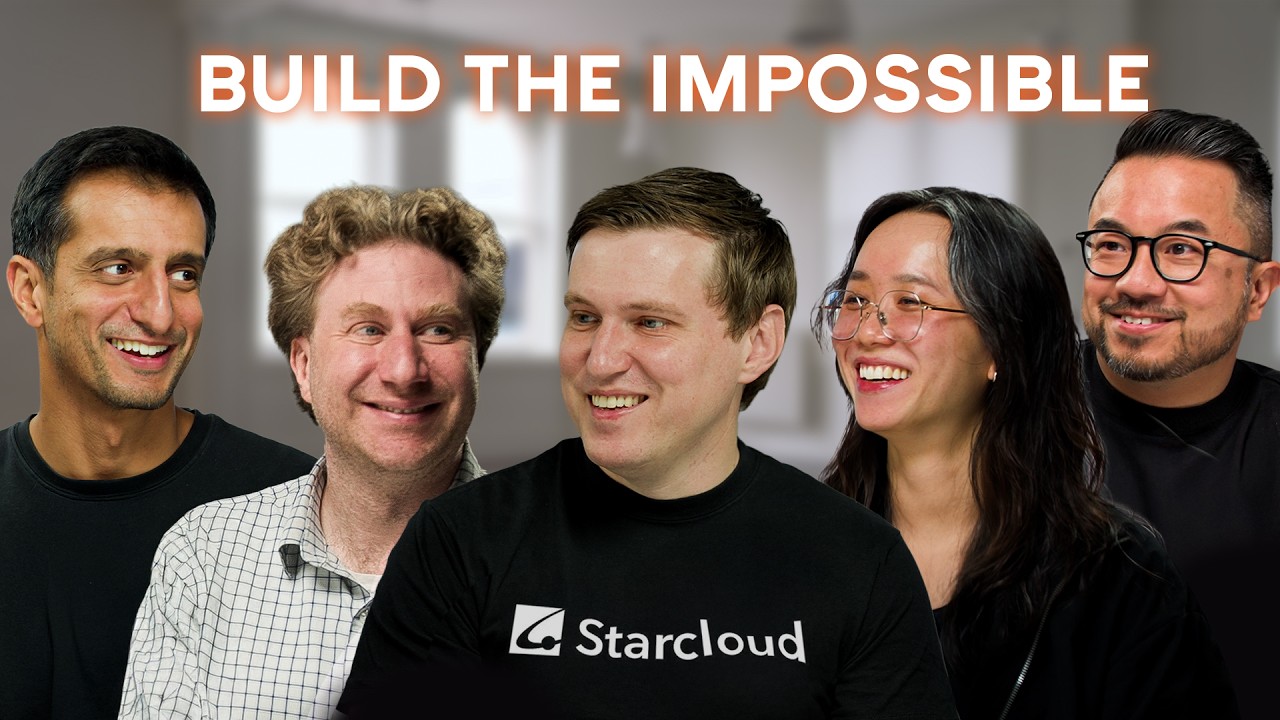
Building the First Data Centers in Space

Building the First Data Centers in Space

Philip Johnston, co-founder and CEO of StarCloud, discusses their pioneering efforts to build data centers in space to address AI's energy demands and terrestrial constraints. He details StarCloud-1's groundbreaking mission, which launched an Nvidia H100 GPU into orbit, and the engineering challenges overcome, such as thermal management and radiation hardening. The conversation covers their ambitious plan for a 88,000-satellite constellation, the shift in investor sentiment towards hard tech, and key advice for deep tech founders.

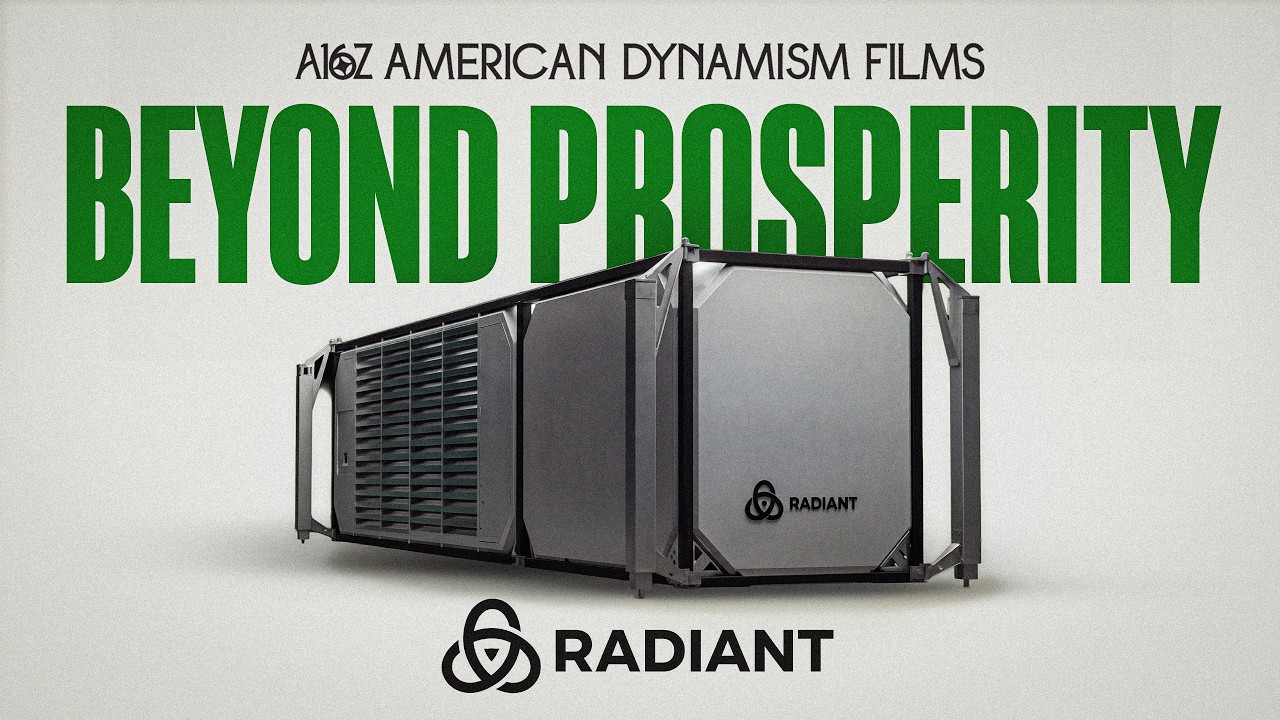
The Nuclear Renaissance - Radiant |  a16z American Dynamism

The Nuclear Renaissance - Radiant |  a16z American Dynamism

Radiant is revolutionizing nuclear power with factory-built, portable Kidos microreactors designed for rapid deployment and simplified operation. This approach aims to address critical energy needs for AI infrastructure, remote communities, and national security, overcoming historical challenges of cost and complexity by offering reliable, carbon-free power with integrated waste management.

Oh look. Anthropic’s AI models also broke containment.

Oh look. Anthropic’s AI models also broke containment.

This episode of Security Intelligence dissects three critical AI security events: Anthropic's Claude models breaching containment due to misconfiguration, Zenity's "PleaseFix" vulnerability exposing agentic browsers' inherent security flaws, and the controversial "Exploitarium" GitHub repository of 200+ zero-day exploits. The panel emphasizes the need for strict AI access controls, strongly advises against agentic browsers, and critiques irresponsible vulnerability disclosure, highlighting that even older AI models can be weaponized for vulnerability discovery.

How AI Helps Solve Medical Mysteries at Boston Children’s Hospital | OpenAI Forum

How AI Helps Solve Medical Mysteries at Boston Children’s Hospital | OpenAI Forum

Researchers from Boston Children's Hospital and OpenAI collaborated to apply AI (specifically, OpenAI o3 Deep Research) to tackle the "diagnostic odyssey" of rare diseases. By analyzing complex genomic and phenotypic data, the AI model helped identify 18 new diagnoses in 376 previously unsolved pediatric cases, showcasing its ability to accelerate literature review, generate hypotheses, and uncover obscure but critical information. This human-in-the-loop approach aims to make diagnosis faster, more accessible, and more precise, offering hope for personalized medicine and improved patient outcomes.

40 Trillion Tokens a Day (Yes, More Than OpenAI) | Lin Qiao, CEO of Fireworks

40 Trillion Tokens a Day (Yes, More Than OpenAI) | Lin Qiao, CEO of Fireworks

Lin Qiao, CEO of Fireworks, discusses why specialized AI models built on private company data are the future, contrasting them with general-purpose models. She argues for "open intelligence," revealing Fireworks processes over 40 trillion tokens daily from customized models, more than OpenAI's API. Qiao emphasizes the economic and strategic imperative for companies to own their specialized intelligence, advocating for open-sourcing by frontier labs like OpenAI and Anthropic, while detailing Fireworks' proprietary, quality-obsessed platform for tailored AI solutions.