Posts

Context Engineering for Coding Agents

Context Engineering for Coding Agents

A deep dive into advanced engineering techniques for coding agents, focusing on effective context management in LLMs like Claude. The talk introduces a practical framework using a brain-inspired analogy, proposing a Markdown-based 'wiki' as a long-term memory system to augment the agent's limited context window. This approach is demonstrated through a real-world challenge of extracting structured data from technical drawings.
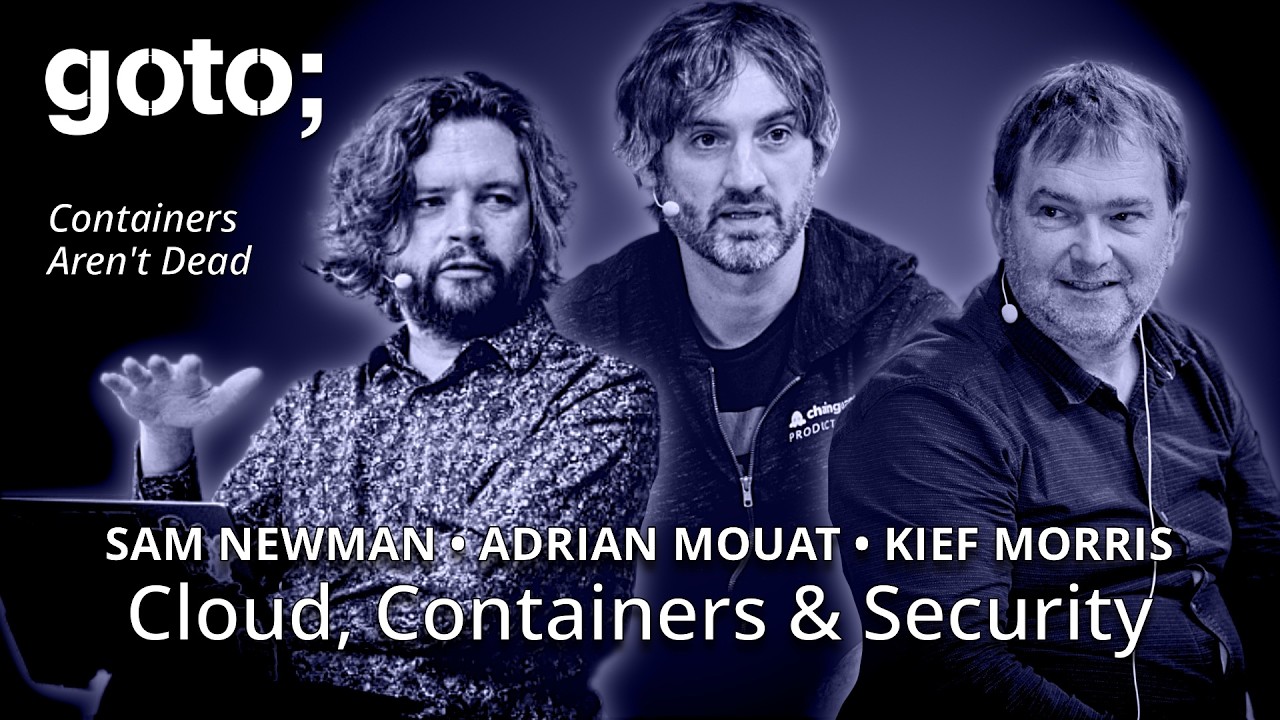
Cloud, Containers & Security • Adrian Mouat, Kief Morris & Sam Newman • GOTO 2025

Cloud, Containers & Security • Adrian Mouat, Kief Morris & Sam Newman • GOTO 2025

In this panel discussion, experts Adrian Mouat, Kief Morris, and Sam Newman delve into the current landscape of cloud technology, container security, and infrastructure automation. They cover key topics such as supply chain security with Sigstore and SBOMs, the practical impact of AI on deterministic systems, the ongoing debate about cloud repatriation, and advanced Infrastructure as Code practices like TDD and managing configuration drift.

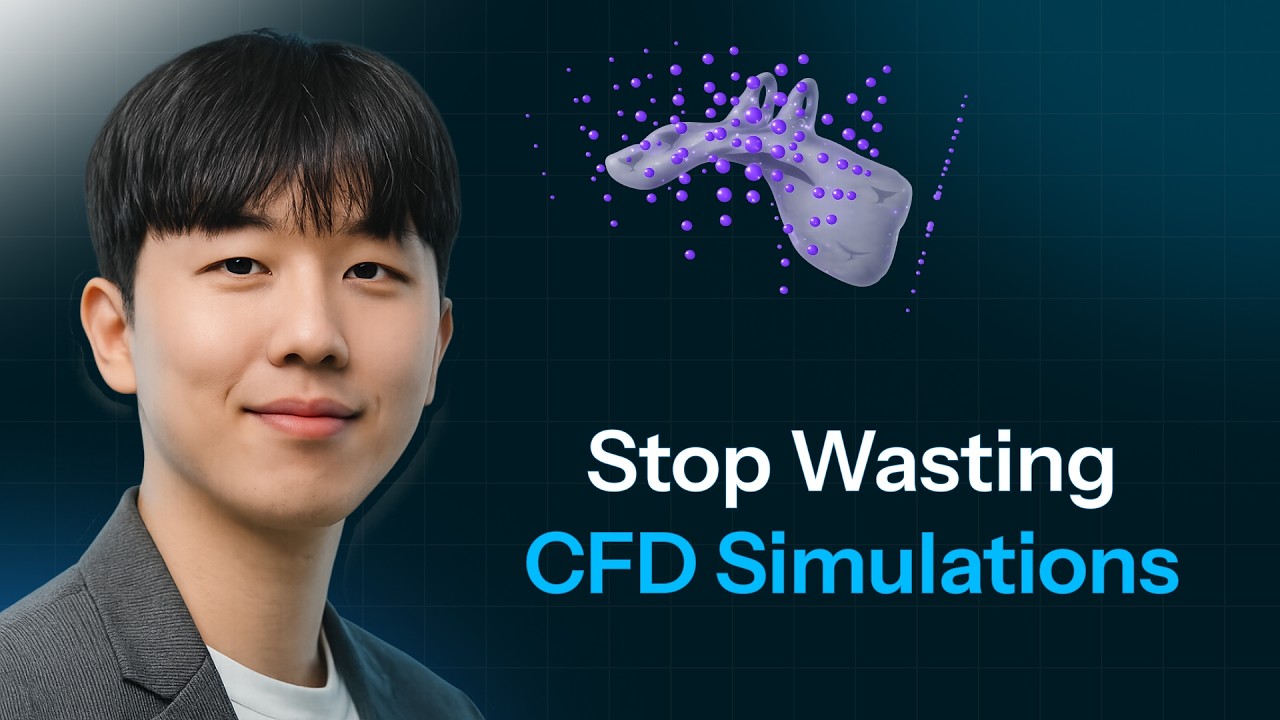
Uncertainty-Guided Data Augmentation for Engineers | Deep Dive - Yongmin Kwon

Uncertainty-Guided Data Augmentation for Engineers | Deep Dive - Yongmin Kwon

This session details a data-efficient method for training engineering surrogate models by using uncertainty quantification (UQ) to guide geometric data augmentation. Instead of random deformations, the approach lets the deep ensemble model identify its own knowledge gaps (epistemic uncertainty), then uses Free-Form Deformation (FFD) to generate new shapes specifically in those uncertain regions. This ensures every expensive simulation run yields maximally informative data, significantly improving model accuracy for a fixed computational budget across domains like structural mechanics and aerodynamics.

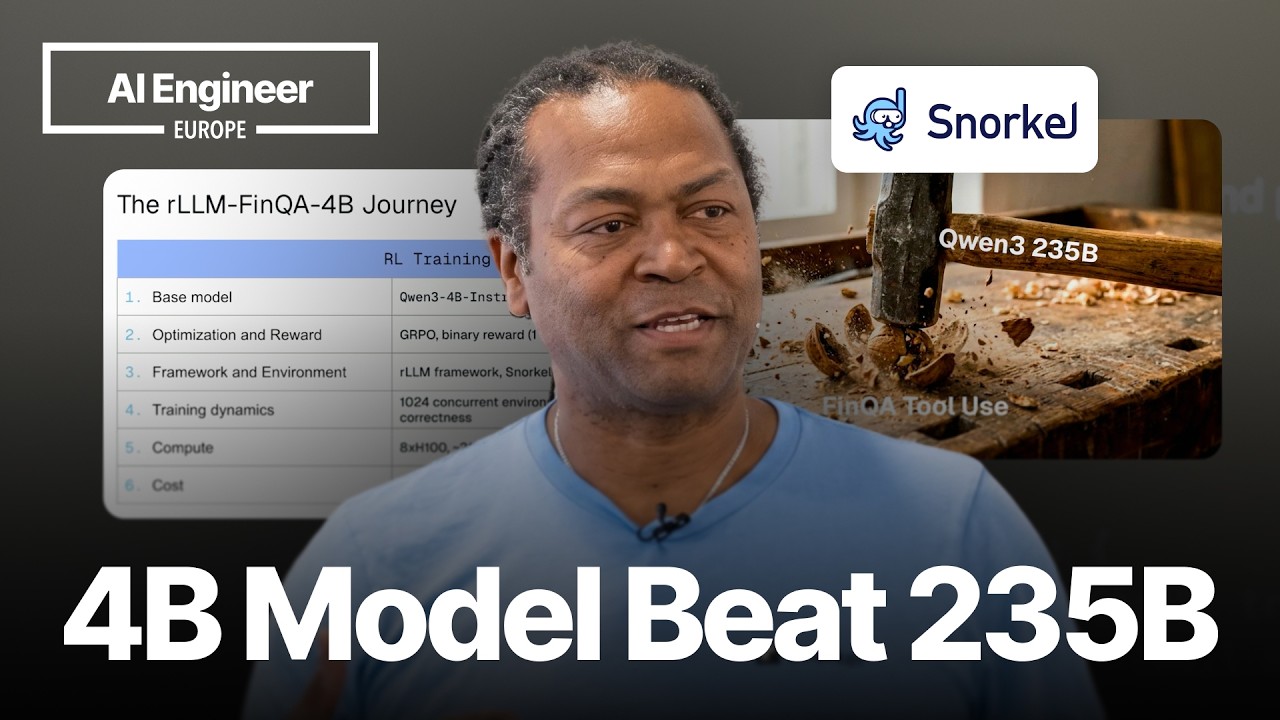
Stop Making Models Bigger, Make Them Behave — Kobie Crawdord, Snorkel

Stop Making Models Bigger, Make Them Behave — Kobie Crawdord, Snorkel

Snorkel.ai's research demonstrates how a 4-billion-parameter model, fine-tuned with Reinforcement Learning for under $500, significantly outperformed a 235-billion-parameter model on financial analysis tool-use tasks. The key was cultivating 'tool discipline' and error correction capabilities, rather than relying on sheer model size or deeper reasoning. Single-table training generalized effectively to harder multi-table problems, emphasizing the importance of targeted behavioral fixes identified through detailed evaluation rubrics.

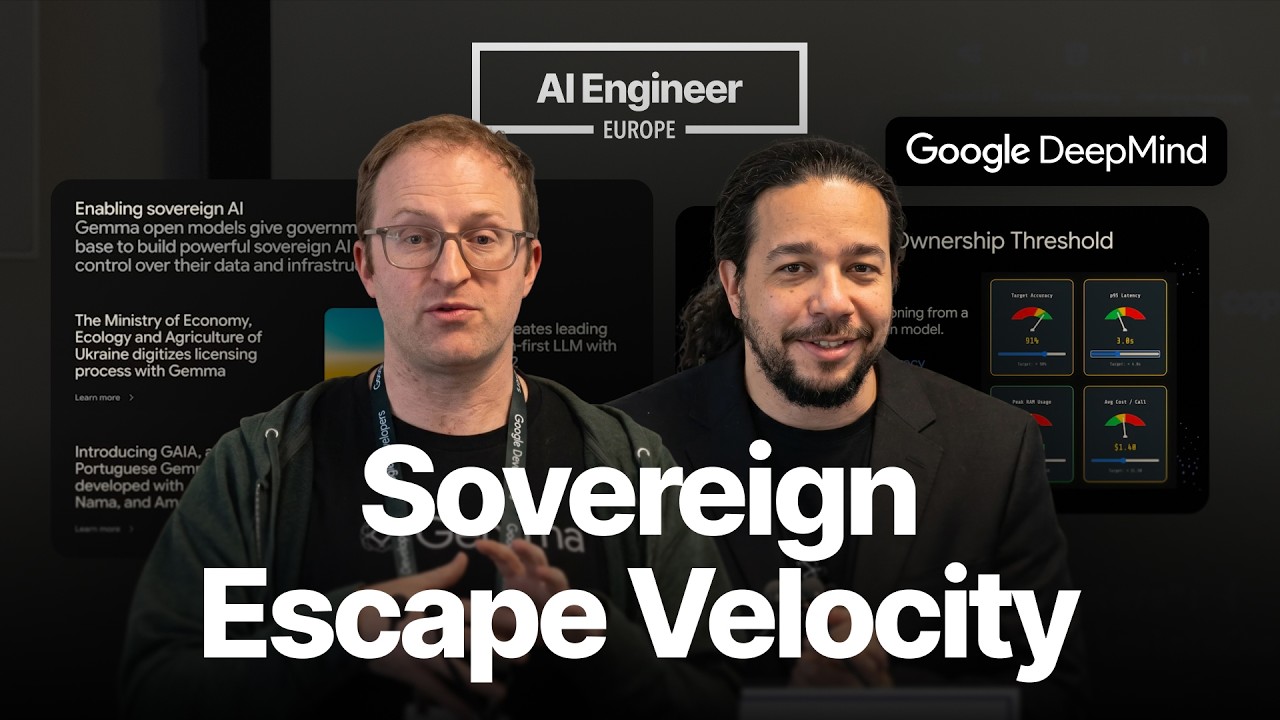
Sovereign Escape Velocity: Ownership w Open Models — Gus Martins, & Ian Ballantyne, Google DeepMind

Sovereign Escape Velocity: Ownership w Open Models — Gus Martins, & Ian Ballantyne, Google DeepMind

Google DeepMind's Ian Ballantyne and Gus Martins introduce Gemma 4, a family of open models delivering state-of-the-art performance with remarkable size efficiency. They discuss how models like the 31B variant outperform competitors 2-20x its size while running on a single GPU, the shift to an Apache 2.0 license to foster sovereignty and adoption, and the new economics of running powerful agentic workloads on hardware ranging from a Pixel phone to a single enterprise GPU.

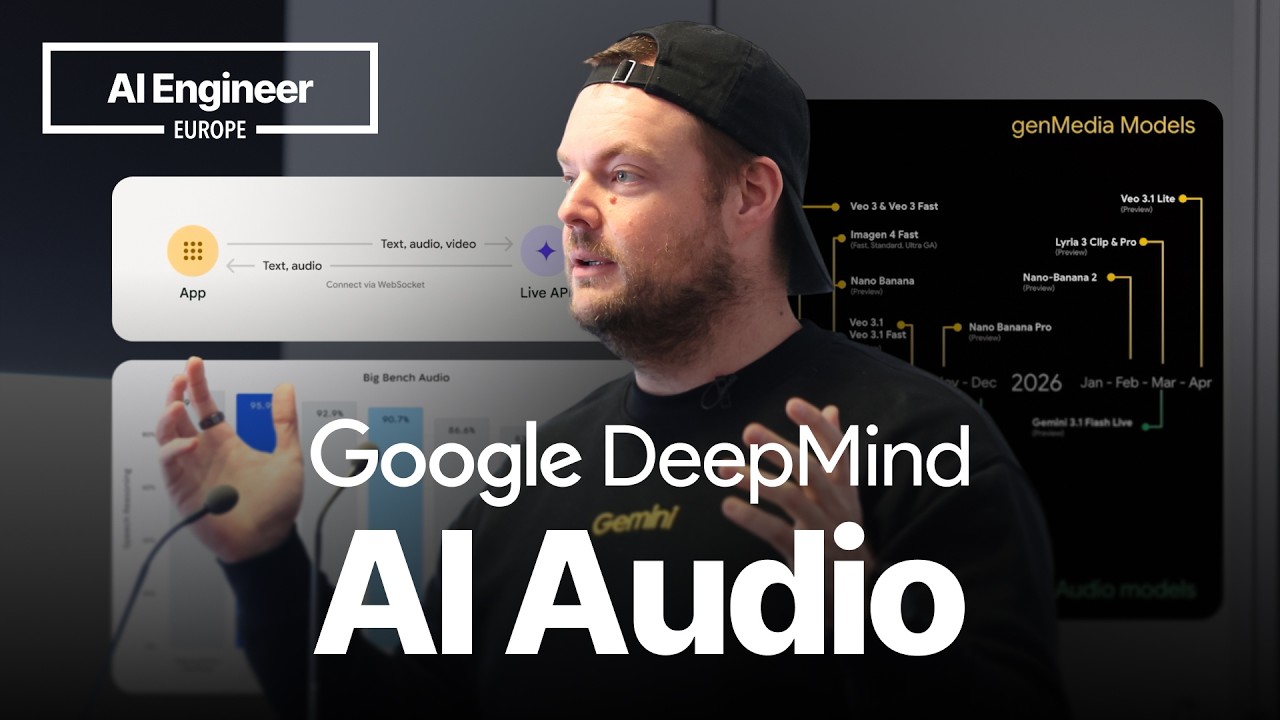
From Transcription to Live Music: Gemini's Audio Stack — Thor Schaeff, Google DeepMind

From Transcription to Live Music: Gemini's Audio Stack — Thor Schaeff, Google DeepMind

Thor Schaeff from Google DeepMind demos the advanced audio AI stack, starting with a single API call to Gemini for rich transcription (speaker names, emotions, translation). He showcases speech generation directed by "director's notes" instead of a voice catalog, the real-time, sound-to-sound Gemini 1.5 Flash Live model, and a live demo of Gemini Live using the Lyria 2 model as a tool to generate a full song on stage.