Posts

Uncertainty-Guided Data Augmentation for Engineers | Deep Dive - Yongmin Kwon

Uncertainty-Guided Data Augmentation for Engineers | Deep Dive - Yongmin Kwon

This session details a data-efficient method for training engineering surrogate models by using uncertainty quantification (UQ) to guide geometric data augmentation. Instead of random deformations, the approach lets the deep ensemble model identify its own knowledge gaps (epistemic uncertainty), then uses Free-Form Deformation (FFD) to generate new shapes specifically in those uncertain regions. This ensures every expensive simulation run yields maximally informative data, significantly improving model accuracy for a fixed computational budget across domains like structural mechanics and aerodynamics.

Stop Making Models Bigger, Make Them Behave — Kobie Crawdord, Snorkel

Stop Making Models Bigger, Make Them Behave — Kobie Crawdord, Snorkel

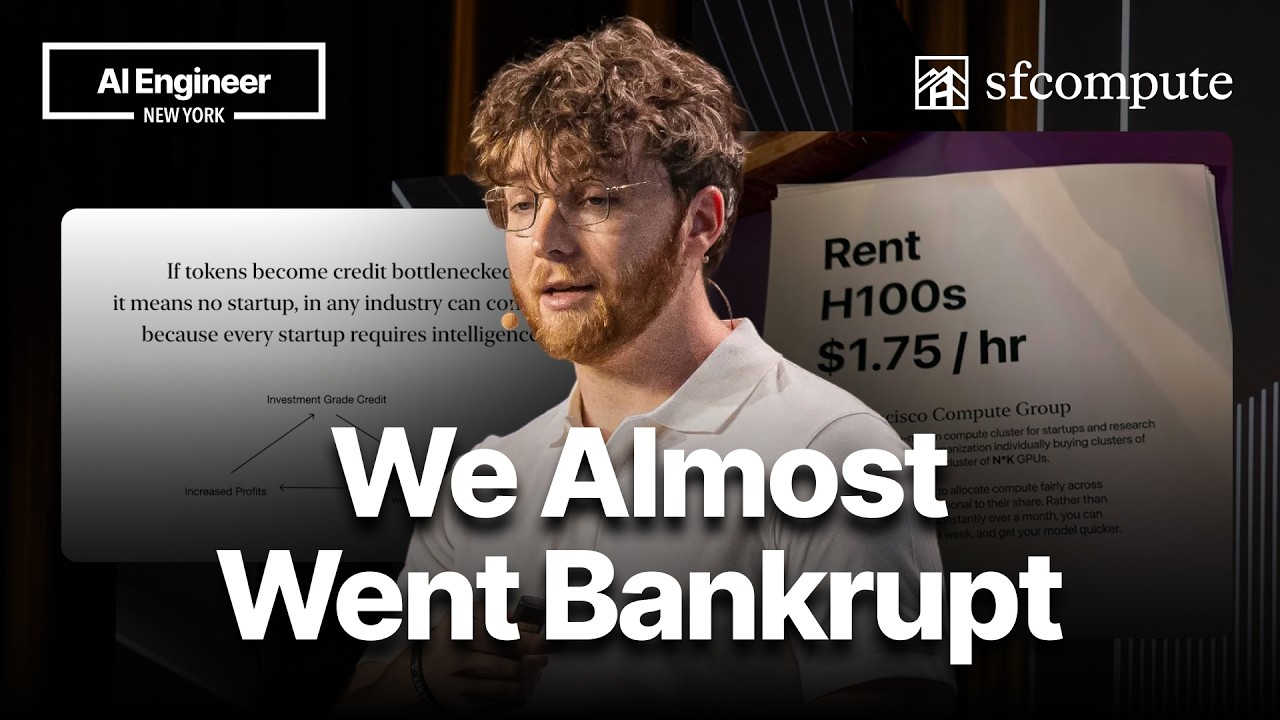
Snorkel.ai's research demonstrates how a 4-billion-parameter model, fine-tuned with Reinforcement Learning for under $500, significantly outperformed a 235-billion-parameter model on financial analysis tool-use tasks. The key was cultivating 'tool discipline' and error correction capabilities, rather than relying on sheer model size or deeper reasoning. Single-table training generalized effectively to harder multi-table problems, emphasizing the importance of targeted behavioral fixes identified through detailed evaluation rubrics.

Sovereign Escape Velocity: Ownership w Open Models — Gus Martins, & Ian Ballantyne, Google DeepMind

Sovereign Escape Velocity: Ownership w Open Models — Gus Martins, & Ian Ballantyne, Google DeepMind

Google DeepMind's Ian Ballantyne and Gus Martins introduce Gemma 4, a family of open models delivering state-of-the-art performance with remarkable size efficiency. They discuss how models like the 31B variant outperform competitors 2-20x its size while running on a single GPU, the shift to an Apache 2.0 license to foster sovereignty and adoption, and the new economics of running powerful agentic workloads on hardware ranging from a Pixel phone to a single enterprise GPU.

From Transcription to Live Music: Gemini's Audio Stack — Thor Schaeff, Google DeepMind

From Transcription to Live Music: Gemini's Audio Stack — Thor Schaeff, Google DeepMind

Thor Schaeff from Google DeepMind demos the advanced audio AI stack, starting with a single API call to Gemini for rich transcription (speaker names, emotions, translation). He showcases speech generation directed by "director's notes" instead of a voice catalog, the real-time, sound-to-sound Gemini 1.5 Flash Live model, and a live demo of Gemini Live using the Lyria 2 model as a tool to generate a full song on stage.

[404] – Developer Not Found: The Continuing Developer Evolution • Derek Bingham • YOW! 2025

[404] – Developer Not Found: The Continuing Developer Evolution • Derek Bingham • YOW! 2025

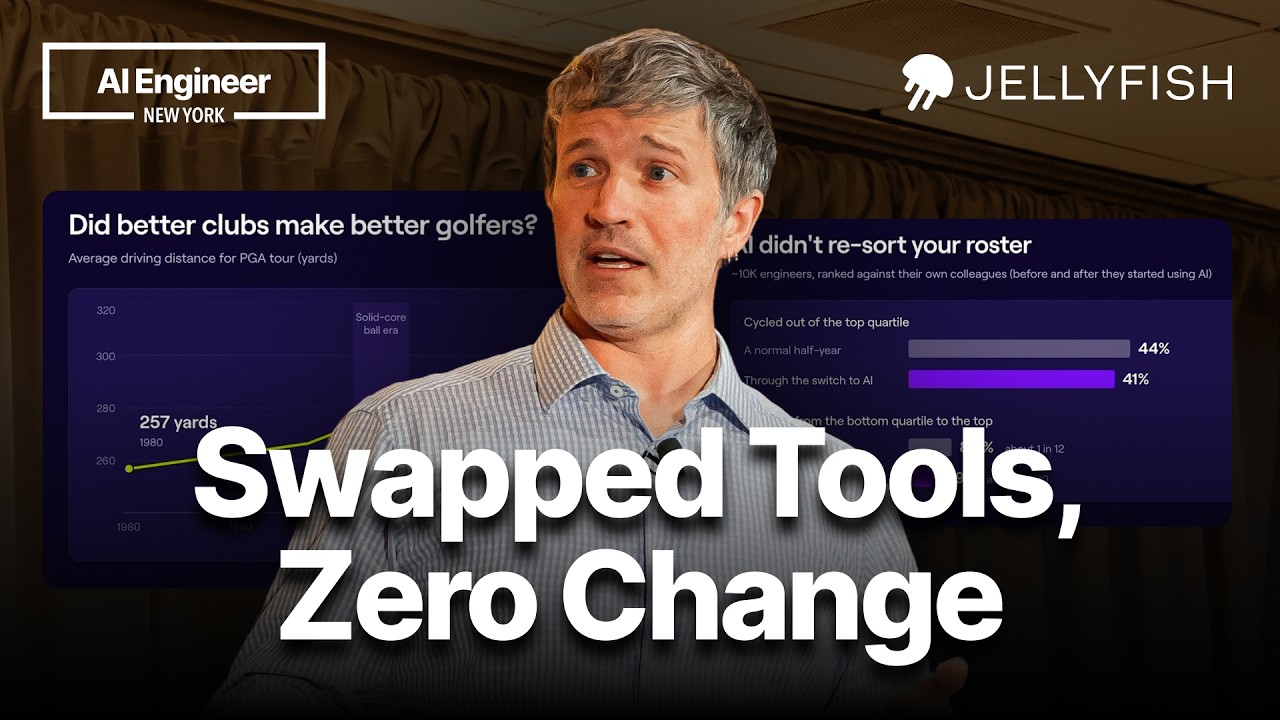
Derek Bingham explores the rapid evolution of developer tools with AI, from coding assistants to autonomous agents. He emphasizes the shift from prompt engineering to context engineering, introduces Spec-Driven Development (SDD) as a framework for quality AI-generated code, and dispels fears about AI replacing developers, arguing instead for increased demand and the necessity of new skills like ethical and systems thinking.

Building AI Agent Systems and Scaling Challenges in Agentic AI

Building AI Agent Systems and Scaling Challenges in Agentic AI

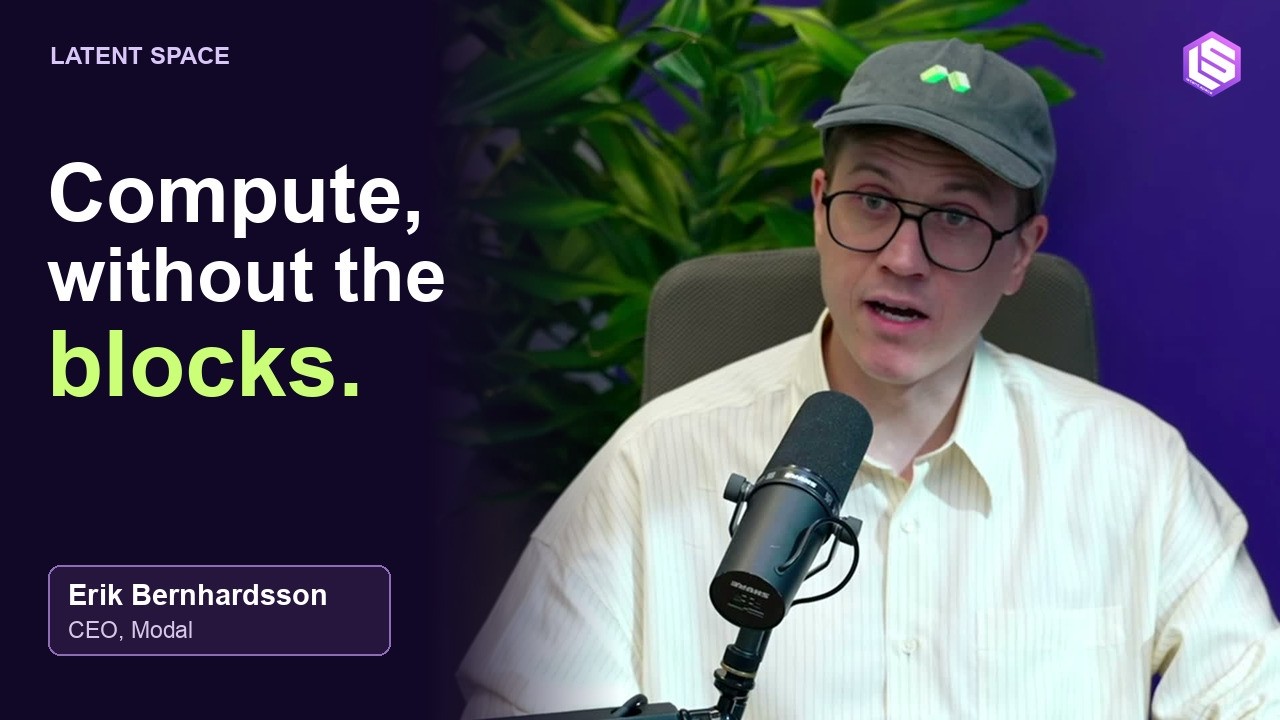
Scaling agentic AI systems presents unique challenges beyond traditional software scaling. This summary explains why expanding a single agent's capabilities leads to non-linear increases in cost, latency, and failure propagation. The talk frames this as a systems design problem solved by moving from a monolithic agent to a multi-agent architecture with distributed responsibilities, and it explores the critical architectural trade-offs between horizontal and vertical scaling of agent capabilities.