Posts

Anthropic’s first technical PM on token maxing, the jagged edge, and living in the future

Anthropic’s first technical PM on token maxing, the jagged edge, and living in the future

Dianne Penn, Head of Product for Anthropic’s AI Research and Labs teams, discusses Anthropic's journey, the evolving AI landscape, and the changing role of product management. She highlights the importance of adaptability, 'evals as the new PRDs,' and how Anthropic's focus on alignment and safety makes Claude a more effective 'thinking partner' by enabling it to push back on user ideas.
Why AI Makes the Humanities More Important Than Ever

Why AI Makes the Humanities More Important Than Ever

Jeff Crume explores why humanities are crucial in an AI-driven world. While AI generates sophisticated answers, it lacks human understanding, purpose, and judgment. He argues that STEM fields explain 'how' but not 'why,' making humanities essential for ethical decision-making, interpreting AI outputs, understanding bias, and effective prompt engineering. Ultimately, AI amplifies the need for human critical thinking and judgment.

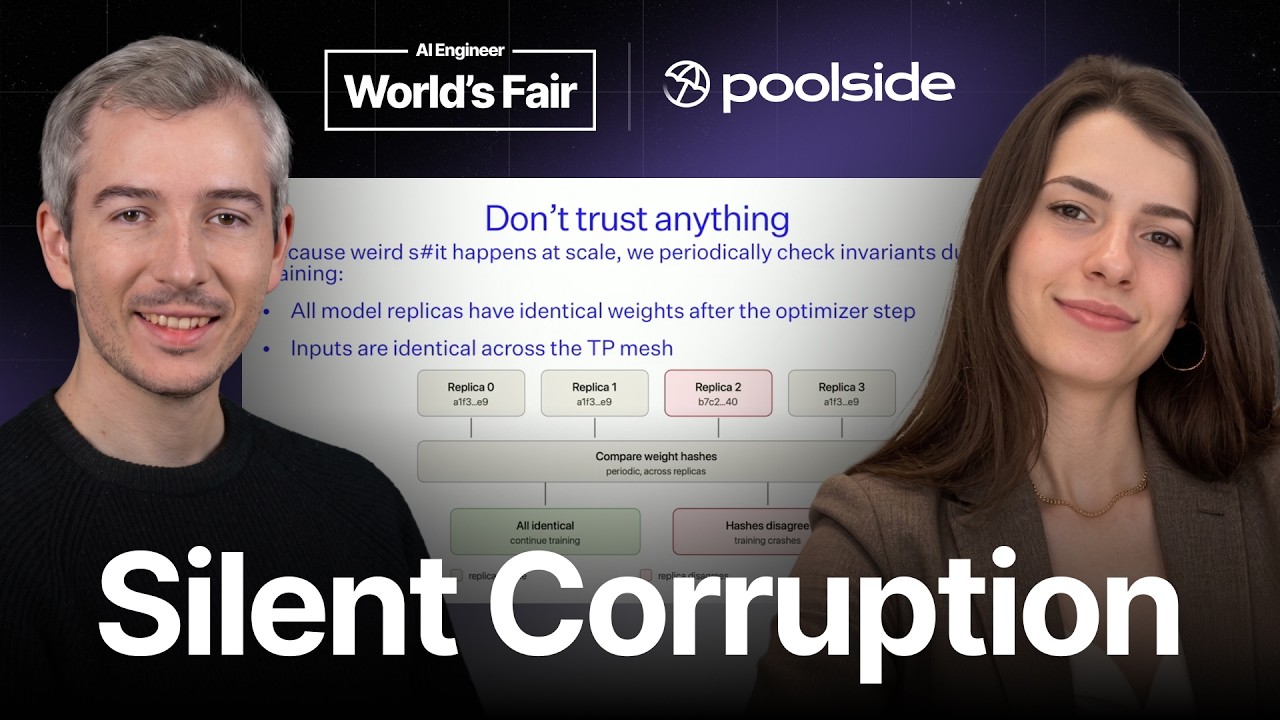
The Messy Reality of Scale: Synthetic Data and Pre-Training — Marah Abdin & Robert McHardy, poolside

The Messy Reality of Scale: Synthetic Data and Pre-Training — Marah Abdin & Robert McHardy, poolside

Poolside discusses their innovative approaches to synthetic data generation, pre-training validation, and distributed training challenges. They highlight how modular data pipelines, rigorous replica hash checks, and numerical stability fixes enabled them to scale their LLMs, culminating in the 118B parameter Laguna S model designed for agentic coding, which shows strong early results against leading open-weight models.

Evals-Driven Development for a Mental Health AI Coach — Akele Reed & Dave Revere, SonderMind

Evals-Driven Development for a Mental Health AI Coach — Akele Reed & Dave Revere, SonderMind

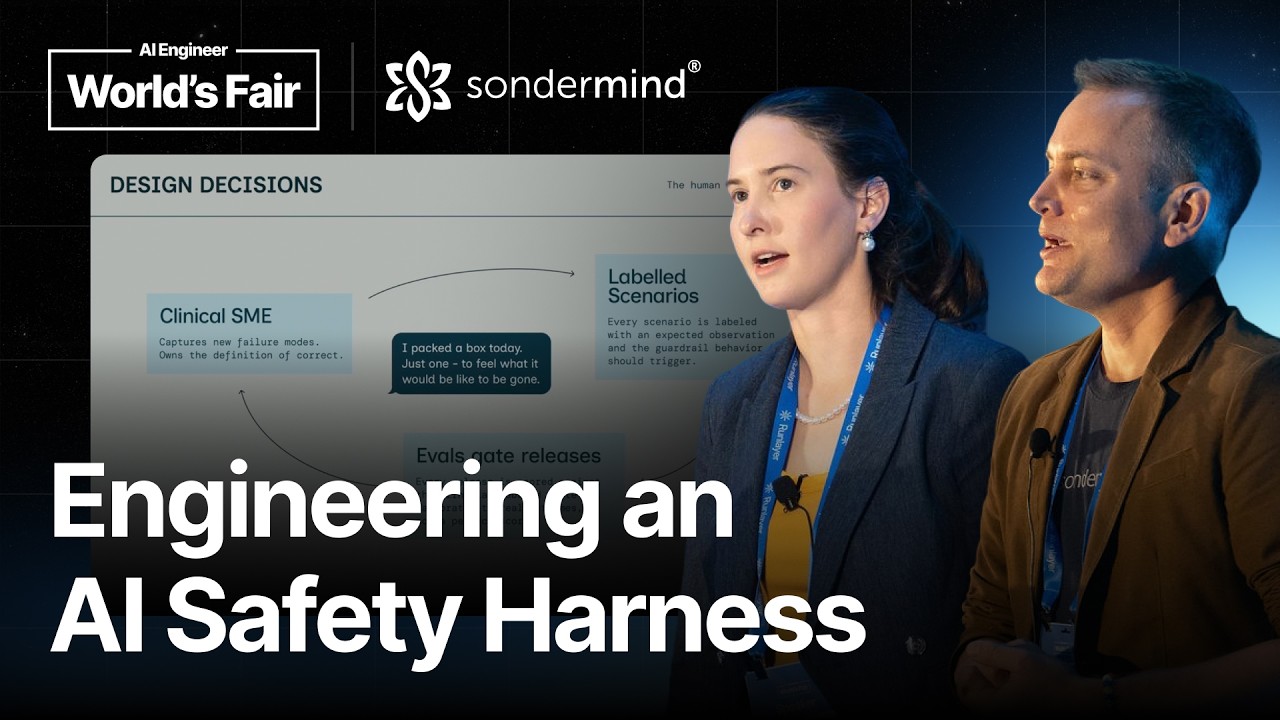
SonderMind's AI mental health coach, Sonder, pioneers an eval-driven development approach balancing effectiveness and safety. This involves a clinical feedback loop turning human therapist insights into machine-readable evaluations, an Ethics Engine with modular, LLM-as-a-judge guardrails for evolving clinical guidelines, and a shift from single-prompt agents to a Supervisor/Executor/Evaluator architecture with human oversight to ensure safety and quality in high-stakes mental health conversations. They also open-source clinically reviewed datasets to foster community safety.

Loop Engineering from First Principles — Kyle Mistele, HumanLayer

Loop Engineering from First Principles — Kyle Mistele, HumanLayer

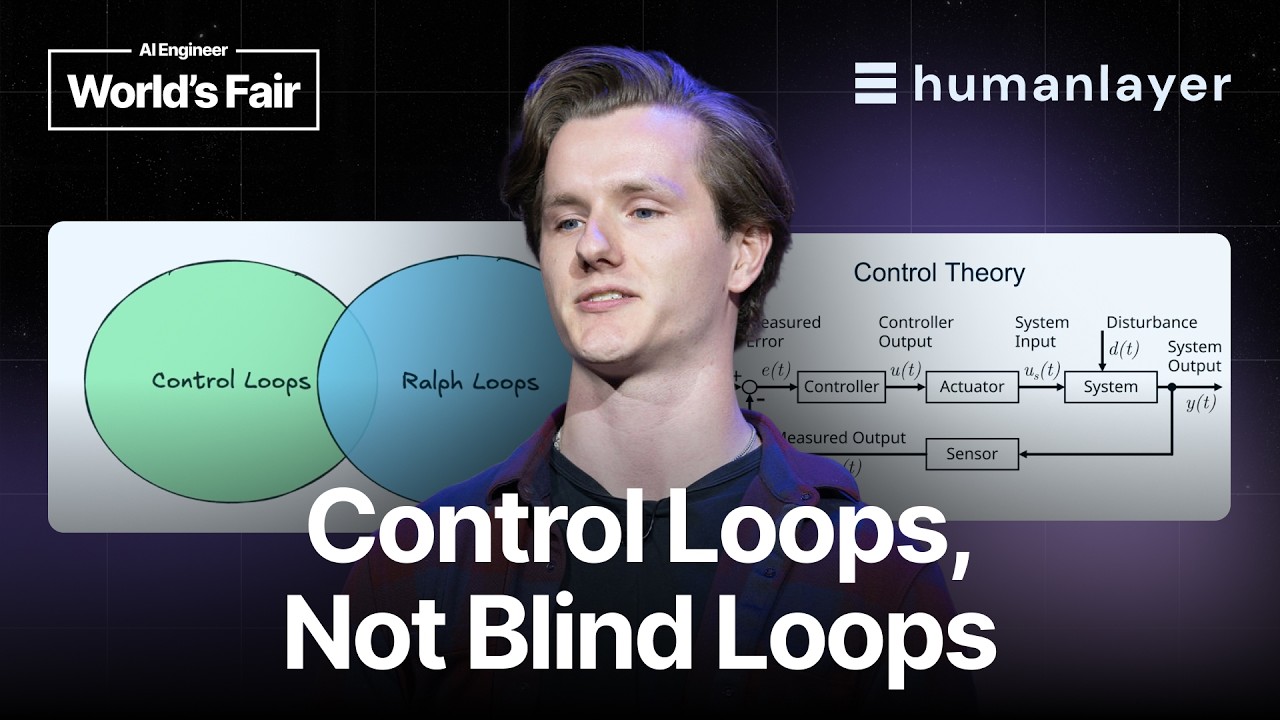
Kyle Mistele, in this presentation, argues that fixing the problem of unreviewable 40,000-line pull requests generated by coding agents doesn't lie in better prompts but in better, control theory-inspired loops. He details how to build agentic control loops with distinct sensors, controllers, and actuators, ensuring incremental, verifiable code changes. Using a practical example of RPC API migration, he demonstrates how to implement these loops with tools like ASGrep, integrate them into CI/CD, enable human feedback, and manage workflow to prevent overwhelming reviewers, ultimately leading to more robust and readable agent-generated code.

Why Large? Tiny LMs & Agents on Edge/Robotics — Cormac Brick, Google

Why Large? Tiny LMs & Agents on Edge/Robotics — Cormac Brick, Google

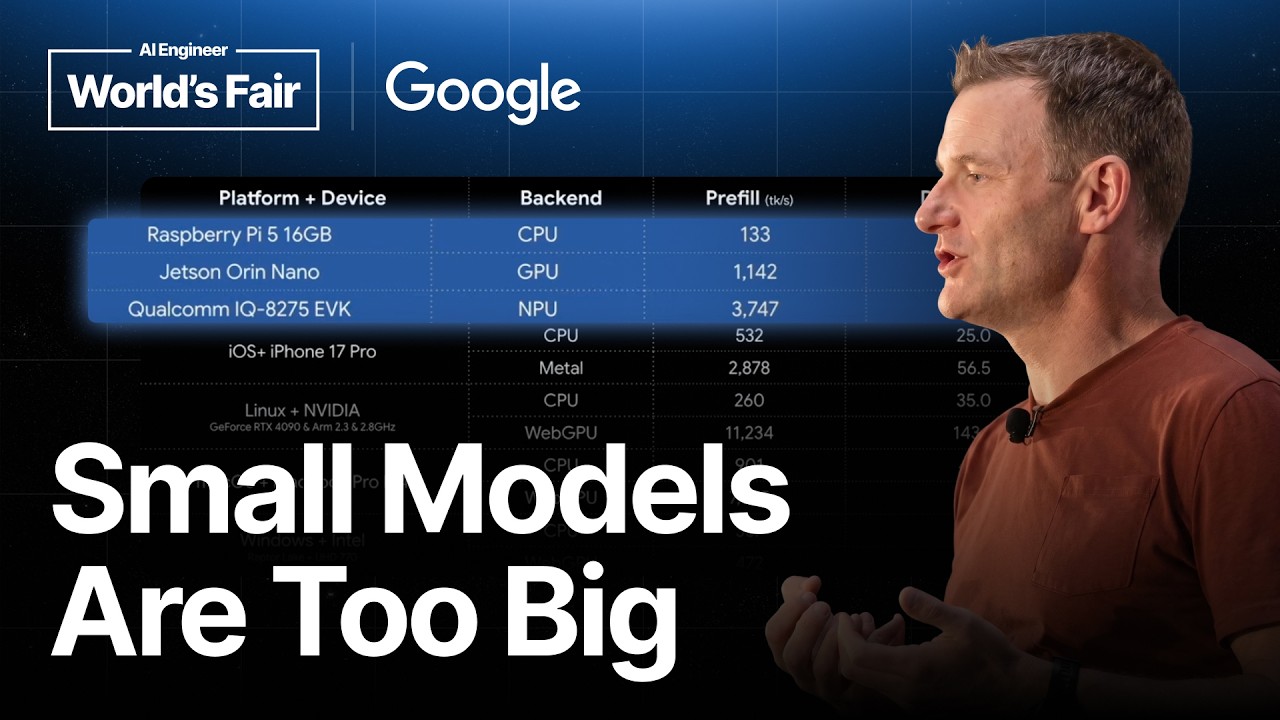
Cormac Brick from Google AI Edge discusses how the increasing constraint of DRAM cost on edge devices necessitates the development and deployment of increasingly smaller AI models. He outlines the work of his team in optimizing models like Gemma, achieving 2.9 bits per weight for a 2 billion parameter model capable of running on a Raspberry Pi at 7.6 tokens/second, or on an NPU at 31 tokens/second decode for vision tasks. The talk delves into 'tiny models' (50M-500M parameters) that extend AI to older devices and enable features like robust voice-to-function calling via fine-tuning with synthetic data, exemplified by an offline voice dictation app.