Posts

What Actually Makes A Startup Durable

What Actually Makes A Startup Durable

YC partners discuss how founders should navigate the AI era, emphasizing the rapid decrease in AI costs, the evolving definition of a 'hard problem' for startups, the critical importance of human connection and co-founders, and practical advice on building AI-native loops, pivoting, and achieving distribution in a world where software is easy to build.

What Big Tech Missed And How Startups Can Still Win

What Big Tech Missed And How Startups Can Still Win

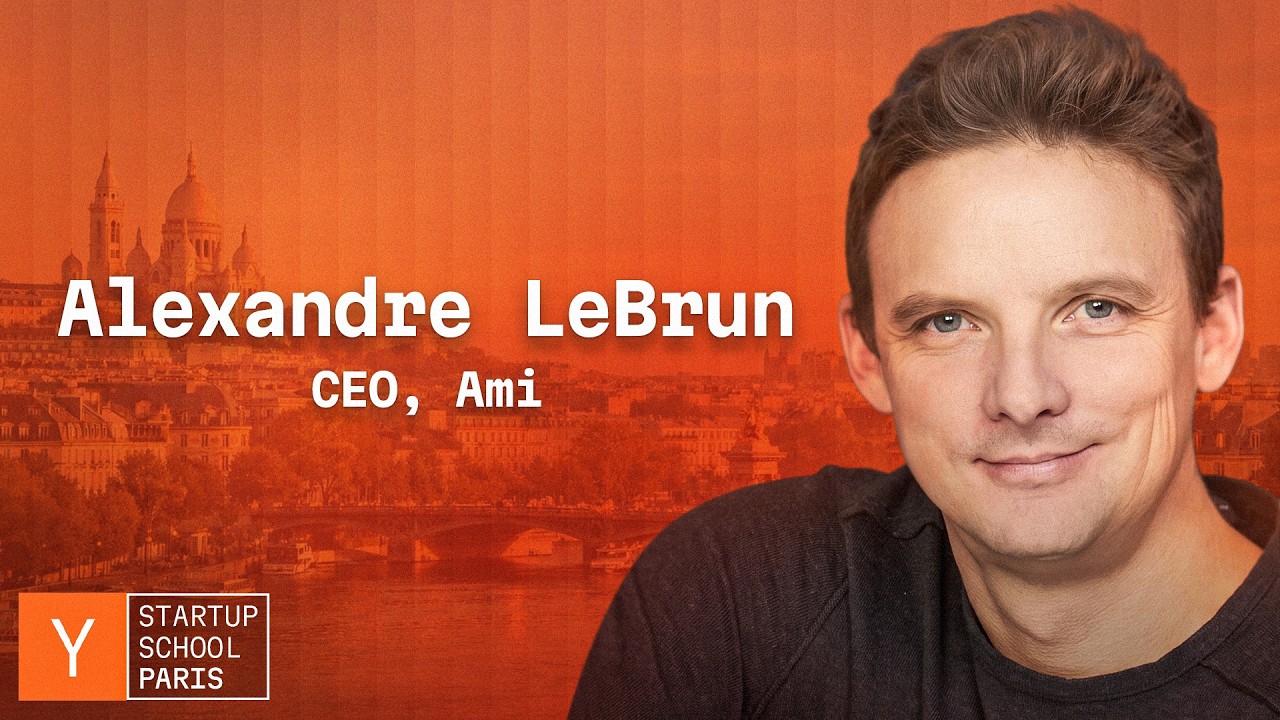
Alexandre LeBrun, CEO of AMI Labs, discusses his career building and selling AI companies, emphasizing his strategy of tackling problems "20 years too early." He delves into AMI Labs' contrarian bet on "world models" over traditional LLMs, highlighting their ability to learn directly from real-world sensory data, unlike LLMs which learn from human-written text. LeBrun explains how this approach is critical for developing intelligent robots and avoiding the pitfalls of Vision-Language Assistants (VLAs). He also touches upon the challenges of securing talent, data, and compute for such an ambitious project, the strategic choice of location, and the importance of holding an extremely large vision while solving a narrow problem for early founders.

Why Physical AI Is the Next Platform Shift

Why Physical AI Is the Next Platform Shift

Encord Co-CEO Eric Landau reflects on his transition from a lucrative quant career to founding an AI startup, driven by a deep belief in AI's paradigm-shifting potential. He discusses Encord's slow, compounding path to product-market fit, the pivotal role of Physical AI, and the importance of embracing the emotional rollercoaster of startup life.

From Agent Traces to Agent Simulations — Rustem Feyzkhanov, Snorkel AI

From Agent Traces to Agent Simulations — Rustem Feyzkhanov, Snorkel AI

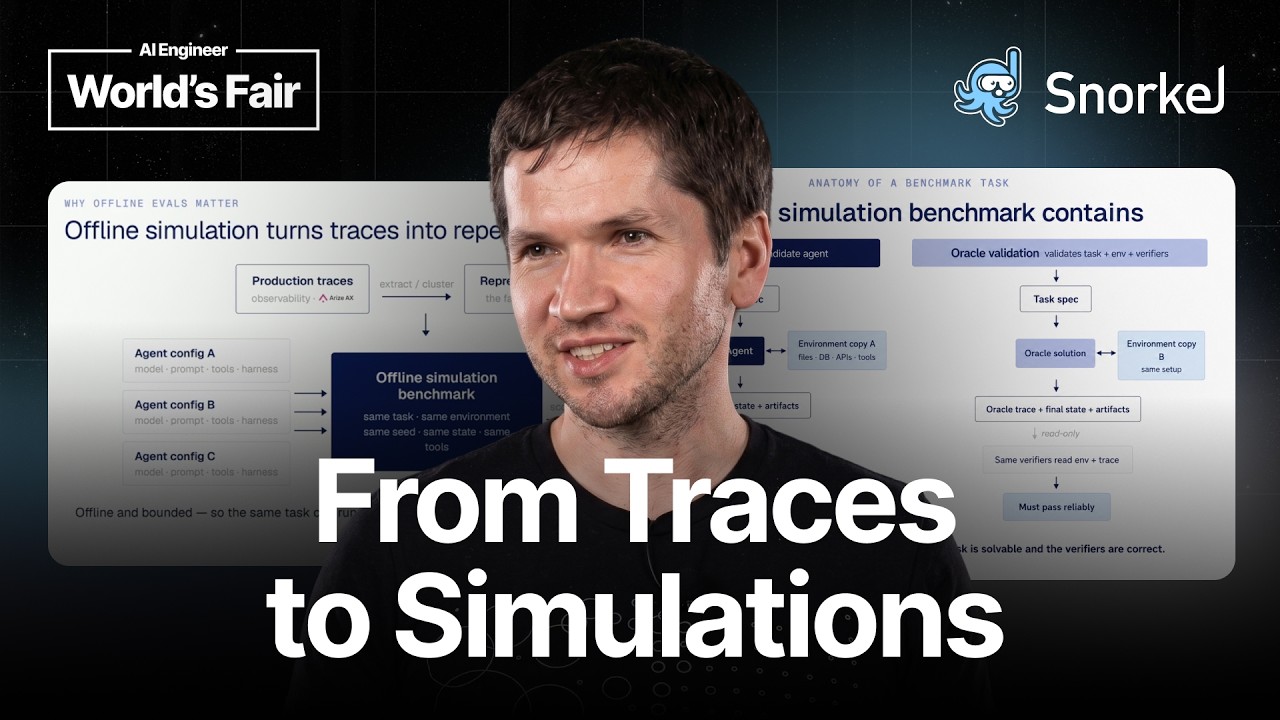
Rustem Feyzkhanov discusses the critical need for companies to build private, production-aligned benchmarks for AI agents. He explains how to turn agent traces into repeatable simulations, why public benchmarks are insufficient, and how a CI pipeline for agents, integrating observability and experimentation, can ensure reliable evaluation, continuous improvement, and effective release management, moving beyond simple pass rates to measure cost, latency, and policy adherence.

Building Closed-Loop Evals for a Multimodal Agent at Scale — Soumya Gupta & Jai Chopra, Uber

Building Closed-Loop Evals for a Multimodal Agent at Scale — Soumya Gupta & Jai Chopra, Uber

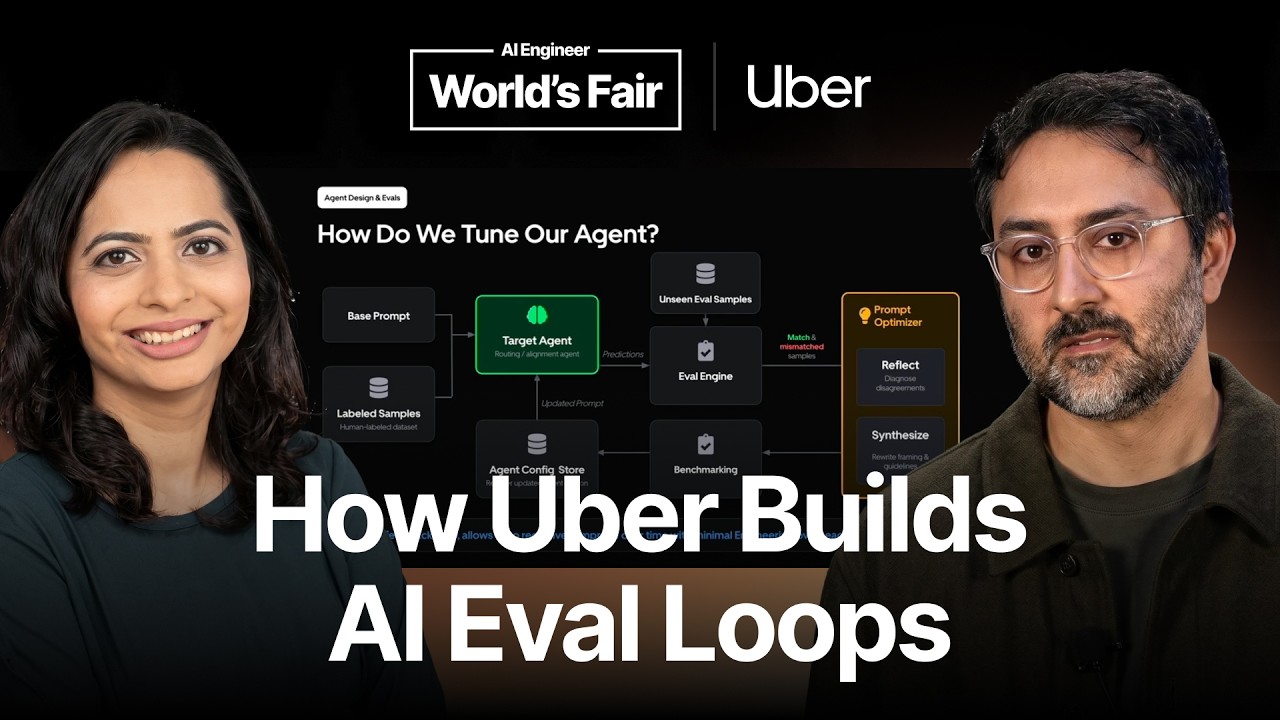
This talk details how Uber Eats designed and implemented a multimodal AI agent to enhance food photography for independent merchants, addressing challenges like maintaining authenticity, merchant brand, and marketplace diversity while operating at scale. It covers the intricate evaluation strategies for routing and image editing agents, including continuous learning loops, managing drift, countering reward hacking, and balancing creative freedom with rigid safety guardrails. The speakers explain how they built a closed feedback loop combining offline human labeling, internal dogfooding, and online production signals to ensure robust and adaptive performance.

How Two French Engineers In New York Built The Company That Monitors The Entire Cloud

How Two French Engineers In New York Built The Company That Monitors The Entire Cloud

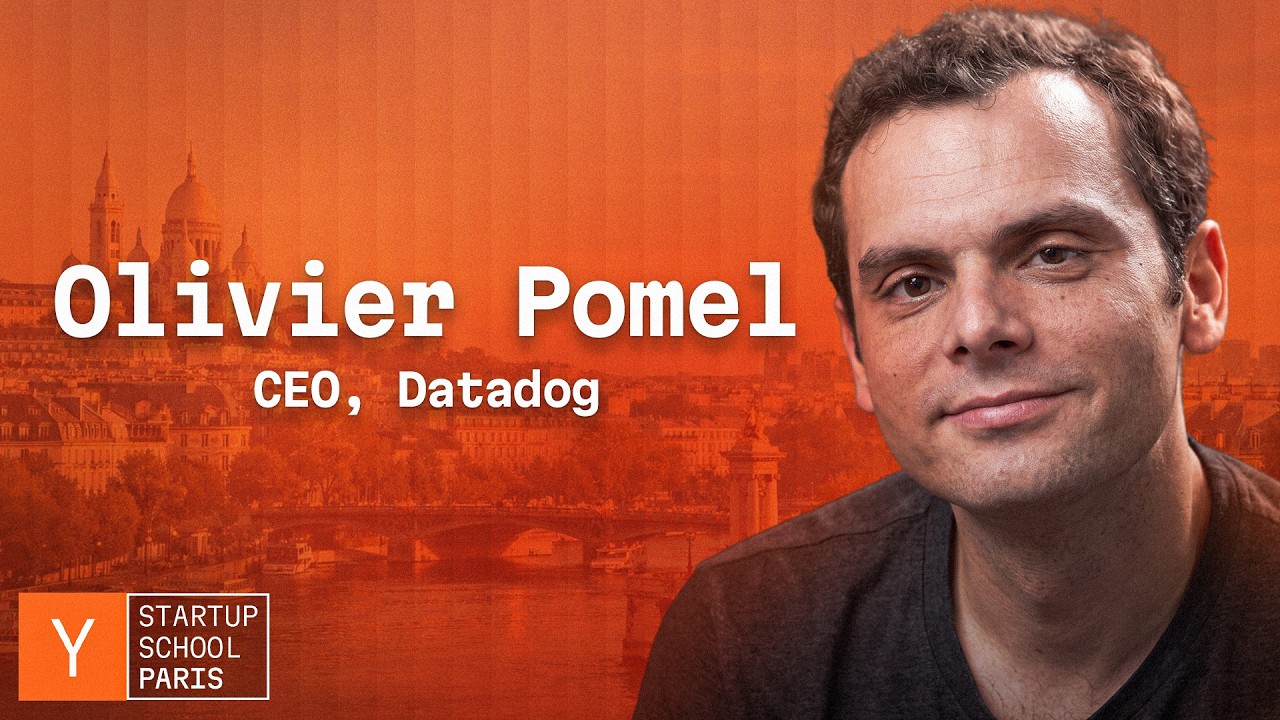
Datadog CEO Olivier Pomel shares his journey, emphasizing the company's evolution from a DevOps insight to a public tech giant. He discusses the resilience required to overcome early rejections, his hands-on leadership style focused on raw customer feedback, and how Datadog is rapidly adapting to the AI revolution by prioritizing automation and faster iteration in product development and internal processes. Pomel also offers candid advice on co-founder relationships and the critical importance of moving quickly in both hiring and firing.