Why the Classroom Must Change in the Age of AI (with Zack Kass)
Zack Kass discusses how AI can revolutionize education through personalized learning, shifting the teacher's role to that of a guide. He outlines key principles from his book, "The Next Renaissance," drawing on the work of educational luminaries Eva Moskowitz, McKenzie Price, and Rudolph Steiner to advocate for a system based on accountability and self-discovery, ultimately aiming to restore the purpose of childhood beyond economic incentives.
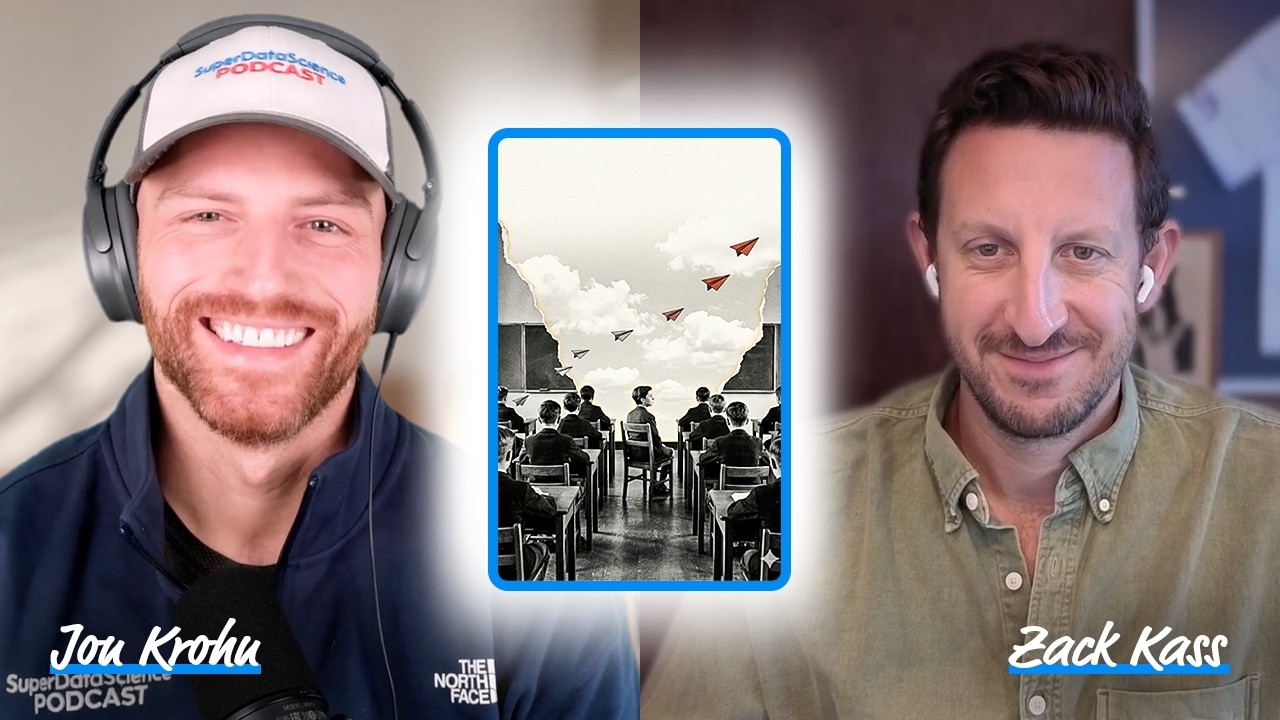
The current educational model, which groups children by age, fails to account for individual learning paces, leaving some students bored and others behind. AI presents an opportunity to revolutionize this system by enabling truly personalized education. In this new paradigm, students can engage in self-guided learning at their own speed, while the teacher’s role evolves from an instructor to a facilitator who provides oversight, encouragement, and empathy.
A New Philosophy for Education
The author wrote his book, The Next Renaissance, primarily for parents trying to navigate an increasingly unfamiliar world against a “relentlessly dystopian backdrop.” The goal was to provide evidence-based hope and a framework for raising children in the age of AI. The chapter on education is presented as the most significant, drawing inspiration from three key figures who offer a blueprint for reform.
Three Luminaries of Educational Reform
-
Eva Moskowitz and Success Academy: Moskowitz founded the highly successful Success Academy charter schools in New York. The core principle of her model is accountability, applied equally to parents, teachers, and students. This approach treats education with the gravity it deserves, viewing it as a matter of life and death given its impact on an individual’s future.
-
McKenzie Price and Alpha School: Price’s Alpha School reinvents the school day by blending technology with life skills. Students spend two hours on self-guided learning at a terminal, where AI can cater to their individual pace and needs across various subjects. This system provides direct feedback to the student, their parents, and their “guides” (not teachers). The remainder of the day is dedicated to physical activity, game theory, and developing essential life skills and character traits like grit. While the model produces high-achieving students, it also has a notable attrition rate.
-
Rudolph Steiner and Waldorf Schools: Over a century ago, Steiner argued that the “industrialization of education”—designing schools to prepare children for factory work—was destroying the “soul and spirit of the child.” While this industrialization drove economic progress, we have now reached a point where we can move beyond the purely economic optimization of childhood.
Restoring the Purpose of Childhood
By synthesizing ideas from these luminaries, we can design a future for education that honors the true purpose of being a child. The author argues that childhood should be a sacred period for self-discovery, free from the economic pressures that define adult life.
“The purpose of childhood… is to understand yourself without economic incentives, which no adult gets to do.”
The current system prematurely forces children to think about skills for getting a good job. The goal is not to eliminate work but to equip individuals with the tools to thrive in a more exploratory world.
This shift redefines the teacher’s role. They are no longer expected to be the smartest person in the room but rather an inspirer who creates a safe space for children to explore what it means to be human. This fundamental change in education could be the catalyst for a broader “spiritual awakening,” prompting society to reconsider the “rat race” and the deeper meaning of human existence.